Cats often loaf because the tucked-paw position feels comfortable while they rest. Cats Protection describes a relaxed loaf as upright rest with paws underneath the body. The pose alone cannot prove happiness, cold, or illness. Consider your cat’s usual habits, whole body, breathing, and movement before deciding what it means.
A loaf is a familiar resting shape, rather than a mood test. Animalia’s guide helps you recognize it, compare it with ordinary rest, and notice a meaningful change. For choosing the space around your cat, see the comfortable hideout guide.
What does a cat loaf look like?
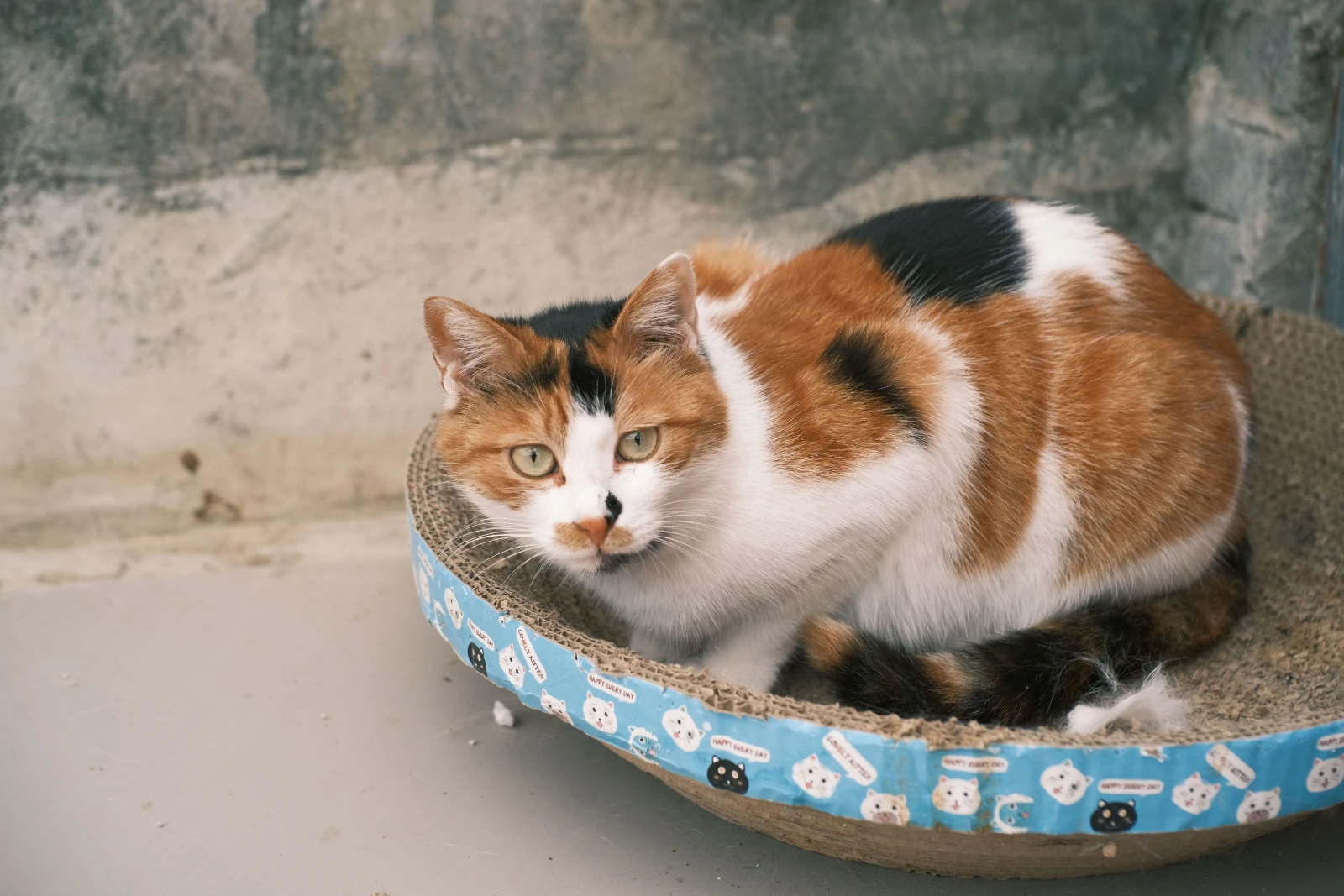
In the classic loaf, a cat rests upright with the front paws tucked beneath the body, giving the outline a compact shape. Cats Protection notes that individual loaves vary. A visible paw or a different tail position is not a diagnosis. Describe what you actually see instead of assigning a medical meaning to a nickname.
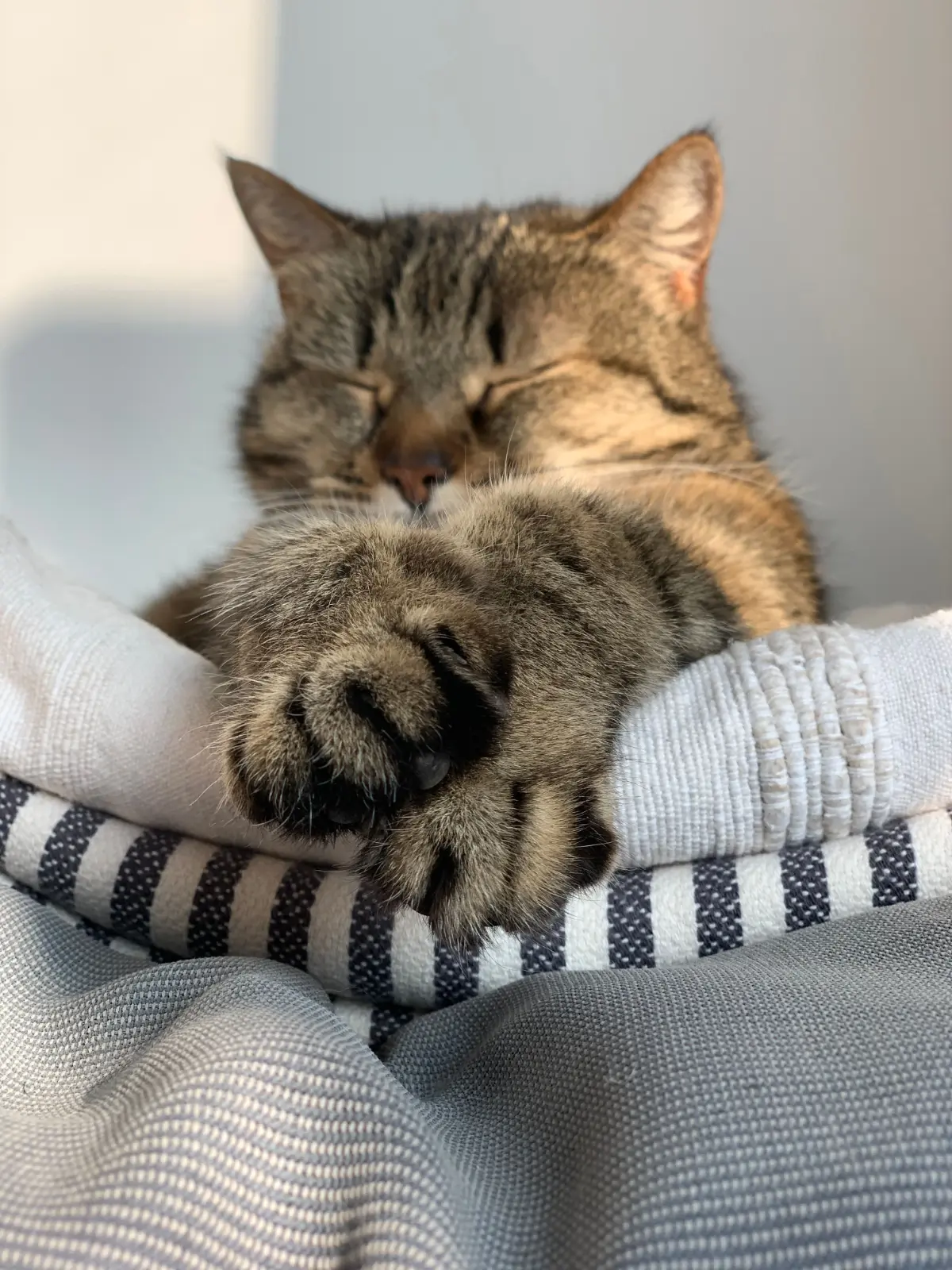
The familiar bread comparison is informal language. Online labels such as full loaf, partial loaf, or loaf boat can describe a photograph, but they are not clinical categories. A cat with the front paws stretched forward may simply be resting in another comfortable position.
Cats Protection distinguishes resting from sleeping and recommends looking at the wider posture. A cat can remain aware of sounds while appearing quiet. Avoid lifting the chest, pulling out the paws, or waking the cat just to confirm which position you have spotted.
Instead, notice whether the body looks settled and whether ordinary movement remains comfortable when the cat chooses to rise. Compare with their own familiar resting habits. A photograph can preserve what you saw, but it cannot show the entire breathing pattern, routine, or movement that matters for a health concern.
Why do cats loaf when they seem relaxed?
A tucked-paw loaf commonly accompanies comfortable rest, but it does not have one fixed emotional meaning. Cats Protection explains that sleeping positions reflect individual preferences and may vary with comfort, temperature, or mobility. Look at the surrounding situation rather than treating the pose as proof of trust or a particular feeling.
A loose-looking body in a familiar resting place fits comfortable rest better than a tense body that cannot settle. However, a cat who chooses another position can be equally comfortable. Loafing beside you does not measure your bond, and never loafing does not show that your cat feels unsafe.
| What you notice | What it can tell you | What it cannot establish |
|---|---|---|
| Tucked paws during familiar quiet rest | This may be an ordinary comfortable position. | A precise emotion or level of affection. |
| A changed shape on a different day | Comfort, surroundings, or temperature may differ. | A room temperature or a medical diagnosis. |
| Lowered head with a tense body or other changes | The wider pattern deserves attention. | Which condition, if any, is responsible. |
| Normal eating, movement, and rest in several poses | The loaf is part of the cat’s usual routine. | A guarantee that every future change is harmless. |
This comparison is an original observation aid, not a test. Animalia recommends describing the whole moment in plain words. “Tucked paws on the usual chair” is a useful record; “a loaf proves complete happiness” adds a conclusion the posture cannot support by itself.
Make resting places easy to choose and leave
Cats Protection recommends warm, comfortable, safe places for rest and says sleeping cats should not be disturbed. Offer suitable options rather than trying to produce a particular pose. Keep the bed accessible and let your cat choose company or privacy without being handled into position.
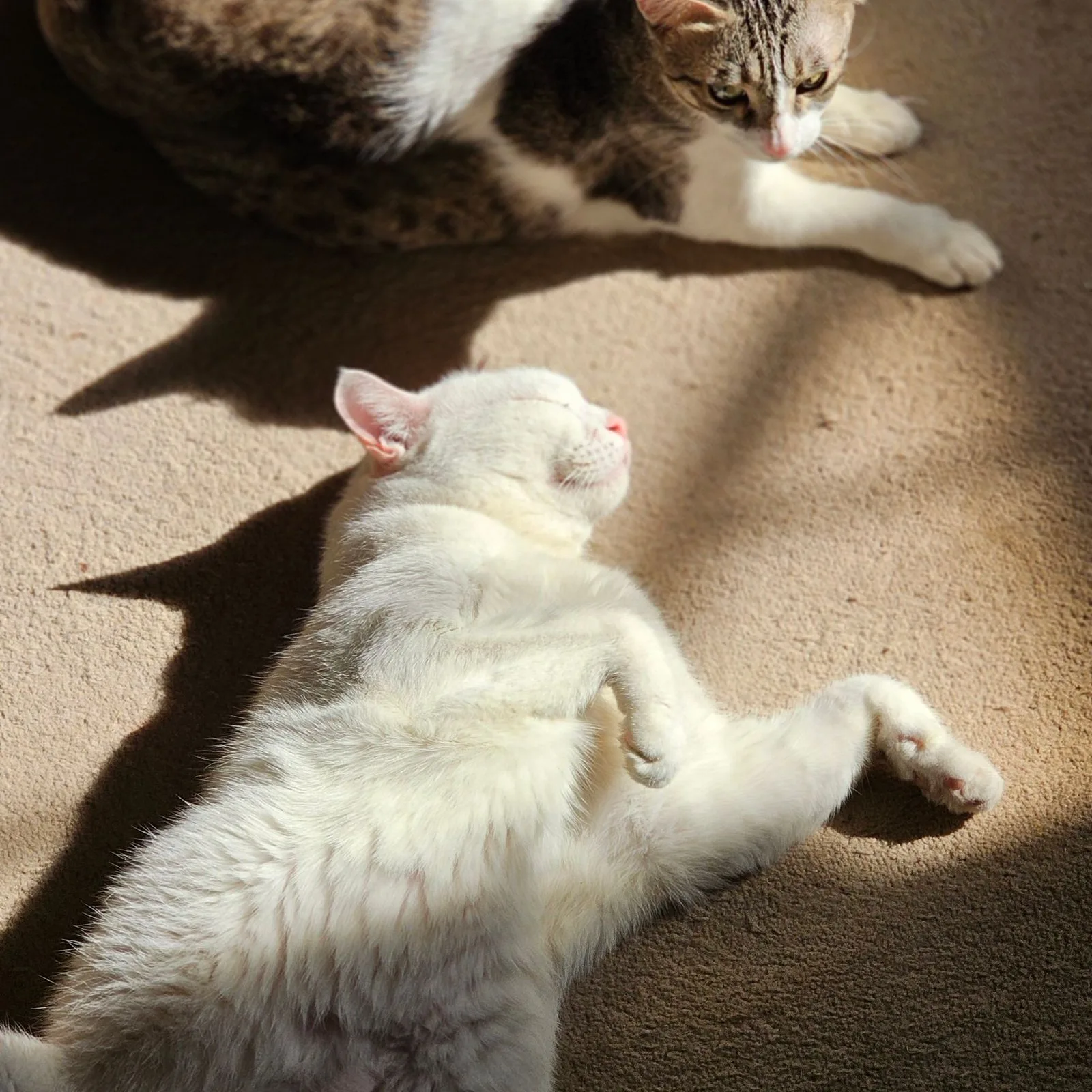
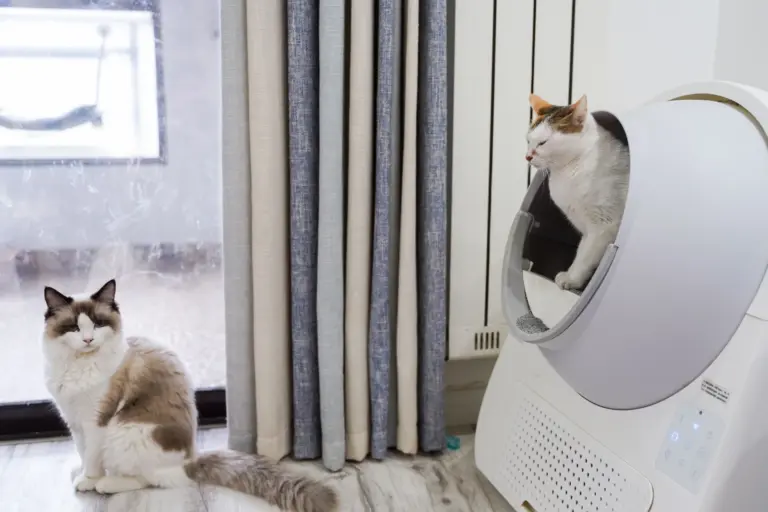
A quiet spot should remain usable when the home becomes busy. For several cats, check whether each can reach rest without passing another animal who blocks the route. The resource layout guide helps you assess those routes and distribute essential care around the home.
The RSPCA recommends constant access to safe hiding places and essential resources. Give your cat an easy way to leave the resting area, and avoid placing every bed beside a noisy appliance or busy doorway. A soft surface is an option to offer, rather than a reason to keep moving a sleeping cat.
If your cat approaches later, use the petting-with-choice steps and let them decide whether contact continues. A resting loaf does not automatically invite touch. The useful goal is comfortable, undisturbed rest in a suitable place, with several ordinary positions available.
When a resting change needs veterinary advice
Cats Protection advises contacting a vet about sudden or persistent resting changes alongside other signs of discomfort or illness. Note appetite, drinking, grooming, toileting, movement, and ordinary interaction. A lowered head or tucked paws alone cannot identify a condition, so avoid searching for a single “sick loaf” shape.
Contact your vet if your cat seems unable to settle, moves differently, withdraws more, or shows another concerning change. Describe when the change began and what else you have noticed. Do not repeatedly make the cat stand or jump to test mobility, and avoid pressing a suspected sore area.
Difficulty breathing or breathing with an open mouth requires urgent veterinary attention. Seek help immediately rather than waiting to see whether the cat changes position. Keep the situation calm and follow the veterinary team’s instructions, without trying to diagnose the cause from a photograph.
Your next step is to learn your cat’s normal rest without interrupting it. Animalia’s cat behavior hub covers related everyday observations. Use that familiarity to notice changes, while leaving diagnosis to your vet and allowing a comfortable loaf to remain an ordinary quiet moment.
Frequently asked questions
Does a loafing cat feel happy and safe?
The pose often appears during comfortable rest, but it cannot prove one exact emotion. Look at the whole body, surrounding activity, and your cat’s usual habits. A cat resting in another position may feel just as comfortable. Avoid treating loafing as a test of your bond or an invitation to touch a cat who wants quiet.
Is my cat cold when the paws are tucked underneath?
Temperature can influence resting positions, but tucked paws do not tell you that your cat is too cold. Offer a comfortable resting place and an alternative, then observe the wider situation. Do not add heat devices or wrap the cat tightly just to change the pose. Ask your vet if the behavior changes alongside other signs of discomfort.
Why does my cat loaf with their head down?
Some cats find a lowered-head position comfortable, as Cats Protection explains. The head position alone does not show illness. Look for muscle tension, altered breathing, appetite changes, difficulty moving, or another change from your cat’s normal habits. Contact your vet about concerns, and seek urgent help for difficulty breathing rather than waiting for a different pose.
What if my cat never sits in a loaf?
Cats have individual resting preferences, and a loaf is not a required sign of good care or comfort. Notice whether your cat can settle, move normally, and use suitable resting places in their preferred positions. A change from their own pattern is more useful than comparison with another cat or an online photograph of a perfect loaf.
Should I move my cat to see whether the paws hurt?
Avoid pulling out tucked paws or making a resting cat move just to test a theory. Observe ordinary movement when they choose to get up, and tell your vet about changes, reluctance to move, or other concerns. A photograph may help explain the posture, but it does not replace an examination or justify pressing a possible sore area.
Sources and editorial notes
- Cats Protection: sleeping positions: loaf definition, individual variation, whole-body observation, changes, and breathing concerns
- Cats Protection: cats and sleep: suitable resting choices and undisturbed sleep
- RSPCA: cat behavior: resource access, safe hiding places, and veterinary advice
Animalia Editorial. Publish date: October 31, 2026. Last updated and sources checked: October 29, 2026. The observation table is an original guide to describing context. Loaf names are informal descriptions, not diagnostic categories. See the editorial policy.
Featured photo: A calico cat rests with tucked paws on a round cardboard bed. Photo: Mia X / Pexels.
Prepared with AI assistance and reviewed against the sources above.