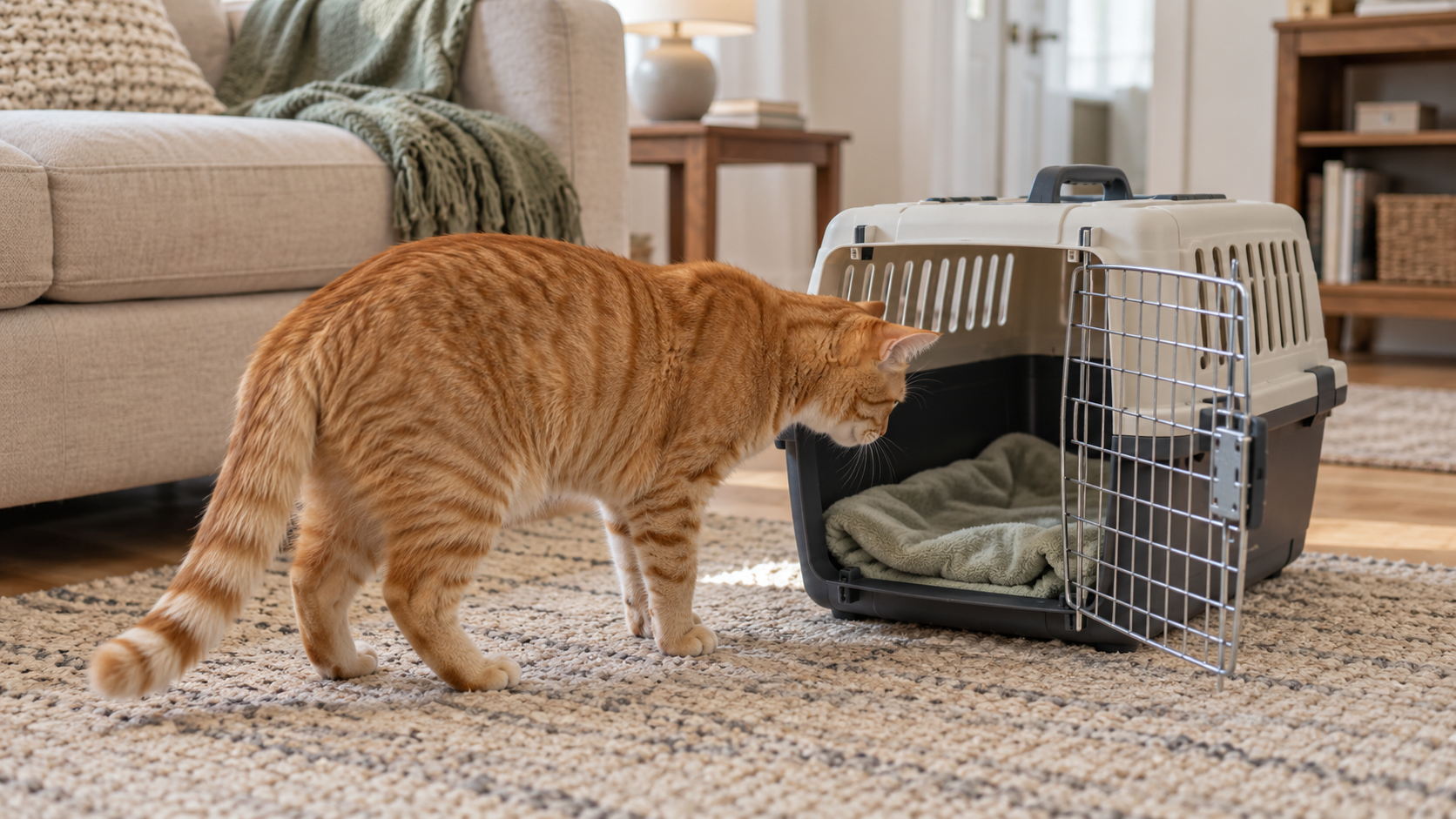
Cat carrier training starts by making a suitable carrier an ordinary, accessible item at home. Leave it securely open in a familiar area and reward voluntary investigation. Build comfort gradually before adding movement or travel; do not push the cat inside for a practice session.
Choose a practical carrier first
Check that the carrier suits your cat’s size, stays secure when closed, and is easy to clean. Follow the manufacturer’s assembly and transport instructions. A familiar blanket can provide a comfortable surface if it fits safely.
The Feline Veterinary Medical Association’s caregiver guidance emphasizes practical carrier design and familiarity. Our travel packing checklist addresses preparation separately; training at home is not the same as readiness for every journey.
Start with an open, stationary setup
Place the carrier somewhere the cat already spends comfortable time. Secure the door so it cannot swing unexpectedly. Leave room for approach and retreat, and avoid positioning it where another pet blocks access.
Reward a small voluntary action: looking toward the carrier, approaching, or stepping near the entrance. Use an appropriate reward the cat values. The cat does not have to enter fully to make progress.
Build the next step slowly
- Repeat comfortable investigation of the open carrier.
- Reward voluntary movement toward or inside it.
- Allow the cat to leave whenever they choose during initial practice.
- Only consider a new element once the current one is easy.
- Keep sessions brief and finish before frustration.
Closing a door, lifting the carrier, and moving through the home are separate challenges. Do not add them all at once. If the cat becomes concerned, return to a comfortable stationary setup and seek guidance where needed.
Keep routine veterinary arrangements separate
A scheduled veterinary visit may happen before training is complete. Contact the veterinary team for advice about your cat’s circumstances rather than delaying necessary care to finish a home program.
Do not improvise sedation, medication, or restraint techniques. This guide covers familiarization, not clinical handling. A cat with intense fear may need an individualized veterinary plan.
Use a tiny progress log
Record the easiest comfortable behavior and the next small step you plan to try. For example, note “approached open carrier voluntarily” rather than “carrier trained.” That distinction keeps expectations realistic for another caregiver.
For a sitter, include where the carrier is stored and how it closes, without asking them to perform unfamiliar training. See our cat-sitter care note.
Sources and editorial notes
Supporting guidance: Cat Friendly Homes: choosing a carrier and Feline VMA: caregiver training techniques. This introductory framework does not certify travel readiness or replace veterinary advice.
Featured image: Illustrative carrier introduction, generated with AI; not a demonstration of every training step.