A cat travel packing list starts with a suitable carrier, familiar care supplies, and a confirmed destination plan. Check requirements with your veterinary team, transport provider, and accommodation before departure. Packing equipment does not establish that a particular journey is appropriate for your cat.
Confirm the journey before packing
Ask about carrier dimensions, animal acceptance, access at the destination, and any required documentation. Requirements vary by route and provider, so use their current instructions rather than copying another owner’s trip.
Discuss your cat’s individual needs with the veterinary team, especially when unfamiliar travel is difficult. Do not improvise medication or sedation. Keep any prescribed instructions with the care records.
Pack the core care items
- A correctly assembled suitable carrier.
- A familiar washable carrier lining and a spare.
- The cat’s usual food and feeding instructions.
- Appropriate water and feeding containers.
- Toileting supplies suited to the travel plan and destination.
- Waste bags and suitable cleaning supplies.
- Veterinary and identification records as applicable.
- Owner, backup, and veterinary contact details.
Label food and care items clearly so a travel companion can help without guessing. Keep the kit organized around tasks instead of packing every accessory you own.
Check the carrier in advance
Inspect hinges, closures, handles, and lining. Follow the manufacturer’s transport instructions and the provider’s requirements. Do not rely on a carrier that has become loose or damaged.
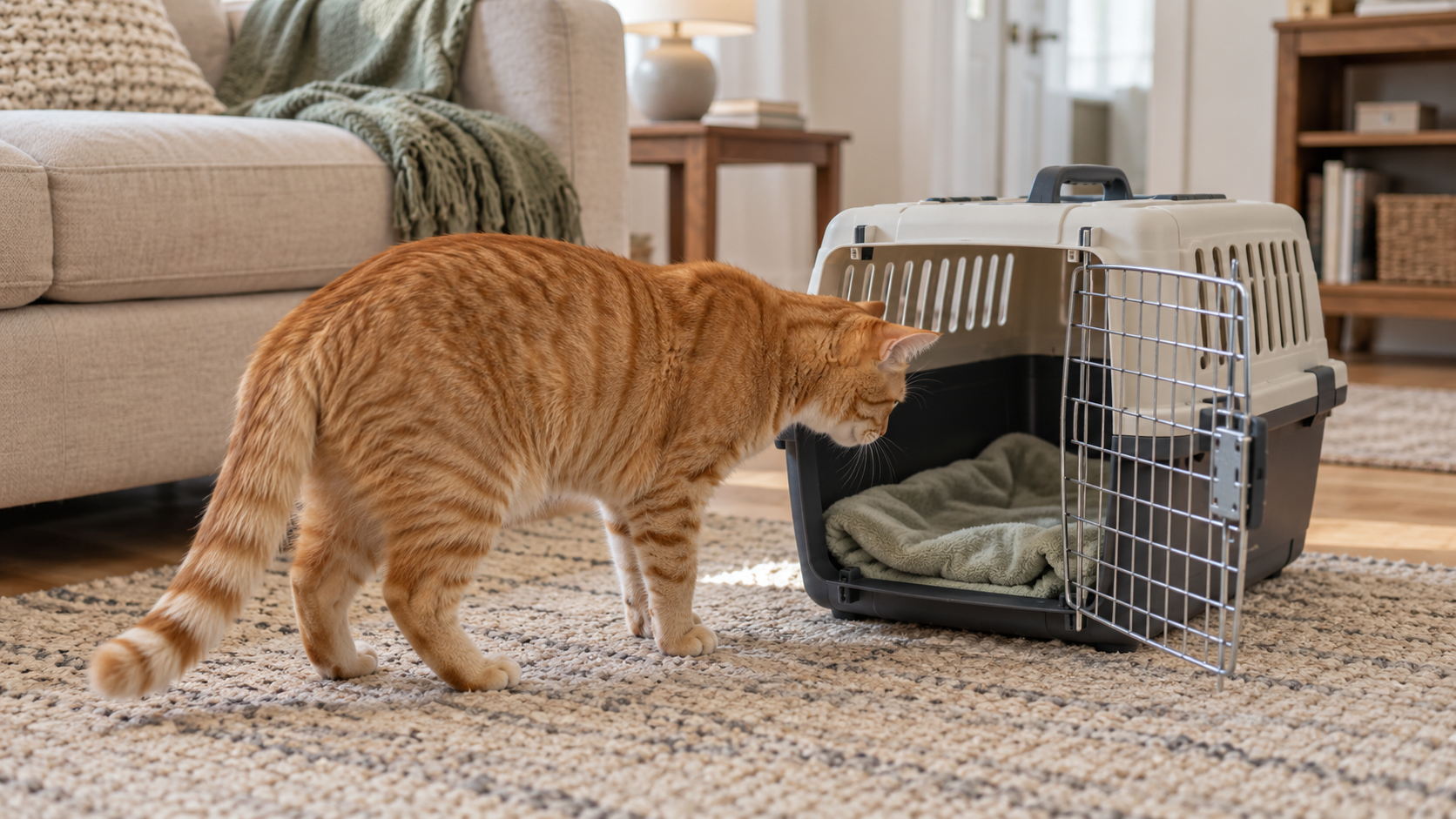
Use carrier familiarization before a planned journey where possible. Familiarity is useful preparation, but a cat comfortable with an open carrier at home may still need help with travel.

Prepare the destination room
Confirm where the cat can rest and how doors and windows will be managed. Bring enough familiar supplies to avoid an immediate search for replacements. Organize resources using the new-cat room checklist.
Tell other people that arrival should remain calm. A new room should not become an immediate meeting area for unfamiliar animals or many visitors.
Do a final handoff check
Ensure the person responsible for each task knows the plan. Keep necessary records and contacts accessible, rather than buried in luggage. Check that destination access and transport arrangements are still confirmed.
For an individual cat that cannot travel comfortably, discuss suitable care alternatives. Travel preparation includes deciding whether remaining at home with an appropriate caregiver is better.
Sources and editorial notes
Carrier-selection context: Cat Friendly Homes: cat carriers. This is an organization checklist, not legal, veterinary, or carrier-compliance advice. Confirm current route-specific requirements directly.
Featured image: Illustrative carrier introduction, generated with AI; not a demonstration of every training step.