
Animalia may earn a commission from qualifying purchases through affiliate links, at no extra cost to you. This guide currently contains no active affiliate purchase links. Our picks are not paid placements.
The best dog crates fit your dog, your home, and your care plan. Start with a divider-equipped wire crate for a growing puppy; consider molded plastic for a more enclosed resting space. Dogs Trust advises enough room to stand, turn, and stretch out. A crate must never replace care or treat anxiety.
Animalia has no active affiliate purchase links in this guide. Product names are plain text. Read our affiliate disclosure. Last product check: October 22, 2026.
- General home starting point: MidWest iCrate Double Door . Divider and removable pan; check the fit.
- Budget alternative: Frisco Fold & Carry Double Door . Compare size and door clearance.
- Heavier wire construction: MidWest Ultima Pro Double Door . For a dog already comfortable in a crate.
- More enclosed plastic option: Petmate Traveler Ultra Vari Kennel . Check usable inside space.
- Portable soft option: EliteField 3-Door Soft Crate . For calm, crate-trained dogs under supervision; no destructive chewing.
Compare the five home crate options
Price bands compare this shortlist, not a promise about the price of every size: $ is a lower-cost option, $$ is midrange, and $$$ is higher. Prices change; check the retailer and selected variant. Features below come from the product pages and manufacturer information listed with each pick.
| Product and use case | Verified construction and features | Price band | Main trade-off |
|---|---|---|---|
| MidWest iCrate Double Door Growing puppy at home | Coated wire; two doors; divider; removable plastic pan | $ to $$ | Adjustable space, but wire and latches still require inspection. |
| Frisco Fold & Carry Double Door Budget home alternative | Wire; front/side doors; divider; removable pan; 42-inch example is 42 × 28 × 30 inches | $ to $$ | Useful layout choices; open doors need extra floor clearance. |
| MidWest Ultima Pro Double Door Heavier wire option | Heavy-gauge steel; two doors; divider and plastic pan on checked listing | $$ to $$$ | Stronger construction claim does not make it escape-proof. |
| Petmate Traveler Ultra Vari Kennel Enclosed resting space | Plastic shell; wire squeeze-latch door; vents; 36-inch example is 36 × 25 × 27 inches outside | $$ to $$$ | Enclosed sides; bulkier storage and less flexible access. |
| EliteField 3-Door Soft Crate Supervised portable rest | Steel tube frame; polyester/mesh; three doors; 42-inch model is 42 × 28 × 32 inches | $$ | Folds for carrying; fabric is unsuitable for destructive chewing. |
How we chose these dog crates
We selected these products through research, not hands-on testing. Animalia Editorial checked current store pages, maker notes, and user guides. We used Dogs Trust and Humane World to set the care checks: room to move, air flow, easy entry, cleaning, and the right type for each dog.

We read buyer feedback about size, trays, doors, and arrival condition. That small sample cannot show how often crates fail. We did not test models, claim another owner’s results, or award star scores. All photos are stock images.
How do you choose the right size and material?
Choose by your dog’s actual movement inside the crate, then check the space around it. Your dog needs to stand, sit, turn, lie down, and stretch comfortably, as Dogs Trust explains. A breed label, weight band, or nominal crate length cannot confirm all those movements for an individual dog.
Build the fit check around your dog
Measure your dog while relaxed and standing, as the maker’s guide shows. Then compare the space your dog needs with the inside of that exact model. Bedding takes up room too. A sloped plastic shell can have much less space inside than the outer size might suggest.

For a growing puppy, ask your vet about likely adult size and a setup you can change as the puppy grows. A divider must still leave room to stretch and turn. Check the fit again as the puppy grows. If a size chart has a field that looks wrong, ask the maker before you buy. Our guide to crate training an older dog explains introducing a suitable enclosure after the equipment decision.
Check the room as well as the crate
Mark the footprint on the floor and include the sweep of an open door. Then trace the route your dog will use to enter and leave. Avoid placing a swinging door across a walkway. Check that the pan can slide out for cleaning without moving furniture or disturbing a resting dog.
Material is a practical choice, not a temperament diagnosis. Wire provides an open view; a plastic shell gives more enclosure; fabric folds easily but can be chewed. A heavy frame can still be the wrong choice if the dog panics when confined. Humane World warns that escape attempts in a crate can cause injury. Seek professional help for distress instead of treating stronger hardware as the solution.
Which are the best dog crates for different needs?
A wire crate with a divider can be a useful first choice for a growing puppy; plastic and soft crates suit other needs. These picks come from checked product details, not our own tests. Check the exact model before buying because its doors, size, and extras may differ.
MidWest iCrate Double Door: a practical starting point
MidWest iCrate Double Door suits a household that wants an adjustable puppy space without a premium furniture design. The checked listing specifies coated wire, a divider, a removable pan, floor-protecting feet, and a carrying handle. Choose the double-door variant when that layout makes entry easier in your room.
- Pros: divider for growth; pan access for cleaning; two entry positions.
- Cons: wire construction needs routine checks; the open-door footprint takes more space than the closed crate.
- Skip it if your dog bites or bends bars, panics behind a door, or cannot fit comfortably in the usable interior.
Use the manufacturer instructions to check panel engagement and the pan stop. Do not modify hinges or add improvised locks.
Frisco Fold & Carry: a budget comparison
Frisco Fold & Carry Double Door is worth comparing when a basic front-and-side-door arrangement fits your home. Frisco is Chewy’s own brand, so the retailer product details are the manufacturer-facing specification source here. The checked family includes a divider and removable plastic pan; its 42-inch example measures 42 × 28 × 30 inches.
- Pros: two-door layout; adjustable puppy area; tool-free folding for empty storage.
- Cons: both door positions need clearance; carry handles are for the folded empty crate, not an occupied enclosure.
- Skip it if you need a certified vehicle restraint, a travel approval, or containment for a distressed escape attempt.
MidWest Ultima Pro: heavier wire, with limits
MidWest Ultima Pro Double Door suits someone comparing heavier wire construction for regular home use. The maker describes heavy-gauge steel, two doors, slide-bolt latches, and a removable pan. The checked retailer variant also includes a divider. Size names differ between listings, so compare actual measurements.
- Pros: heavier wire specification; front and side access; folding storage and removable pan.
- Cons: heavier construction can be less convenient to move; it still has wire panels, joints, and latches that need checking.
- Skip it if you are hoping that an extra-strong label will cure separation anxiety or prevent every escape.
Petmate Ultra Vari: an enclosed plastic option
Petmate Traveler Ultra Vari Kennel may suit a dog that rests comfortably in a plastic enclosure. The maker describes a molded shell, ventilation, assembly hardware, and a wire squeeze-latch door. The checked 36-inch listing gives outside dimensions of 36 × 25 × 27 inches. Those are not usable inside dimensions.
- Pros: enclosed sides; solid shell around the resting area; a straightforward front entrance.
- Cons: it does not fold flat like a wire crate; a single front door offers less layout flexibility.
- Skip it if the verified interior is too small, your room needs side entry, or the exact airline or vehicle requirements have not been confirmed.
The maker and store may list sizes that do not agree. We found an inside-width field that did not match, so we have left that number out. Ask about your exact model. Petmate also says to check with the airline: a crate’s sales page does not approve it for your flight.
EliteField soft crate: supervised portable resting
EliteField 3-Door Soft Crate is the option to consider for a dog already comfortable in a crate and unlikely to chew its enclosure. The maker specification and checked listing describe a steel tube frame, fabric and mesh construction, three doors, a carrying bag, and a removable mat. The 42-inch model measures 42 × 28 × 32 inches.
- Pros: folding frame; several access points; removable fabric components for cleaning.
- Cons: mesh and zippers are vulnerable to chewing or scratching; fabric needs different cleaning and drying than a plastic pan.
- Skip it for a destructive chewer, a puppy still learning containment, or a dog left without supervision.
Inspect a delivered crate before your dog uses it
Check the exact item and size, then assemble it with the supplied instructions. Look for missing fasteners, damaged coating, sharp edges, bent panels, loose seams, and latches that fail to engage. An unfamiliar noise is a reason to investigate, not proof that the dog simply needs to get used to it.
| Check | What you need to confirm | What to do if it fails |
|---|---|---|
| Identity | Model, size, doors, and accessories match the order | Resolve the mismatch before use. |
| Assembly | Every joint and panel engages as the manual shows | Stop and ask the maker; do not improvise. |
| Movement | Dog can stand, turn, lie down, and stretch | Choose a better fit; do not force entry. |
| Condition | No accessible damage or malfunctioning latch | Photograph the fault and contact the seller. |
| Routine | Toilet, water, exercise, and company are covered | Change the care plan before closing the door. |
What daily care must a crate plan include?
Plan toilet opportunities, water, movement, rest, and human company before deciding when to close a crate. Dogs Trust recommends access to fresh water and short, positive use. A crate is an optional managed resting space. It must not become the place a dog spends the whole day because a schedule lacks care.
Set up water and suitable bedding
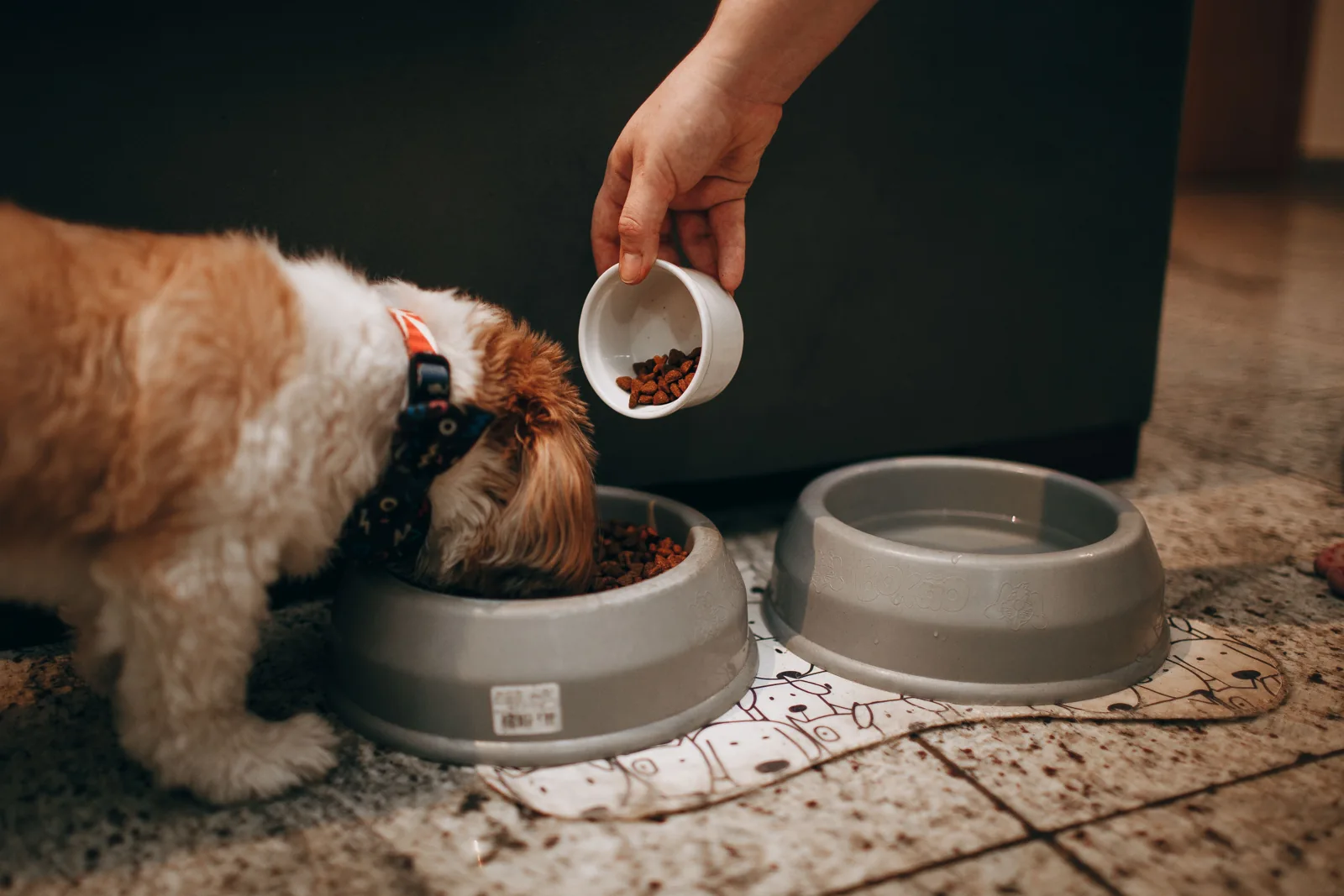
Set out fresh water in a bowl that suits the space, and check that the dog can reach it with ease. Choose bedding that fits the dog’s chewing habits and leaves room to move. Remove items the dog shreds or swallows, and ask your vet for help if the dog may have eaten them.
Follow the enclosure’s safety directions. The MidWest manual warns to remove collars, tags, and leads before crating because of entanglement. Never tie a dog inside. Keep cords, curtain pulls, and objects that can be reached through openings away from the enclosure.
Allow breaks and respond to discomfort
Build the day around the dog rather than the crate’s material. Who will provide an outdoor break after sleep or activity? Who can check a puppy when you are away? If nobody can meet those needs, arrange care and a suitable larger safe area instead of buying a stronger box.

Introduce the space with the door secured open and reward voluntary interest. Go at the dog’s pace, as Dogs Trust recommends. Stop an escalating setup and seek help for panic or injury risk. A veterinarian and qualified reward-based professional can help assess the situation without punishment. Use our new puppy home checklist to organize the wider care setup.
Frequently asked questions about dog crates
Is a wire or plastic crate better for a puppy?
Either can work if it fits and the puppy rests well in it. Wire crates often come with a divider and a pan you can take out to clean. Plastic gives more enclosed sides. Check the exact model and the space inside it first, then think about where to put it and how it looks.
Should I buy the adult size with a divider?
A divider fitted as the maker directs can let you change the space in an adult-sized wire crate as a puppy grows. Leave enough room to stand, turn, and stretch. Do not make the space too small to stop toilet accidents. Puppies still need help to reach the right toilet spot and rewards when they use it.
Which crate is best for a dog with separation anxiety?
None of these crates is a treatment for separation anxiety. A dog who tries to escape can be hurt even in a strong crate. Ask your vet and a qualified reward-based trainer for help with the distress. A heavier frame does not tell you why the dog is upset or prove that closing them in is the right plan.
Can I use one of these crates in the car?
A home crate is not a tested car restraint just because it is easy to carry or has strong sides. If you need a car crate, check an independent crash test for the exact model, size, and way it is fitted. This guide does not give a crash-safety award to any of the five picks.
Can two dogs share a large crate?
Plan a resting crate for each dog, rather than adding their weights to pick a shared size. Each dog needs room to move and a way to avoid touch they do not want. The checked listing’s care Q&A advises separate crates. Ask a qualified trainer for help if either dog guards the space or gets upset when apart.
Do I need to spend more for a furniture-style crate?
No. A wood finish is a choice about how the crate looks, not proof that it meets a dog’s needs. First check fit, air flow, entry, cleaning, and comfort. Then compare the cost. If a crate cannot give your dog the right space or stand up to normal use, choose a different setup.
Choose the care plan, then the crate
Shortlist the suitable material, confirm the exact interior, and check the delivered item before use. Use our step-by-step crate training guide to introduce the space with care. Start with our training and behavior guides and reward-based training foundations. Our workday care plan helps organize the time outside an enclosure.
Sources and editorial notes
- Dogs Trust: crate and playpen training; Humane World: crate training and welfare limits.
- MidWest iCrate manufacturer instructions; MidWest Ultima Pro specifications.
- Petmate Ultra Vari specification; EliteField soft crate specification.
- The five retailer listings linked in the product sections were opened to verify availability and features on October 22, 2026. Prices and stock can change. Ordinary specification links are untagged references, not active affiliate tracking links.
Prepared by Animalia Editorial. Last source and product review: October 22, 2026. This guide reports desk research, not hands-on testing, crash testing, or veterinary review. No retailer product images are used. Editorial policy and corrections policy.
Featured photo: A puppy rests on blue bedding inside a wire crate. Stock illustration; Animalia has not tested these products. Photo: Tibor Szabo / Pexels.
Prepared with AI assistance and reviewed against the sources above.