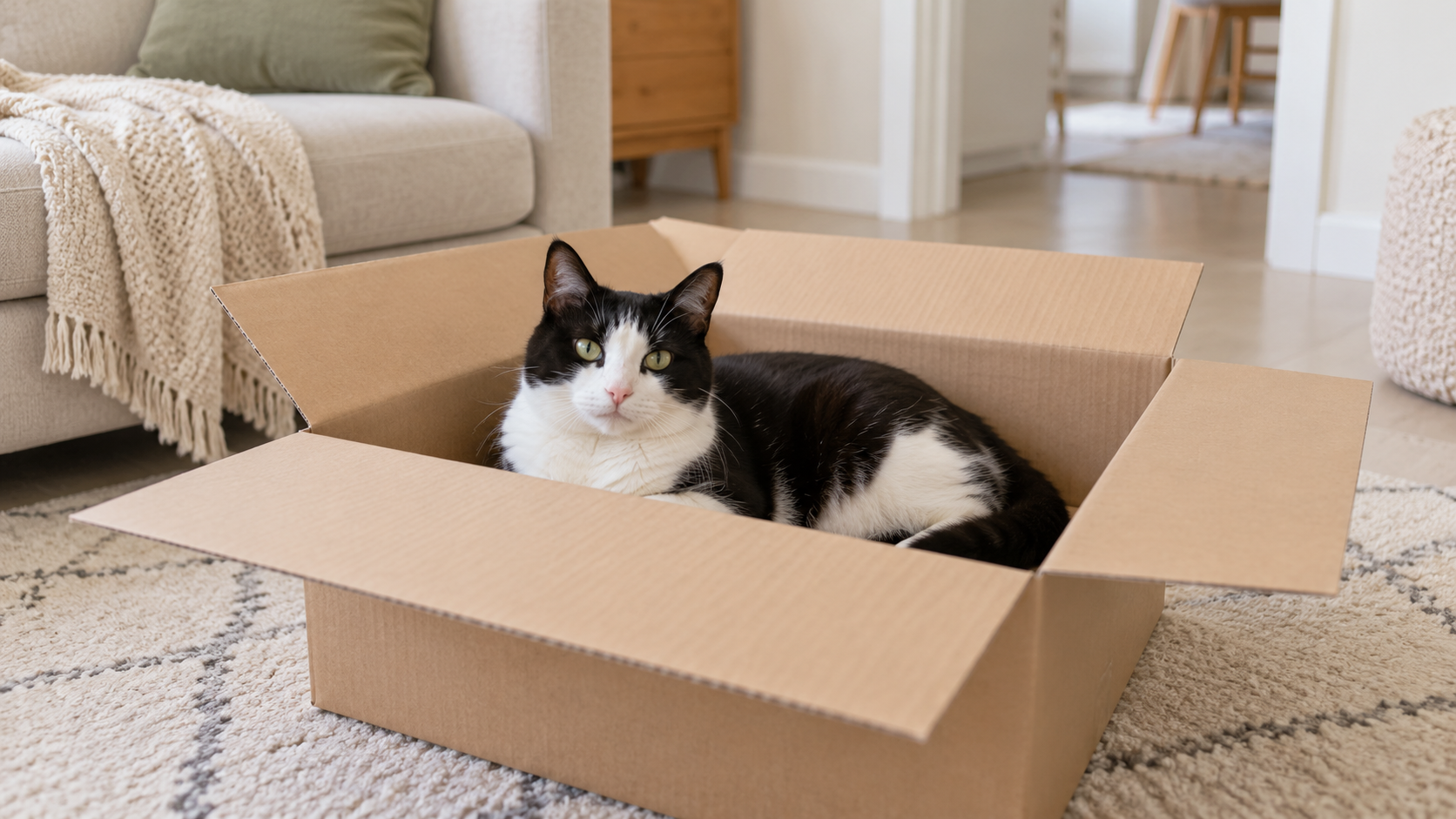
A clean open cardboard box can become a resting choice or part of supervised play. Choose a roomy box with smooth edges and no staples, loose tape, string, or trapping openings. Let your cat explore voluntarily and remove the box if chewing or damage makes it unsuitable.
Check the box before using it
Use clean packaging that has not held chemicals or spoiled material. Remove unsuitable attachments and inspect the entire surface. Do not add tiny cutouts that may trap a head or paw, or close the lid around the cat.
If your cat chews and swallows cardboard, skip cardboard activities and choose a suitable purpose-made alternative. Household packaging is not automatically a pet-safe toy.
The open resting box
Place a roomy open box in a quiet familiar location. A plain washable blanket can add a comfortable surface if it fits without crowding the space. Keep the entrance clear and allow the cat to leave at any time.
This is an option to explore, not a training target. The cat may sit beside the box or prefer another resting place. Try a different location before decorating the box or purchasing a replacement.
The supervised play landmark
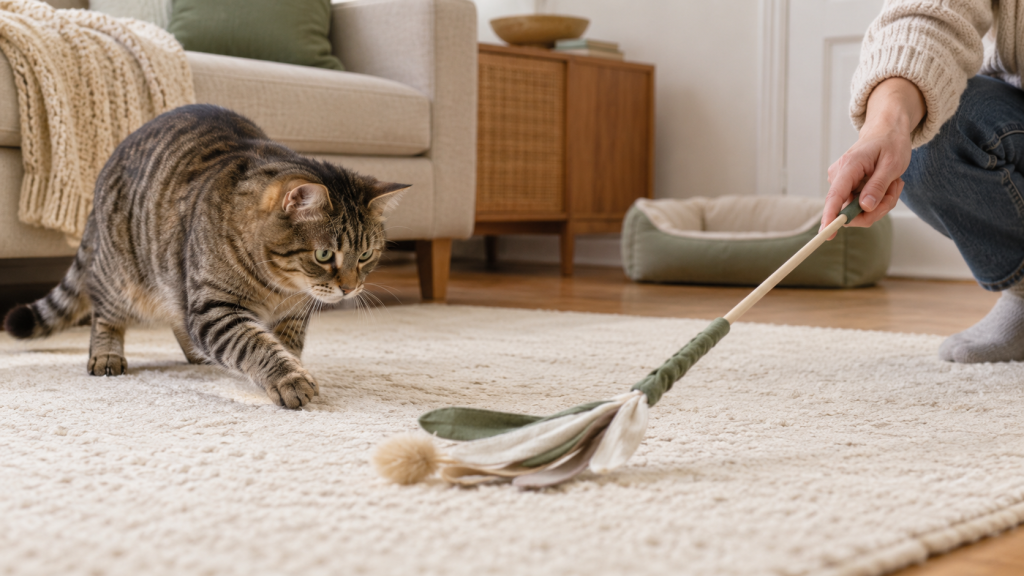
Use the box as a stable object near an easy floor-level toy game. Move a suitable toy around the outside where both cat and toy remain visible. Leave clear routes and avoid dangling string through holes.
The box changes the play space without requiring difficult jumping. Follow the supervision and storage checks in our wand-toy guide if you use a wand.
Two open choices
Offer two inspected open boxes with space between them. Let the cat investigate either one. This can help you compare locations or resting preferences without forcing the cat to use a particular item.
In a multi-cat household, do not arrange boxes so one cat can block both approaches. Separate useful locations may be better than two containers side by side.
End with inspection and cleanup
- Remove the supervised toy.
- Collect any loose cardboard pieces.
- Discard a damp, dirty, or damaged box.
- Keep only a suitable resting box available.
- Check again before the next game.
There is no reason to retain a box until it falls apart. A simple activity should remain easy to supervise and maintain.
Sources and editorial notes
General resource and play context: Cats Protection: cats and play. These are adaptable supervised setups, not tested toy designs. For a broader room plan, see indoor cat enrichment.
Featured image: Illustrative cardboard hideout, generated with AI; inspect materials and adapt the setup.