Rotating cat toys means changing the options available while keeping favorites accessible and supervised toys safely stored. Begin with the toys you already own. A small, well-maintained collection can offer variety without a constant stream of new purchases.
Sort the collection before planning a rotation
Inspect each toy for damage, loose parts, sharp edges, and materials your cat tries to swallow. Remove unsuitable items. Put wand and string-based toys in the supervised-use group rather than leaving them on the floor between sessions.
Separate the remaining options by the kind of interaction they invite: batting, carrying, comfortable exploration, or supervised chasing. This makes it easier to change the experience rather than merely swapping one similar ball for another.
Keep the system small and obvious
Use two clearly separated storage areas: a few current options and the inspected reserve. Do not store toys where food, cleaning products, or other pets create problems. A cupboard that everyone can identify is more useful than a complicated numbered inventory.
- Leave a familiar favorite available when suitable.
- Add one different option at a time.
- Store supervised toys out of reach after play.
- Reinspect reserve toys before returning them.
- Clean according to material and manufacturer guidance.
Rotate according to response, not a rigid calendar
If the cat enjoys a toy, there is no need to remove it because a week has passed. If it is ignored, try a different setting or an easy supervised session before concluding it is useless. A toy that appeals during quiet evening play may be overlooked during a busy morning.
Record a few words about what happened: “batting on rug,” “ignored during visitors,” or “chewed attachment; removed.” These notes are practical household observations, not research findings.
Include simple non-purchase variety
A suitable open cardboard box can change how a familiar toy is approached during supervised play. Keep exits clear and avoid dangling string through holes. Our cardboard-box guide explains manageable options.
You can also vary the play location or movement while using the same toy. Change one feature at a time so you learn which adjustment the cat appreciates.
Share responsibility across caregivers
Choose a single storage location and agree that a damaged toy stays out of circulation. If someone replaces an item, record why so another person does not put it back out by accident.
For a cat sitter, explain the supervised-use distinction clearly. Link the rotation to a comfortable play routine instead of asking the sitter to entertain the cat continuously.
Sources and editorial notes
General toy-selection guidance: Ohio State University: toys and VCA: toy safety. The storage and rotation system is an Animalia planning example. A sudden change in play should not be dismissed as toy boredom.
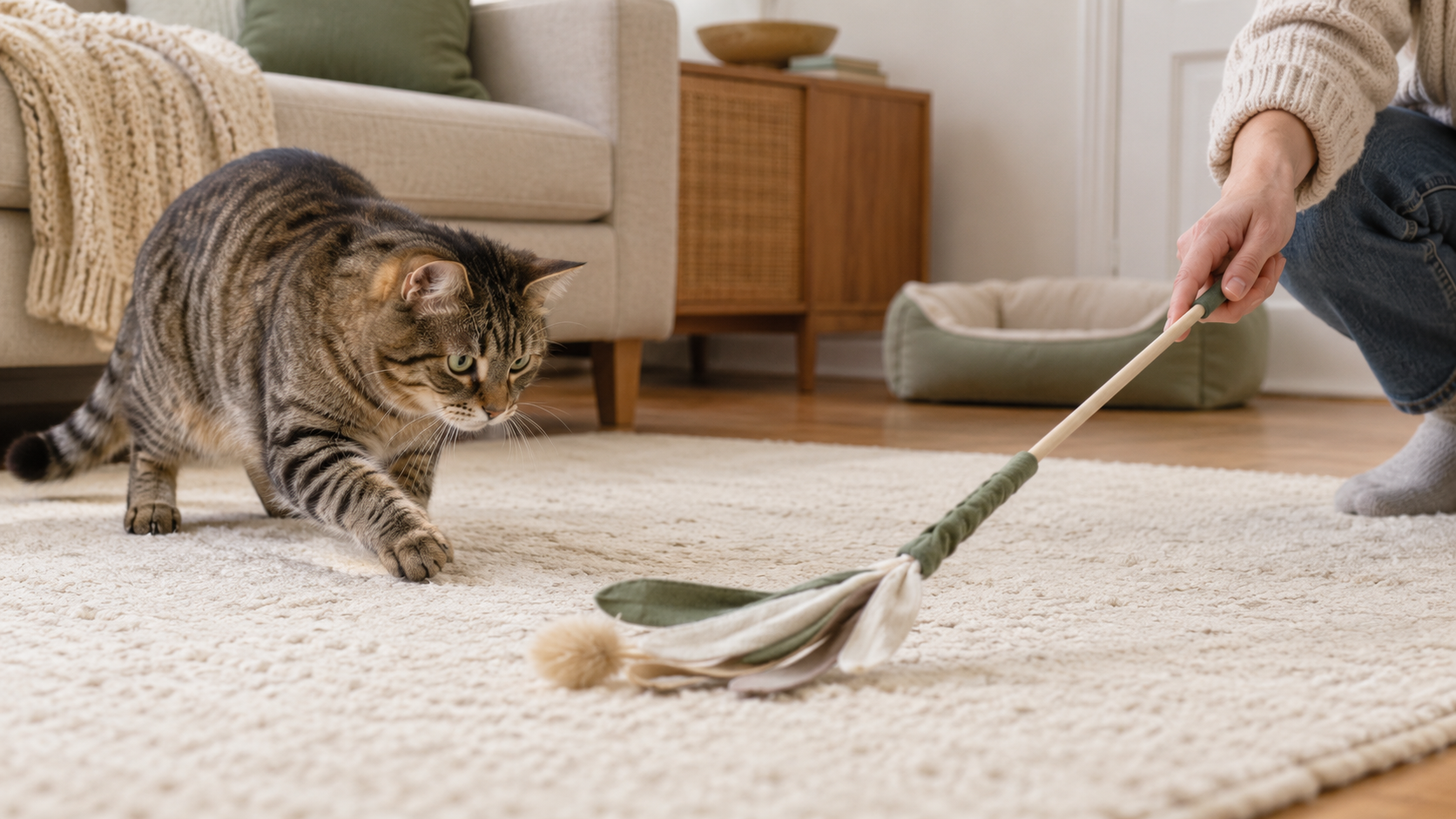
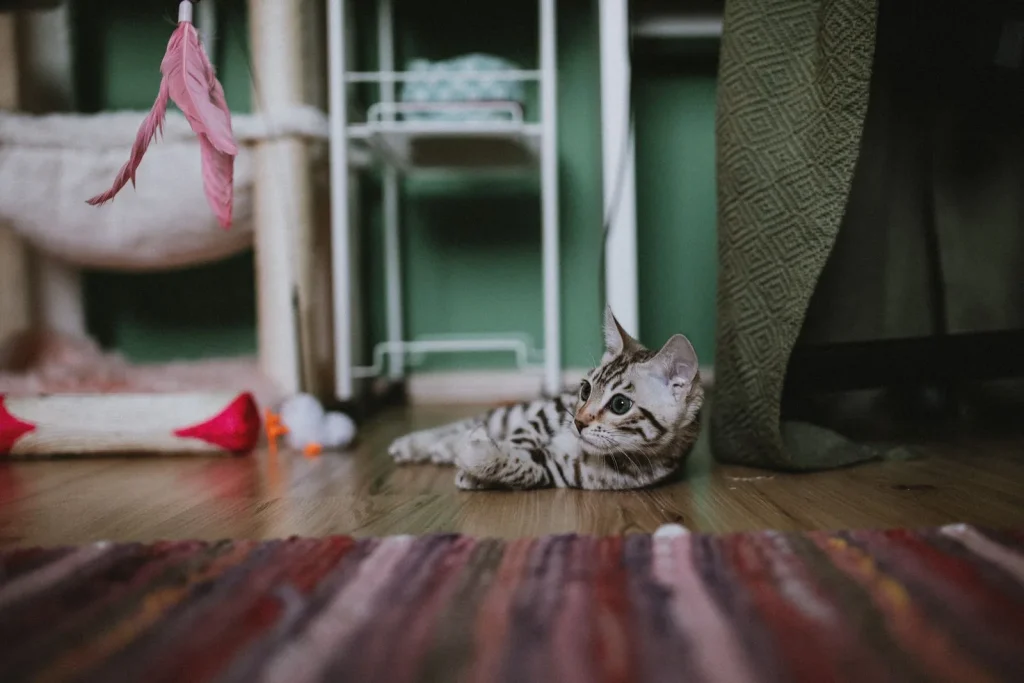
Featured image: Illustrative supervised play scene, generated with AI; not an observed Animalia session.