How often do cats pee? One small video-observation study found healthy cats averaged about two urinations daily, but an average is not a normal range or a health test. Watch your cat’s usual pattern and any change. Straining with little or no urine needs immediate veterinary attention, even if the day’s visit count looks ordinary.
Frequency means how often urine is passed, not simply how often a cat enters the box. Animalia’s guide separates visits, output, and comfort to help you report changes without diagnosing from a clump count.
What can a daily pee count actually tell you?
A count can describe your cat’s observed pattern, but it cannot establish that the urinary tract is healthy. Some visits produce little or no urine, and you may miss other visits entirely. Compare like observations over time, keep uncertainty visible, and seek advice about changes rather than using an online range as reassurance.
In the study above, researchers followed 11 healthy cats and eight cats with relevant disorders for 14 days. Video detected more urinations than caregivers reported. The healthy group averaged 2.1 daily urinations and the other group 2.9. These small-group averages overlap in practice and do not provide a diagnostic cutoff for an individual cat.
The useful lesson is that observation can be incomplete. It does not mean every household needs cameras or that a consumer litter-box app has the same accuracy as a research recording system. Write down any uncertainty about which cat used the box or whether urine passed. Avoid turning an uncertain record into a precise-looking total.
When does a urinary change need urgent help?
Contact a veterinarian immediately if your cat repeatedly tries to pee but passes little or nothing, or appears distressed while trying. Cornell identifies suspected urethral obstruction as an emergency. Do not wait until tomorrow, complete a diary, or assume that a few drops establish safety. Explain the signs to the clinic promptly.
PDSA also advises contacting your veterinarian as soon as you notice changed peeing habits. Tell the team about discomfort, blood, unusual places, increased visits, or a change in drinking or eating. The clinic can advise on urgency; an article cannot determine which cause applies or whether a home observation excludes a blockage.
Do not press the abdomen, try to express the bladder, change medication, or give a home remedy to test your theory. Those actions are outside an observation plan. Tell the clinic if you are unsure whether the cat is trying to pee or poop. Avoid choosing a less urgent interpretation from the posture alone.
Separate visits, output, and comfort in your notes
This Animalia table organizes information for a veterinary conversation. It does not assign a safe daily minimum or tell you to wait for more evidence. Write only what you can observe while maintaining ordinary care, and prioritize the call whenever there are concerning signs.
| Record | Useful wording | What it cannot prove |
|---|---|---|
| Box visit | Entered and crouched; urine output unknown | A completed urination |
| Observed urine | Saw urine pass; time and cat identified | A healthy urinary tract |
| Litter evidence | New clump found; cat and time uncertain | Exact volume, frequency, or source cat |
| Comfort | Repeated attempts, crying, or another visible change | The underlying diagnosis |
| Wider context | Changed drinking, appetite, food, routine, or medication | That the change is harmless or caused by one event |
Keep the note readable enough to share: who observed it, when it happened, and what was uncertain. If several people care for the cat, use one shared record so a second report of the same visit does not become another counted urination. Our cat-care household log helps coordinate these observations.
Avoid chasing the cat to the tray, moving them into a box for a camera, or restricting water to make the record look consistent. Observation should fit around the cat’s access and comfort. A partial but honest record is more useful than a complete-looking one obtained by changing ordinary care or creating a stressful test.
Care access and changes worth describing
Make sure ordinary water and toilet access are available while you seek advice. A cat should not have to pass another animal guarding a narrow route to reach the box. Our multi-cat layout guide and litter-box location guide address those environmental tasks separately from medical assessment.
Describe changes in food, drinking, activity, household routine, or prescribed medication to your veterinarian. Do not decide that a recent change explains away unusual urination or establishes a particular illness. Avoid starting a urinary diet, restricting fluids, or changing a prescription because another cat with a similar count received that advice.
For routine access planning, our cat hydration guide discusses water arrangements. That guidance is not treatment for a cat who is struggling to pee. Changing a bowl or adding a fountain should not delay contacting the clinic. Seeing a cat drink does not resolve uncertainty about whether urine can pass.
How should you prepare for a veterinary conversation?
Share the change, when it began, visible output, any discomfort, and relevant care or medication history. Include uncertainty rather than filling gaps from memory. Ask what the clinic wants you to bring and how soon the cat should be seen. Do not delay an urgent visit to collect a sample, photograph, or longer record.
Animalia suggests one clear opening: “This is different from usual, and here is what I saw.” You can then describe the details without needing a disease label. If your cat has an existing care plan, tell the team and follow their instructions about the current concern rather than applying an old plan to a new situation.
Start with the appropriate call when anything concerns you, and use routine notes only as support. Return to our cat behavior hub for other everyday questions. A useful frequency guide helps you recognize uncertainty and communicate change; it should never persuade you that a familiar number cancels a warning sign.
Frequently asked questions
Does a usual-looking daily count prove my cat is healthy?
No. A count alone cannot establish health or exclude a urinary problem. Consider whether urine actually passed, whether the cat seemed comfortable, and what changed from their usual pattern. Seek veterinary advice for concerns, even when the total resembles another cat’s routine. Repeated attempts with little or no urine need immediate attention rather than reassurance from a daily number.
Is every litter-box visit a pee?
No. A visit may involve inspection, digging, another toileting action, or an attempt that produces little or no urine. Record what you actually saw and leave the output unknown when you did not see it. If repeated attempts or discomfort concern you, call your veterinarian instead of waiting to see whether another visit produces a larger clump.
Can litter clump size tell me the exact urine volume?
Do not treat a clump as a precise volume measurement. Record the observation and the uncertainty, especially when several cats use the same boxes or cleaning happens at different times. Ask your veterinary team what information would help in your situation. A litter record can support a conversation, but it cannot replace an examination or establish a diagnosis.
Should I wait a day if my cat keeps trying but cannot pee?
No. Contact your veterinarian or an emergency clinic immediately when your cat is trying to urinate but passing little or nothing. Do not wait for a daily minimum, a bigger clump, or a complete record. Describe exactly what is happening and follow the clinic’s instructions. A suspected urinary obstruction requires urgent professional assessment and care.
Do I need to buy a smart litter box to track changes?
No purchase is required before you ask for advice. A brief written observation can be useful, and a device reading should still include uncertainty about the cat, visit, and output. Do not delay care while installing equipment or assume that a usage counter is a medical test. Ask your veterinary team which observations are helpful for your cat.
Sources and editorial notes
Animalia Editorial. Reviewed November 4, 2026. Study averages describe a small sample and are not clinical reference limits. The note table is an organizational aid, not a diagnostic or treatment tool. See our editorial policy.
Primary study: video and caregiver observations; PDSA: urinary signs and when to call; Cornell: lower urinary tract signs and obstruction.
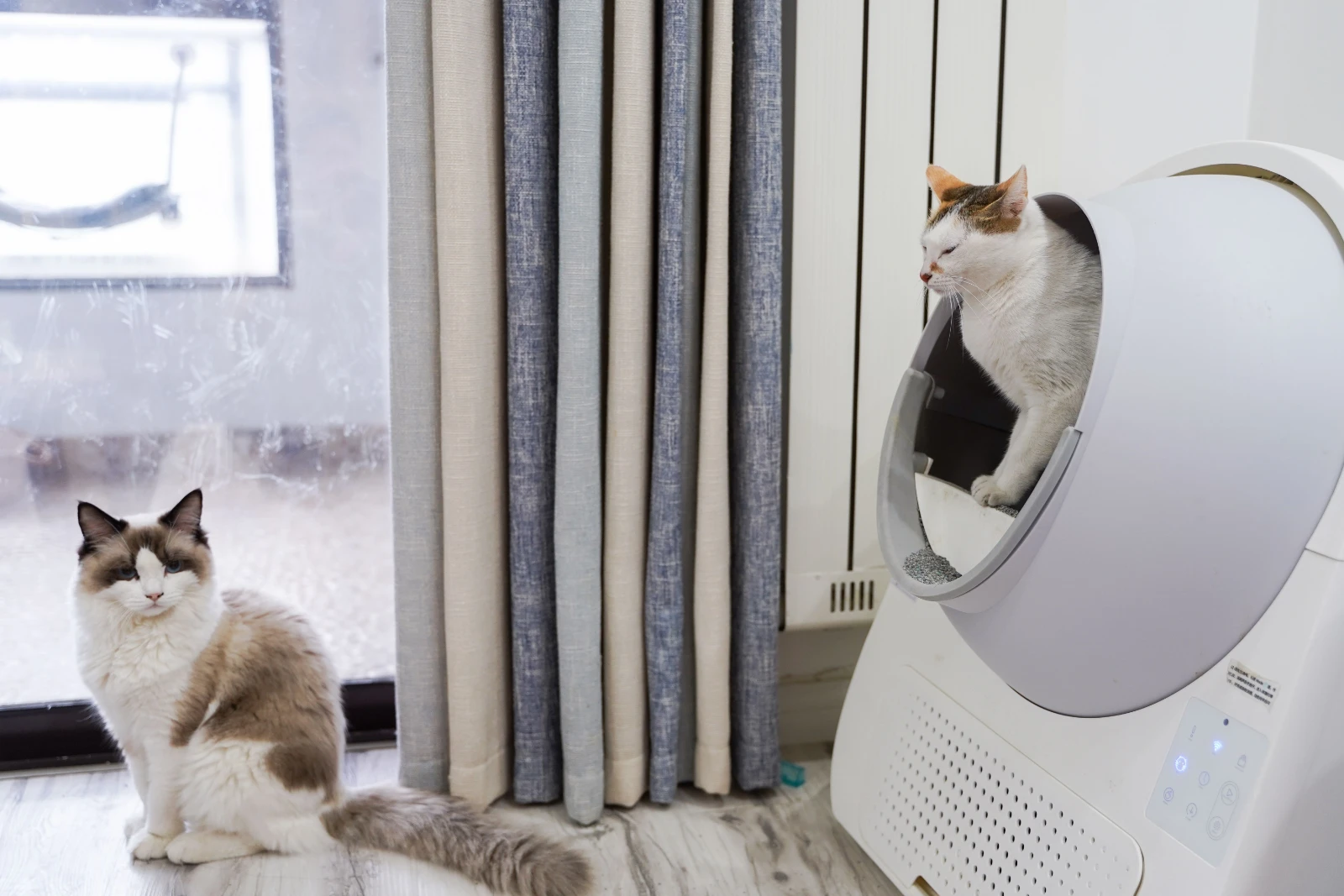
Featured photo: Two cats are near an automatic litter box. A visit or device reading does not establish a healthy urination. Photo: Nicholas Fu / Pexels.
Prepared with AI assistance and reviewed against the sources above.