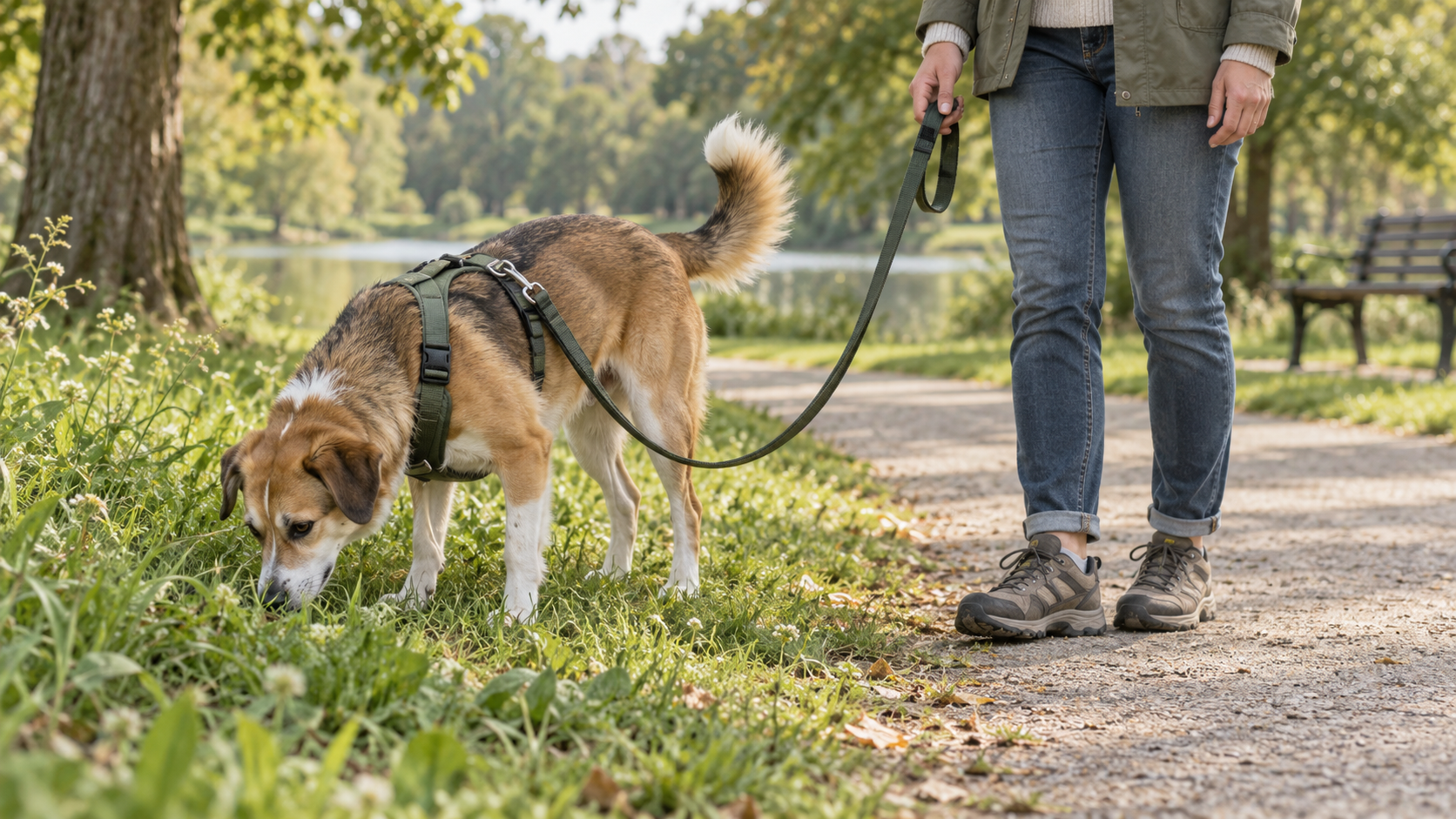
A sniff walk gives your dog time to investigate suitable places rather than covering a particular distance. Choose a manageable route, use properly fitted walking equipment, and allow pauses where it is safe. You remain responsible for traffic, other animals, and the surroundings.
Choose a route you can manage
Look for clear sightlines, enough space to move away, and safe footing. Check local access rules. A busy path with narrow passing points may be a poor place to practice a slower outing.
Consider the individual dog’s comfort, health, and existing veterinary advice. Shortening the route can be more useful than trying to reach a predetermined exercise target.
Check the equipment first
Inspect the leash, attachment points, and harness or other professionally recommended equipment. Ensure a secure fit and keep enough control for the location. Do not let a trailing line reach roads, cyclists, or other people.
- Carry the usual cleanup supplies.
- Bring suitable rewards if helpful.
- Plan access to drinking water as appropriate.
- Know an easy route home.
Let suitable pauses happen
When the dog investigates a safe patch, pause instead of repeatedly asking them to move. Keep the leash comfortable without allowing access to litter, unfamiliar substances, wildlife, or hazards.
You can offer another direction if a spot is unsuitable. Avoid pulling the dog toward something they do not want to approach.
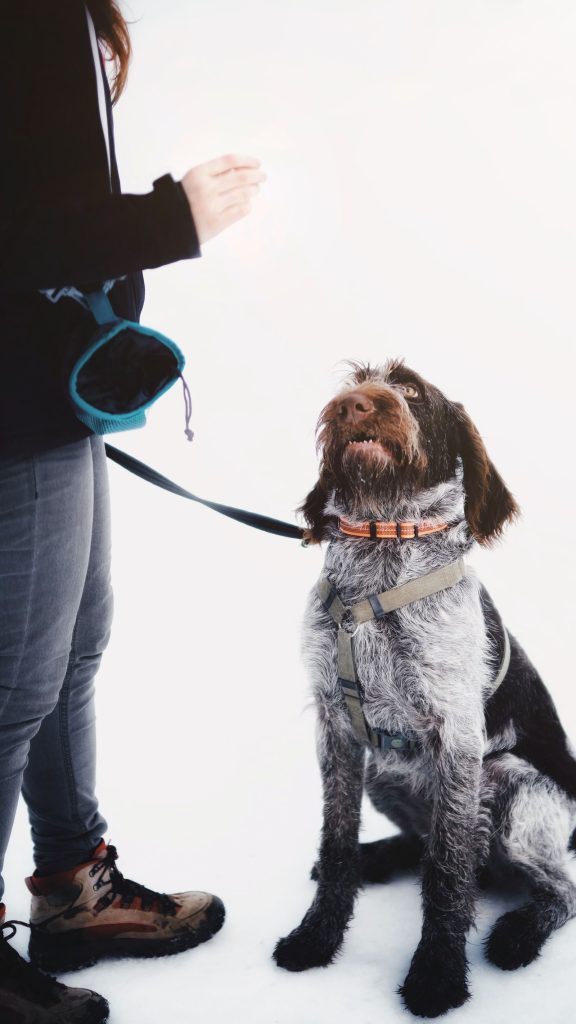
Make passing others easier
Notice other people or dogs early and create space. A sniff walk does not require greetings. Move to a wider area or turn away if the route becomes uncomfortable.
Our U-turn practice offers a simple movement skill to teach in a quiet setting before using it outside. For leash foundations, see loose-leash walking.
Review the outing
Note which section felt comfortable and where you needed more space. Next time, adjust the route or timing. There is no requirement to finish a loop when returning earlier would suit the dog better.
Persistent fear, lunging, discomfort, or sudden changes need appropriate professional assessment rather than a more ambitious walking plan.
Sources and editorial notes
Activity context: Dogs Trust: enrichment activities. The route checklist is an Animalia planning example, not an individualized exercise prescription.
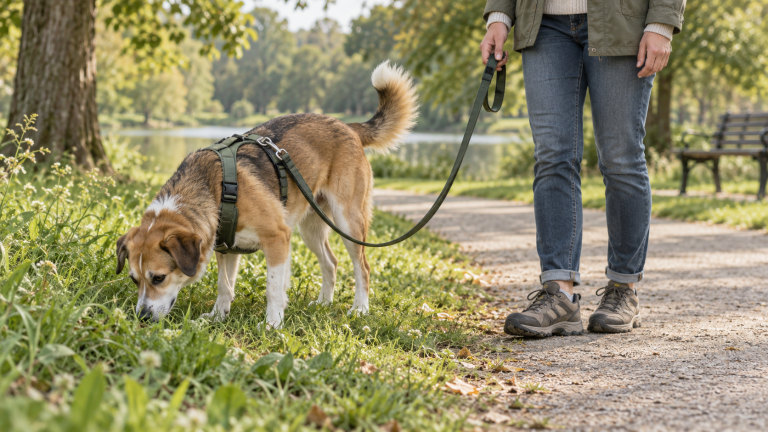
Featured image: Illustrative supervised outing, generated with AI; choose equipment and surroundings for the individual dog.