Gentle bathing introductions can begin around two months old: the AKC’s puppy-bathing guide quotes a master groomer recommending that starting age. Keep early cleaning simple, often with a warm, damp cloth rather than a full shampoo bath. Ask your vet first for a younger, unwell, very dirty, or skin-sensitive puppy.
The useful question is what cleaning this puppy needs today and how to keep it comfortable. A first bath need not happen on the first day home. Review the new puppy home checklist and gather supplies before deciding whether a full wash is necessary.
Does being eight weeks old mean a full bath is needed?
No. Age is only part of the decision, and a puppy who is already clean does not need a bath just to mark a milestone. Consider the dirt, health, coat, temperature, and comfort with handling. Begin with the least involved cleaning that meets the need, and ask for help when you are unsure.
The groomer quoted by the AKC favors a warm washcloth for very young puppies and discusses introducing shampoo from around three months. That is guidance for a gradual grooming routine, not a reason to leave significant contamination untreated. Your vet can advise when the puppy needs more specific cleaning.
| Age or situation | Useful starting point | When to ask for help |
|---|---|---|
| Younger than about two months | Ask the vet or responsible caregiver before a routine full bath | Significant dirt, poor warmth, uncertain health, or orphan care |
| Around two months, healthy and lightly dirty | Gentle introductions and a warm, damp cloth may be enough | Cleaning cannot be done comfortably or dirt will not come off |
| Older puppy needing a full wash | Prepare a warm, safe setup and suitable dog products | Uncertain product, skin concern, or difficult coat |
| Persistent smell, itching, sores, or hair loss | Arrange a veterinary assessment | Repeated baths are not a diagnosis or treatment |
| Possible chemical or toxic contamination | Prevent further exposure and call your vet promptly | Follow professional instructions instead of trying random cleaners |
This Animalia decision table is a practical guide, not a medical age-clearance test. Do not apply household chemicals, essential oils, flea shampoos, or leftover medicated products to solve a cleaning problem without appropriate veterinary advice.
Prepare the space before the puppy gets wet
Choose a warm indoor place with a secure, nonslip surface. Keep towels, a soft cloth, suitable products, and a gentle source of water within reach. Check the water before it touches the puppy, and keep it comfortably lukewarm rather than hot.
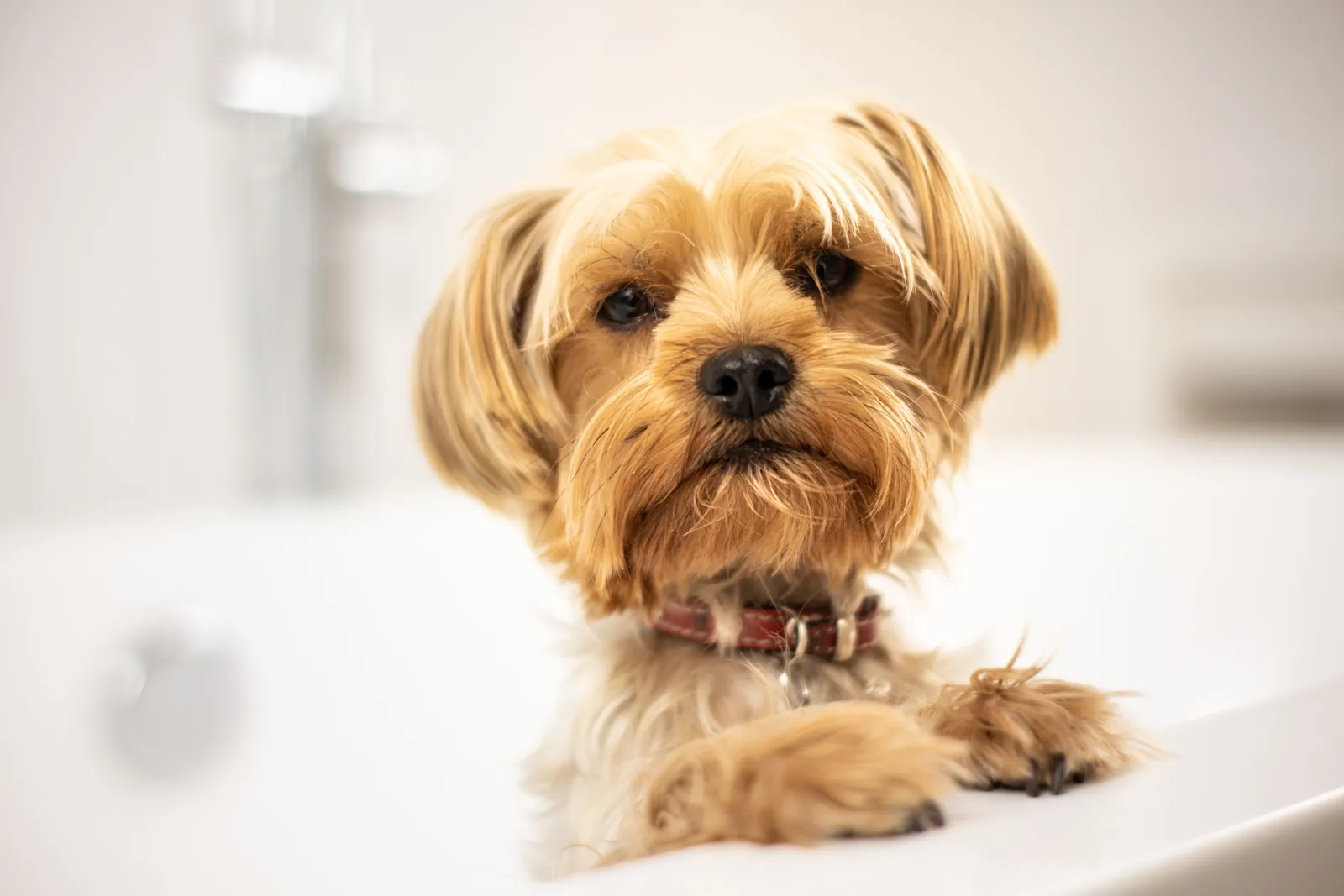
Prepare a safe way to get in and out without jumping from a height or struggling over a slippery edge. If lifting is needed and you are unsure how to support the puppy, ask someone qualified to show you. Do not leave the puppy alone in a sink, tub, or raised grooming area.
- Remove floor clutter and protect the exit from slipping.
- Have dry towels ready before you start.
- Check the product label and any veterinary instructions.
- Keep water away from the face, ears, eyes, and nose.
- Use a helper when needed for gentle support, not forced restraint.
- Choose another time or professional help if handling is unsafe.
An Animalia example: a puppy has a small dirty patch on a paw but backs away from the bath. The caregiver uses gentle local cleaning where appropriate and practices calmly approaching the dry bathroom later. They do not turn a minor cleanup into an unexpected full wash.
Keep the first cleaning gentle and predictable
Let the puppy investigate the area and tools before water or shampoo is introduced. Reward comfortable interest and pause if they retreat, freeze, or struggle. Blue Cross recommends more space and freedom to retreat when new experiences become overwhelming. A food reward should not be used to trap the puppy into a frightening procedure.
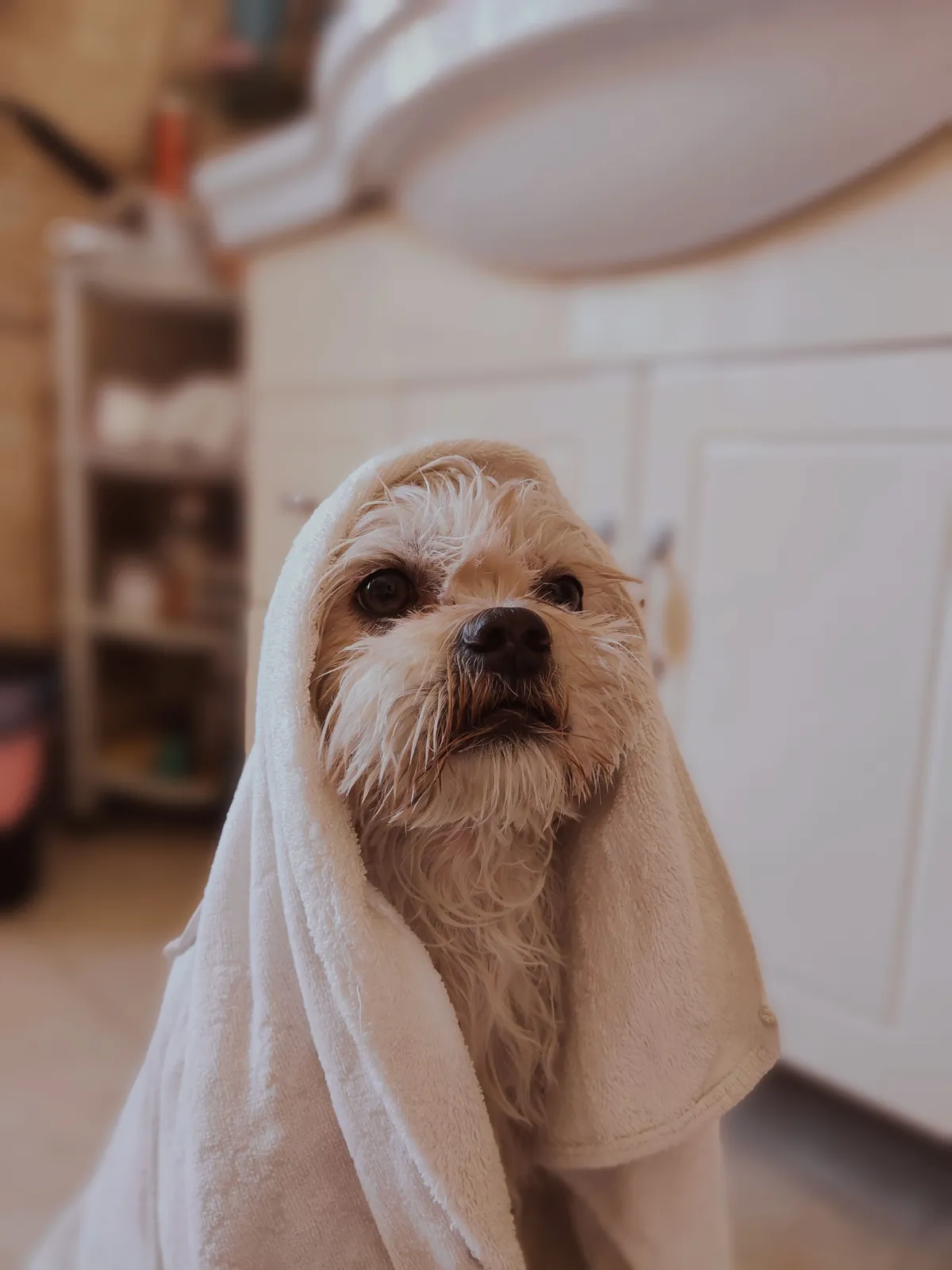
If a full wash is appropriate, wet the coat gently, use the dog-specific product as directed, and rinse thoroughly. The ASPCA recommends using a damp cloth for the face rather than shampooing the head. Avoid pouring or spraying water into openings, and do not insert items into the ear canals.
Dry the puppy with gentle towel contact and keep them warm while the coat dries. Ask a reputable groomer about a coat that needs more drying than you can safely provide. Do not force a loud dryer toward a worried puppy or use hot air close to the skin.
A successful first session may involve only entering the bathroom, standing on a nonslip surface, or accepting a brief cloth touch. Practice those small parts separately when cleaning is not urgent. If essential hygiene cannot be maintained comfortably, ask your vet and groomer for a practical plan.
Once you have decided a full wash is needed, follow our step-by-step puppy bath guide for preparation, gentle washing, rinsing, and drying. Keep the first-bath timing decision separate from the washing process.
How often should you bathe a puppy after the first time?
There is no single schedule for every puppy. Coat, dirt, skin health, lifestyle, and the products used affect the plan. Keep up with appropriate brushing and local cleaning, then ask your vet or a reputable groomer how often a full bath suits this puppy. Follow a prescribed medical plan when one exists.
PDSA advises that dogs usually do not need frequent baths and that coat type matters. A generic monthly or weekly instruction may fit one grooming situation poorly. Bathing repeatedly to remove a persistent odor can delay finding out why the smell is present.
VCA advises veterinary review when frequent bathing seems necessary. Ask about persistent odor, itching, redness, sores, or other changes. This guide does not diagnose skin problems or choose a therapeutic shampoo, and a product labeled natural is not automatically suitable.
For a public groomer or self-wash facility, ask your vet about infection risk and confirm the facility’s health requirements. Home cleaning and entering a shared dog environment are separate decisions. Save the agreed grooming instructions in your sitter care note and use our dog care hub for related routines.
Frequently asked questions
Can I give my eight-week-old puppy a bath?
Gentle introductions around two months are described in the AKC guide, but a warm, damp cloth may meet a young puppy’s immediate needs. Consider health, warmth, coat, and whether a full bath is necessary. Ask your vet if the puppy is heavily soiled, seems unwell, or needs a product you are unsure about.
What if a younger puppy is very dirty?
Contact the vet or responsible experienced caregiver for age-appropriate cleaning advice, particularly for an orphaned, weak, or unwell puppy. Do not assume an online age rule is enough to plan a full bath. Explain what is on the coat and whether the puppy is warm and alert, and follow specific professional instructions.
Can I use human baby shampoo on a puppy?
Choose a product specifically suited to dogs and the puppy’s needs, with veterinary guidance when necessary. VCA advises against human shampoos, including baby shampoo, for routine dog bathing. A gentle-sounding label does not establish suitability. Do not improvise with dish soap, essential oils, or medicated products when a puppy needs ordinary cleaning.
Does my puppy need to finish vaccinations before a bath?
Ask your vet about the individual puppy and the setting. Cleaning at home and visiting a public grooming or self-wash facility involve different exposure decisions. Confirm the facility’s health requirements before booking. Do not treat permission for gentle home cleaning as clearance for every shared dog environment, especially when the puppy’s health history is uncertain.
What if my puppy is scared of the bath?
Pause before the situation becomes a struggle and return to easier introductions when cleaning is not urgent. Let the puppy explore the dry area and reward comfortable engagement without blocking escape or forcing contact. If essential cleaning cannot wait or handling is unsafe, ask your vet and a reputable groomer for a suitable plan.
Can I bathe a puppy every week to prevent smells?
Do not adopt a weekly schedule solely to cover a recurring smell. Coat needs vary, and frequent washing or an unsuitable product can irritate skin. Ask your vet about persistent odor, itching, sores, or other changes. A prescribed bathing plan is a separate situation and should follow the product and veterinary instructions exactly.
Sources and editorial notes
- AKC: starting puppy bathing gently
- ASPCA: grooming, shampoo and thorough rinsing
- PDSA: individual coat needs and bathing frequency
- VCA: skin, coat and shampoo suitability
- Blue Cross: avoid overwhelming a puppy
Animalia Editorial. Last reviewed: October 22, 2026. The table distinguishes grooming introductions from a routine full wash. The paw-cleaning example is an editorial scenario. Age, shampoo choice, and frequency must fit the individual puppy; no medical bathing protocol is supplied. Editorial standards: Animalia Editorial Policy.
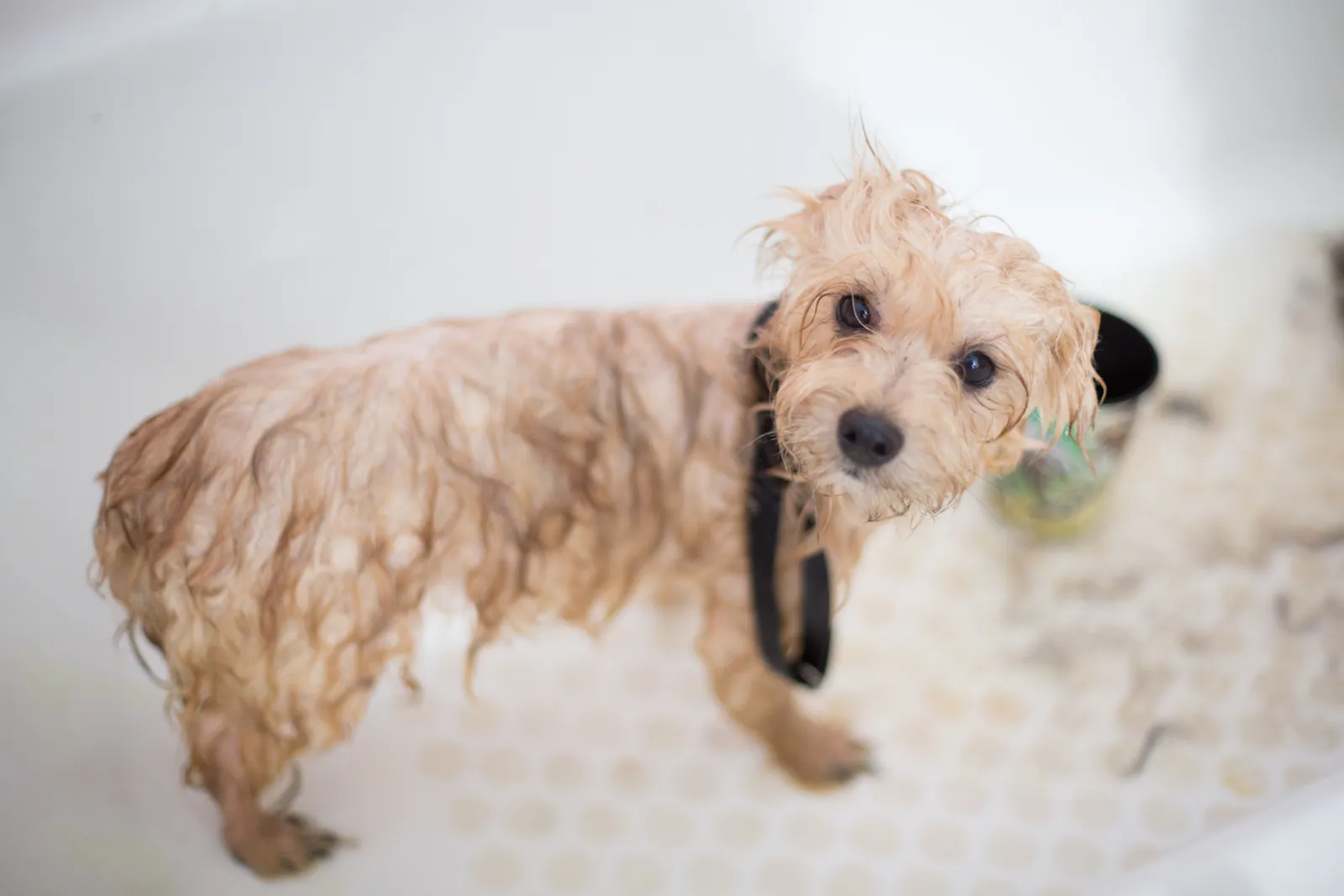
Featured photo: A wet puppy stands in a bathtub. Photo: Benjamin Lehman / Pexels.
Prepared with AI assistance and reviewed against the sources above.