A cat may bite you then lick you when social contact shifts into play or feels too intense. Cats Protection links this sequence with overstimulation, while licking itself can have several causes. Pause the interaction, read the whole situation, and do not treat the lick as an apology or permission for more petting.
Why can biting and licking occur together?
Licking and biting do not have to carry one shared message. Your cat may begin with social licking, become excited, and make mouth contact as the interaction changes. The order alone cannot tell you whether they wanted play, had reached a touch limit, or were reacting to discomfort.
VCA describes several reasons cats lick people, including social bonding, learned attention, taste, and stress. These are possible explanations, not a way to read your cat’s mind. A lick after a nip does not cancel the bite, and a nip during grooming does not prove hostility.
Focus on the part you can change: what happened just before teeth touched skin. Was your hand moving? Had you been stroking the same spot? Did the cat turn toward your fingers before the nip? You can use those details without deciding that your cat felt guilty, was being dominant, or was “cleaning the wound.”
How can you read the moments before mouth contact?
Watch the whole cat, not just whether they are purring. A turn toward your hand, a tense body, ears moving back, or a tail becoming active can be reasons to stop touching. Look for a change from your cat’s usual relaxed behavior rather than assigning one fixed meaning to each movement.
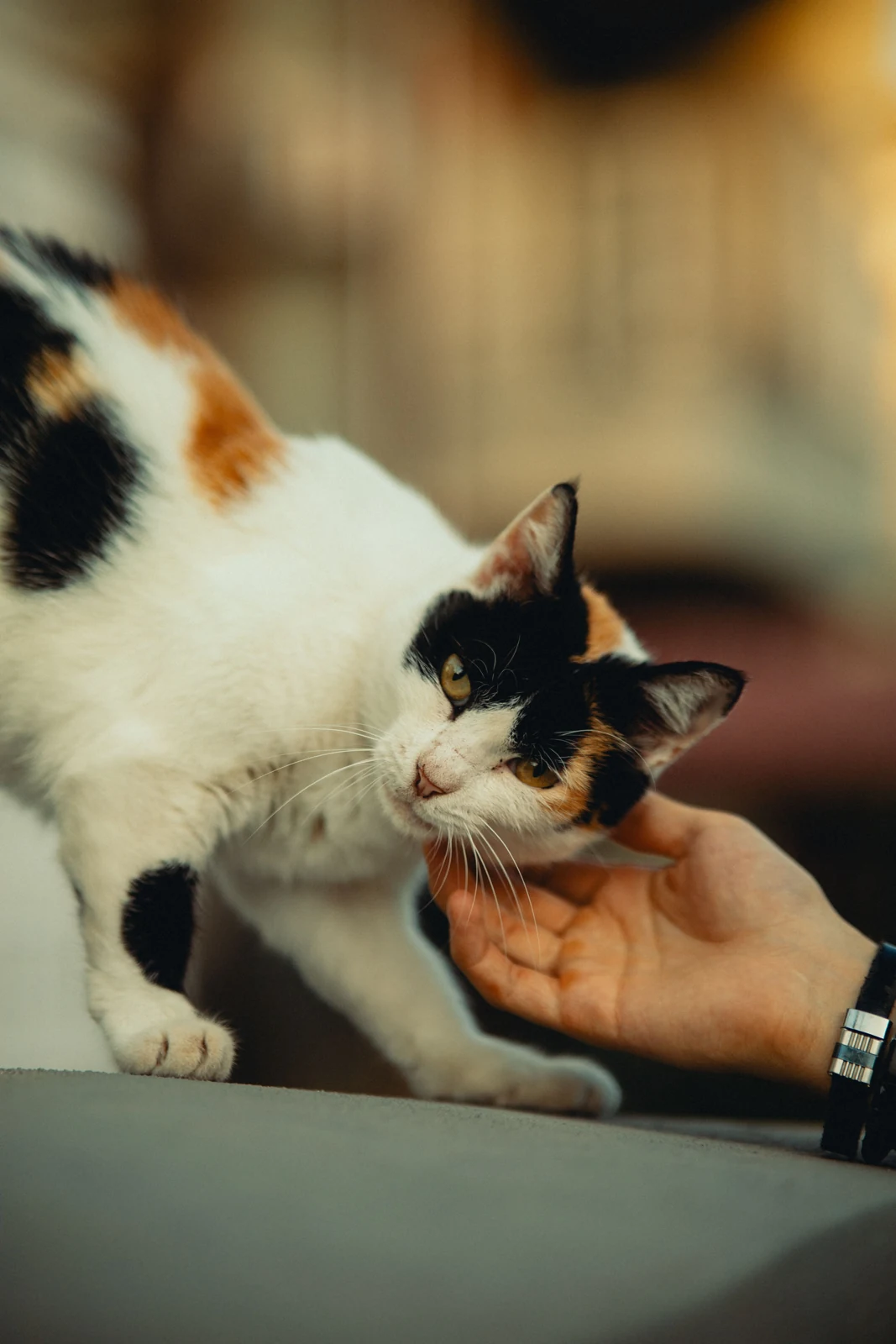
An invitation to sit nearby is not a request for continuous strokes. A cat may enjoy your lap and still dislike a moving hand. Our guide to petting a cat with choice explains the handling technique; here, the useful question is how the interaction changed before the bite and lick.
Do not repeat the contact to test your theory. If a particular area seems sensitive or your cat’s response is new, tell your vet. Avoid pressing on the area to check for pain yourself. Record what you noticed and let the clinician decide what assessment is needed.
What should you do in the moment?
Stop the movement or touch and stay as calm as you can. Give your cat room to move away, and withdraw from the interaction safely. Cats Protection advises calm movement and space after a bite. Do not hold the cat in place to finish a cuddle or demand a response.
- Keep hands still enough to avoid turning the moment into a chase game.
- End the contact instead of offering your other hand for another lick.
- Let the cat use an open exit or a familiar hiding place.
- Keep children and other pets away if the cat is still tense or excited.
- Review the setup later, when everyone has settled; do not provoke another bite for a video.
If a bite or scratch breaks skin, wash the wound with soap and warm water and seek medical advice promptly. Bites to the hand, foot, face, or head need urgent medical advice; severe wounds or bleeding that will not stop need emergency care. Keep the cat away from the injury. Contacting a clinician is separate from understanding the cat’s behavior.
Compare the context, then choose an easier interaction
Animalia’s table is a way to organize observations, not a diagnostic test. Several explanations may fit the same event. The goal is a lower-pressure next interaction, not proving which label was right.
| What happened before the sequence | What it may suggest | A useful next step |
|---|---|---|
| Repeated strokes, then a head turn and nip | Touch may have become too much | End sooner and let the cat approach again |
| Fast fingers or a moving sleeve | Movement may have invited play | Keep hands out of play and offer a suitable toy later |
| Cat began licking while you sat still | Licking may have its own social or learned cause | Leave your hand still, then withdraw before mouth contact |
| Noise or another cat appeared nearby | Excitement may have changed the interaction | Create distance from the trigger without picking the cat up |
| New response to touch or more frequent biting | A health or comfort problem needs review | Arrange a vet check rather than testing the sore area |
When your cat is relaxed again, choose an activity that does not use your skin as a target. A well-chosen wand toy lets you keep hands away from the moving lure. Put string toys away after supervised use. For quieter time together, let your cat rest nearby without petting.
If the mouth contact happens mainly around your ankles, our guide to cats licking and playing around feet examines that specific context. Use it to choose a calmer response without testing the cat’s limits.
Review repeated patterns without guessing feelings
A useful note records the order of events in plain terms. For example: “Cat sat beside me. I stroked the back. Cat turned toward my hand, nipped, then licked. I stopped.” This is an illustrative note, not a case report. It gives you more to work with than “the cat apologized.”
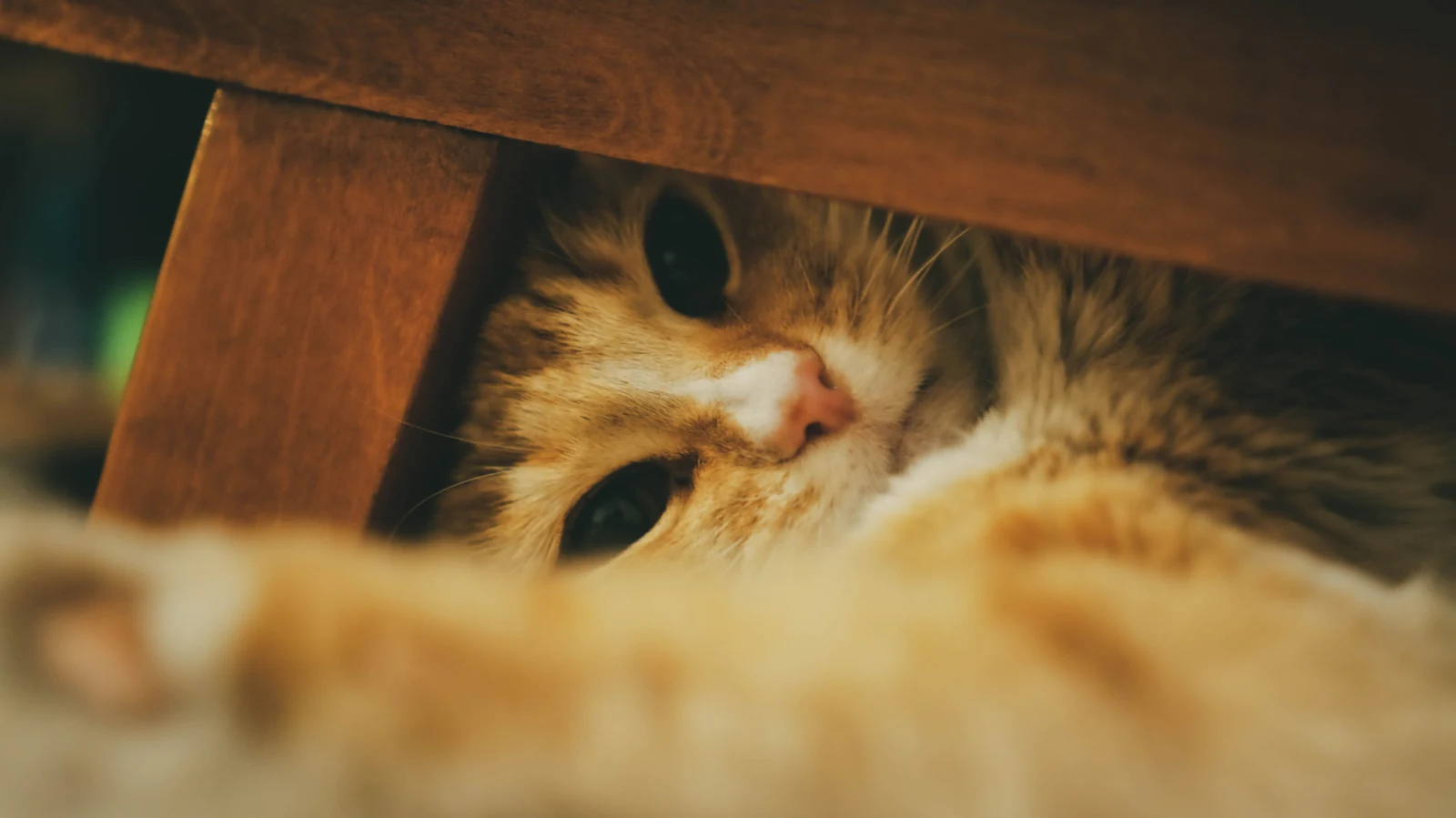
Compare future ordinary interactions without testing the limit. Did shorter contact prevent the turn toward your hand? Did stopping finger play help? Was there a noise or another animal nearby? Keep the change small so you can tell what made the setting easier.
Cat Friendly Homes recommends veterinary input for biting or changes in usual behavior. Seek help for new, painful, repeated, or escalating contact, and ask about a qualified feline behavior professional when needed. Maintain accessible hiding places and a suitable daily play routine while the cause is assessed.
FAQ: cat biting then licking
Does licking after a bite mean my cat is sorry?
No reliable interpretation follows from that sequence alone. Licking can be social, learned, or related to the current setting, and the nip may signal that the interaction changed. It is safer to pause and review what came before the bite than to assume remorse and continue touching the cat. The lick is not a reason to ignore pain.
Why does my cat do this while purring?
Purring does not guarantee that every part of an interaction is welcome. Your cat may have enjoyed the first strokes and then reached a limit, or movement may have shifted the moment into play. Watch the whole body and stop when contact becomes tense, mouthy, or harder to read. Let the cat leave even if the purring continues.
What if my cat bites and licks when I am not petting?
Look at what else was happening: a moving hand, a sleeve, social licking, a nearby animal, or a sudden sound. Do not assume that a petting explanation fits an event without petting. Leave the interaction calmly and note the context. Repeated or painful episodes warrant a vet and behavior review.
Should I let my cat give gentle love bites?
You do not need to accept teeth on skin to maintain a bond. End contact calmly and give the cat another way to spend time with you. A label such as “love bite” does not establish that the behavior is safe, welcome, or unlikely to become painful in another setting.
Can I stop the pattern by punishing the bite?
Punishment can add fear and make interactions harder to predict. Cat Friendly Homes advises changing the setting and rewarding suitable alternatives instead. Avoid yelling, spraying, pinning, or provoking another bite. Begin by shortening contact and keeping hands out of play, and ask for professional help if the pattern continues. An expert can help make that next step clearer.
Make the next interaction easier rather than longer: let your cat choose contact, pause early, and keep a note if the pattern repeats. Explore Animalia’s cat care guides for related home and play routines.
Sources and editorial notes
- Cats Protection: Why does my cat bite me?
- VCA: Why do cats lick humans?
- Cat Friendly Homes: Preventing unwanted behaviors
- NHS: Animal and human bites
Animalia Editorial. Last reviewed: October 22, 2026. The tables and worked examples are editorial planning aids, not a diagnosis or reported result. See the Animalia Editorial Policy.
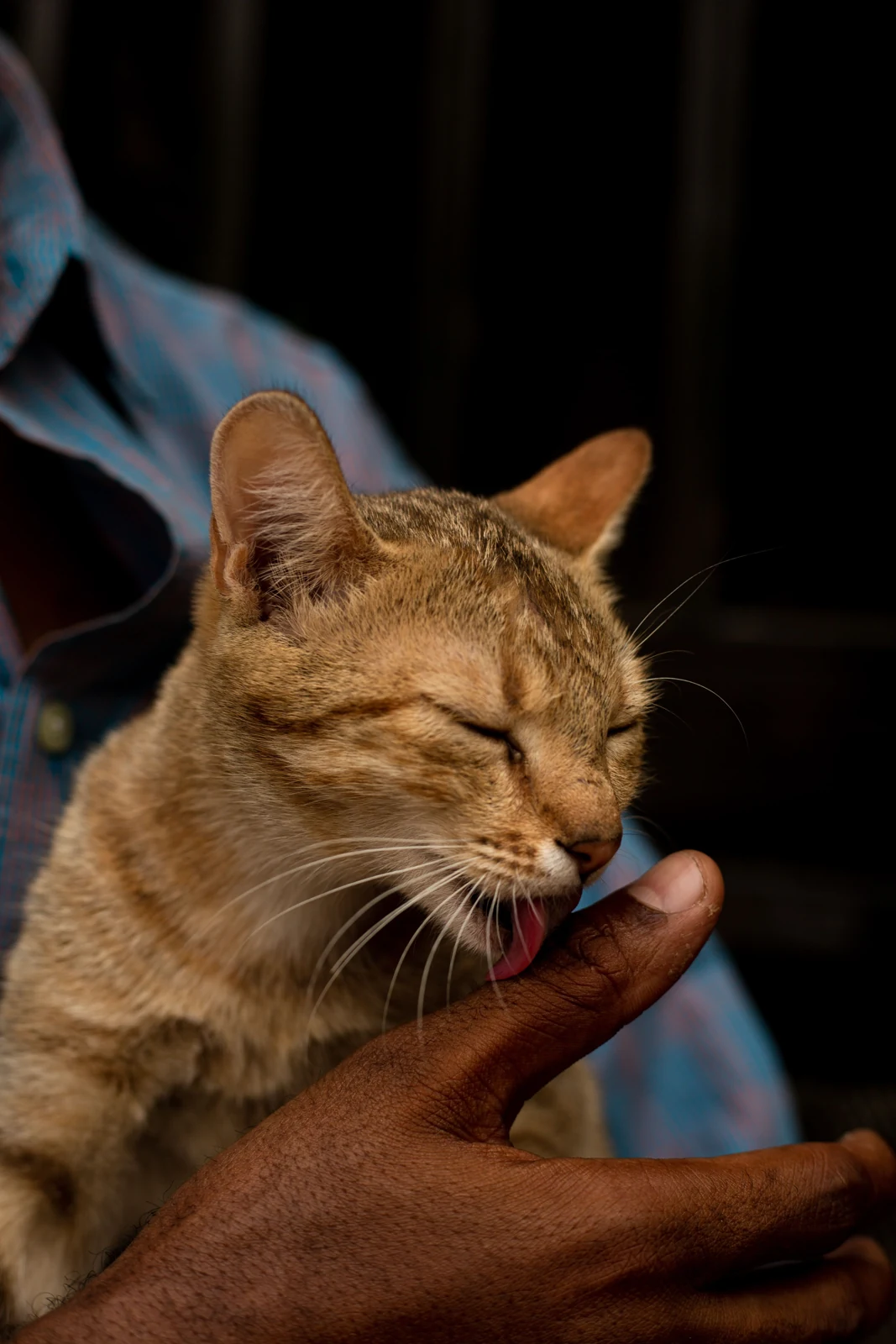
Featured photo: A ginger cat licks a hand. This image shows licking only, not a bite or an explanation for the sequence. Photo: Awobo Oluwapelumi / Pexels.
Prepared with AI assistance and reviewed against the sources above.