Why do cats flop over? A relaxed cat may drop onto their side or roll onto their back during a greeting. Cats Protection explains that showing the belly can express comfort without inviting a belly rub. Read the whole interaction, give space when the cat seems tense, and ask your veterinarian about concerning changes.
A familiar stretch on the rug and an unusual movement that worries you need different responses. Animalia’s guide helps you observe the position, choose a calm response, and avoid turning a visible belly into permission to touch it.
Does flopping over mean your cat wants attention?
It can be part of a relaxed greeting, but the posture does not tell you exactly what your cat wants next. A cat may choose to stay nearby without being handled. Notice the setting and the rest of the body, then allow the cat to continue, rest, or move away freely.
Compare the setting before adding touch
RSPCA’s body-language guide distinguishes a loose, stretched posture from tense postures that can also involve lying on one side. Check the whole cat rather than interpreting the position of the belly alone. This Animalia table is a response aid, not a test of emotional state.
| What happens around the flop | Calm response | Avoid concluding |
|---|---|---|
| The cat approaches and settles loosely nearby | Acknowledge quietly and allow rest | Every exposed belly invites a rub |
| The cat turns away or becomes tense as you reach | Stop reaching and give space | The cat is teasing or being disloyal |
| The movement occurs during toy play | Keep hands out and use a suitable toy when appropriate | Your fingers should become the target |
| Another animal approaches the resting cat | Preserve distance and an easy exit | A side-lying cat is necessarily submissive |
| The movement or wider behavior is unfamiliar | Describe the change to your veterinarian | A familiar nickname establishes that it is harmless |
For example, “lay on the rug after I came in, then stayed there when I sat nearby” is an observation. “Demanded a belly rub” adds an assumption. Keep those separate so your next action follows what the cat actually does, rather than a story about what the posture must mean.
How should you respond to a relaxed flop?
Pause, acknowledge your cat calmly, and let them choose whether to approach further. If they seek familiar gentle contact, keep it brief and stop to check their response. Avoid reaching for the belly, holding the cat in place, or moving them into a position that makes petting easier for you.
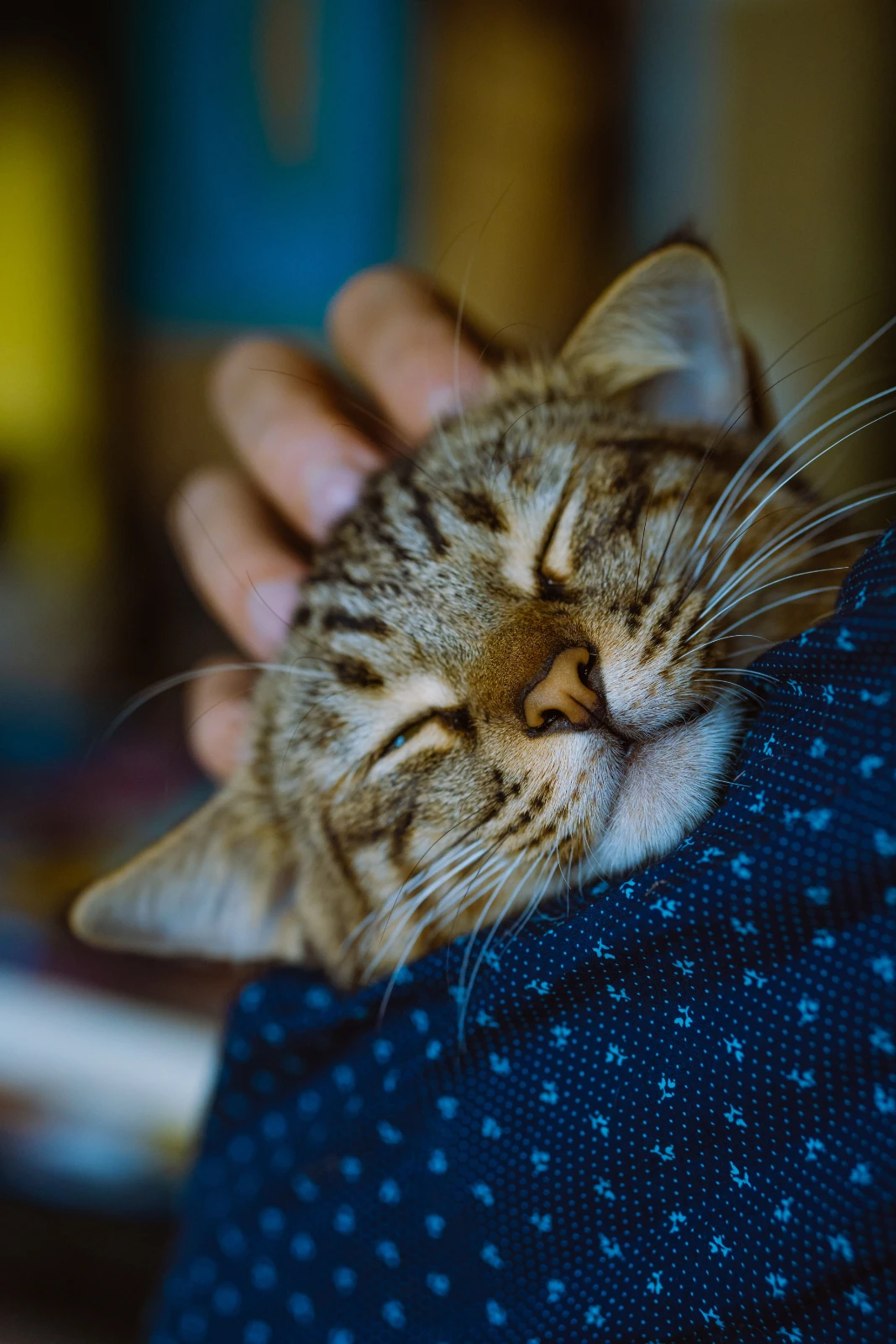
Our guide to petting with choice explains the approach, pause, and withdrawal that matter during ordinary contact. You can share a pleasant moment without touching at all; if your cat settles beside you, continuing your quiet activity may be enough; their choice to remain nearby does not require a handling exercise.
If a game is appropriate, offer a suitable toy with space for the cat to disengage. Our wand-toy guide covers selection and storage. A cat lying on their side may still grab a target, so keep your hands and feet out of play rather than testing whether the relaxed-looking position makes them safe to tickle.
Rolling, play, and limits of a single posture
A short video or photograph rarely shows the whole sequence. Notice what happened before the position changed and what the cat did afterward. Was there a toy, a greeting, another animal, or unwanted handling? Those details can guide your response without proving a single cause for every roll.
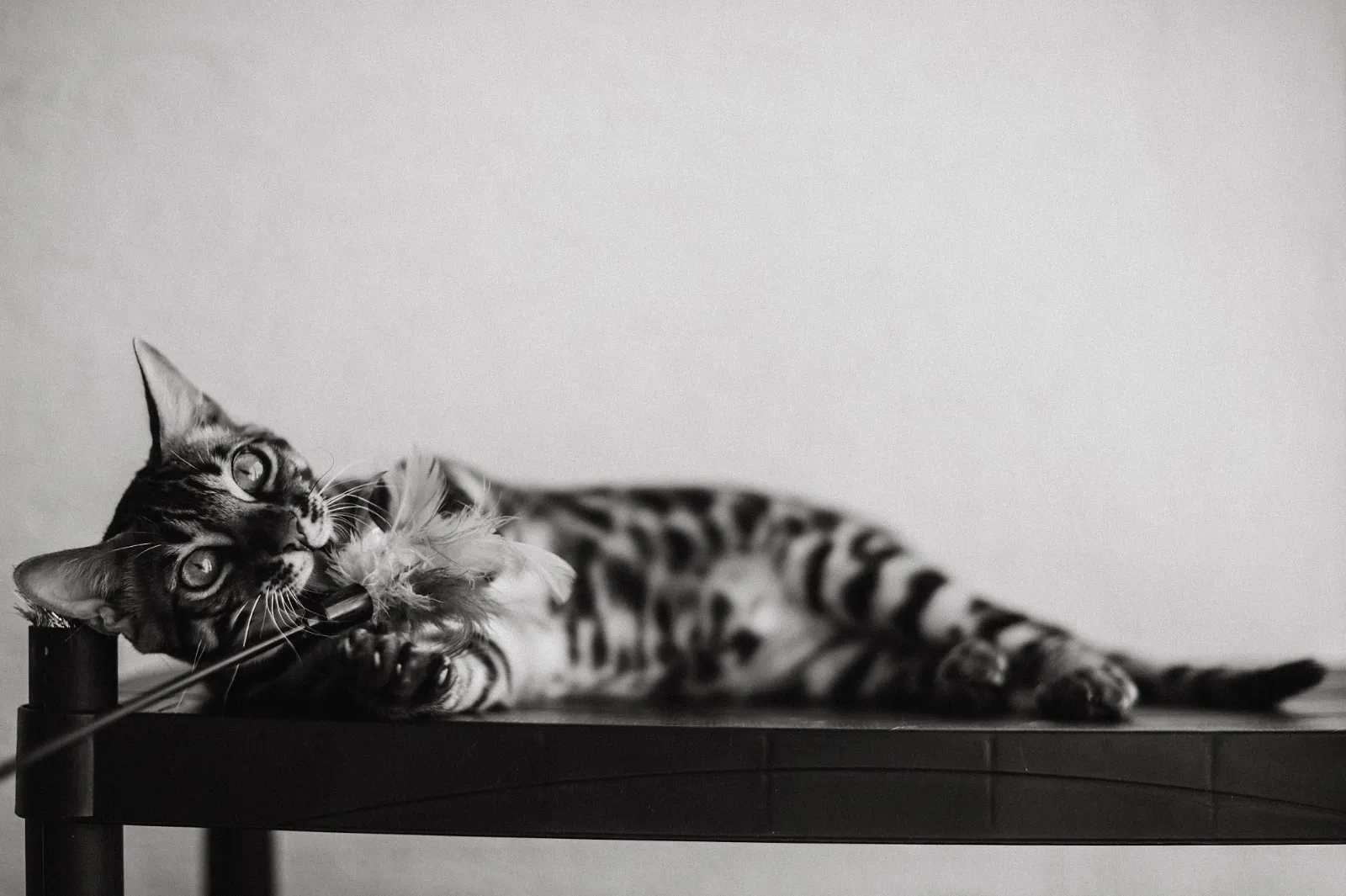
Avoid describing a side-lying or belly-up cat as automatically submissive. Likewise, a cat who grabs a hand after a belly touch is not playing a deliberate trick. Review your own reaching and the cat’s opportunity to leave. Our bunny-kicking guide explains the separate grabbing-and-kicking action without encouraging hand play.
Keep observations brief enough to use by writing “rolled during a wand game” rather than collecting a long list of possible motives. Animalia suggests changing the part you can manage safely, such as pausing contact or clearing a route, while asking for help when the pattern concerns you or makes ordinary care difficult.
When should you ask your veterinarian?
Ask for advice if the movement is new or concerning, or if your cat also seems uncomfortable, behaves differently, or has difficulty with ordinary movement or care. Do not use “flopping” to dismiss an unexplained change. If your cat appears acutely unwell or distressed, contact a clinic promptly rather than filming another episode.
Start with the comfortable choice available now: space, a pause in contact, or an appropriate professional call. Return to the cat behavior hub for related questions. You do not need to establish the cat’s exact emotion before respecting their movement away or requesting help with an unfamiliar pattern.
Frequently asked questions
Does showing the belly always invite a belly rub?
No. A cat can be comfortable enough to expose the belly without wanting it touched. Acknowledge the greeting and let the cat choose further contact. If you offer a familiar gentle stroke, pause and watch the response rather than reaching directly for the belly. Stop if the cat withdraws or becomes tense, and keep an easy route away.
Is a cat on their side always being submissive?
No. The position alone does not establish submission or explain the interaction. Read the whole body, the nearby animal or person, and what happened before the cat lay down. If the cat looks tense or tries to leave, provide space. Avoid placing animals together to test a supposed social ranking based on one posture or a still photograph.
Why does my cat grab my hand after rolling over?
Review whether your reaching or petting changed the interaction, and stop using your hand as the target. An exposed belly does not establish permission for touch. Give space and offer suitable play separately when appropriate. If the response is new, painful, repeated, or difficult to manage safely, ask your veterinarian for advice rather than repeating the same test.
Should I roll my cat over to encourage the behavior?
Let the cat choose their position instead of placing or holding them on their back. A freely chosen greeting differs from restraint, even when the final photograph looks similar. Quiet company and suitable play offer other ways to interact. If handling is needed for care, ask your veterinary team for an individual plan that keeps the cat comfortable.
Can I tell the cause from a video alone?
A video may provide useful context, but it does not establish a diagnosis or a single emotional cause. Record only if you can do so without recreating distress, reaching into a risky interaction, or delaying help. Describe the setting and any wider changes to your veterinarian when concerned. A familiar online label should not replace assessment of your cat.
Why do cats roll in the dirt?
A roll on soil may be part of the same greeting or play described above; the surface alone does not reveal a motive. Do not assume a digestive benefit from dirt. Ask your vet about persistent scratching or sore skin. If a harmful substance may be on the fur, contact the clinic immediately for advice rather than waiting for symptoms or trying a cleaning mixture.
Sources and editorial notes
Animalia Editorial. Reviewed November 4, 2026. Examples and the comparison table are observation aids, not individual behavior assessments. See our editorial policy.
Cats Protection: belly exposure and greeting; RSPCA: whole-body posture and changes.
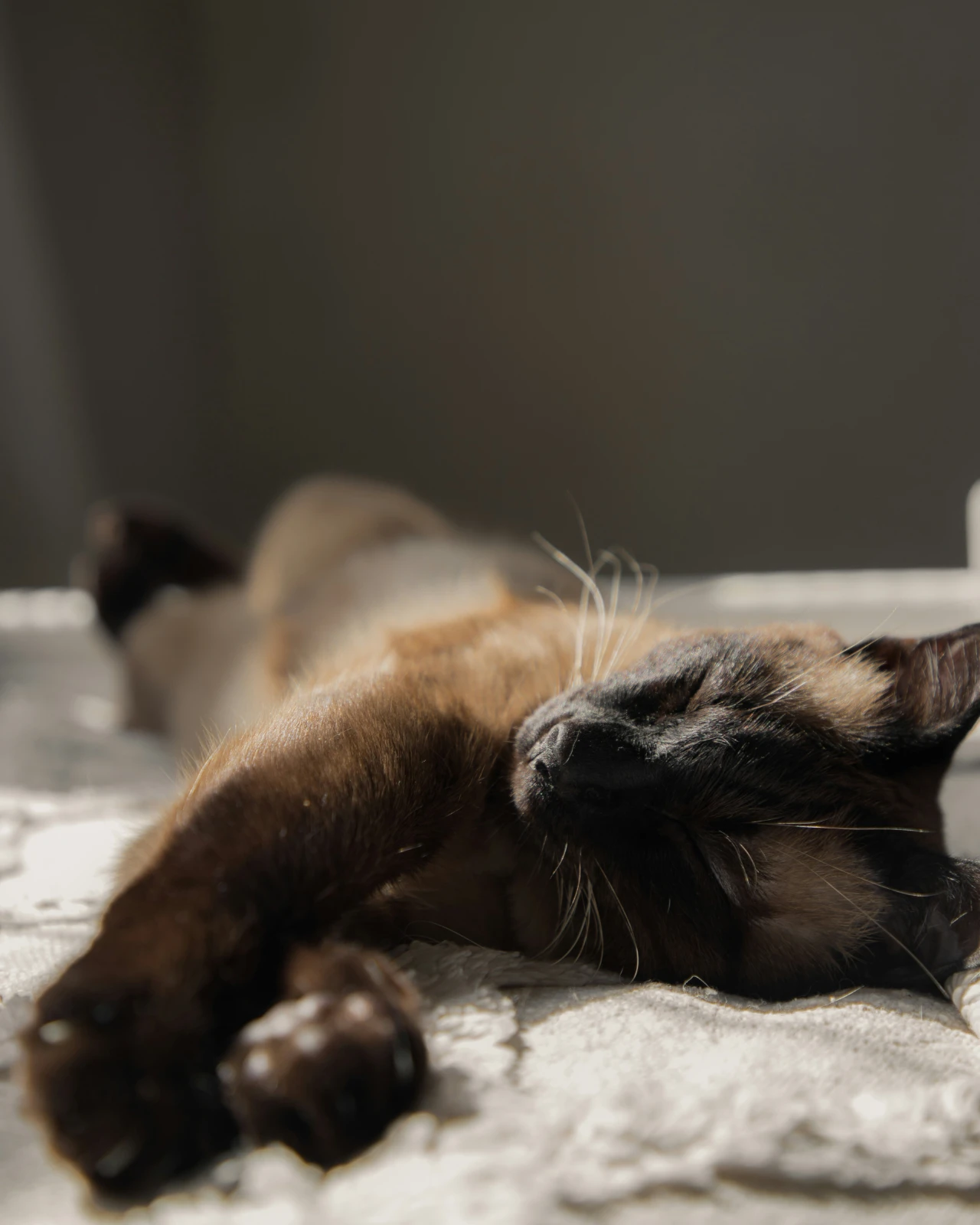
Featured photo: A cat lies on its side in sunlight. The photo shows a resting position, not the cause of a flop. Photo: Jovan Vasiljević / Unsplash.
Prepared with AI assistance and reviewed against the sources above.