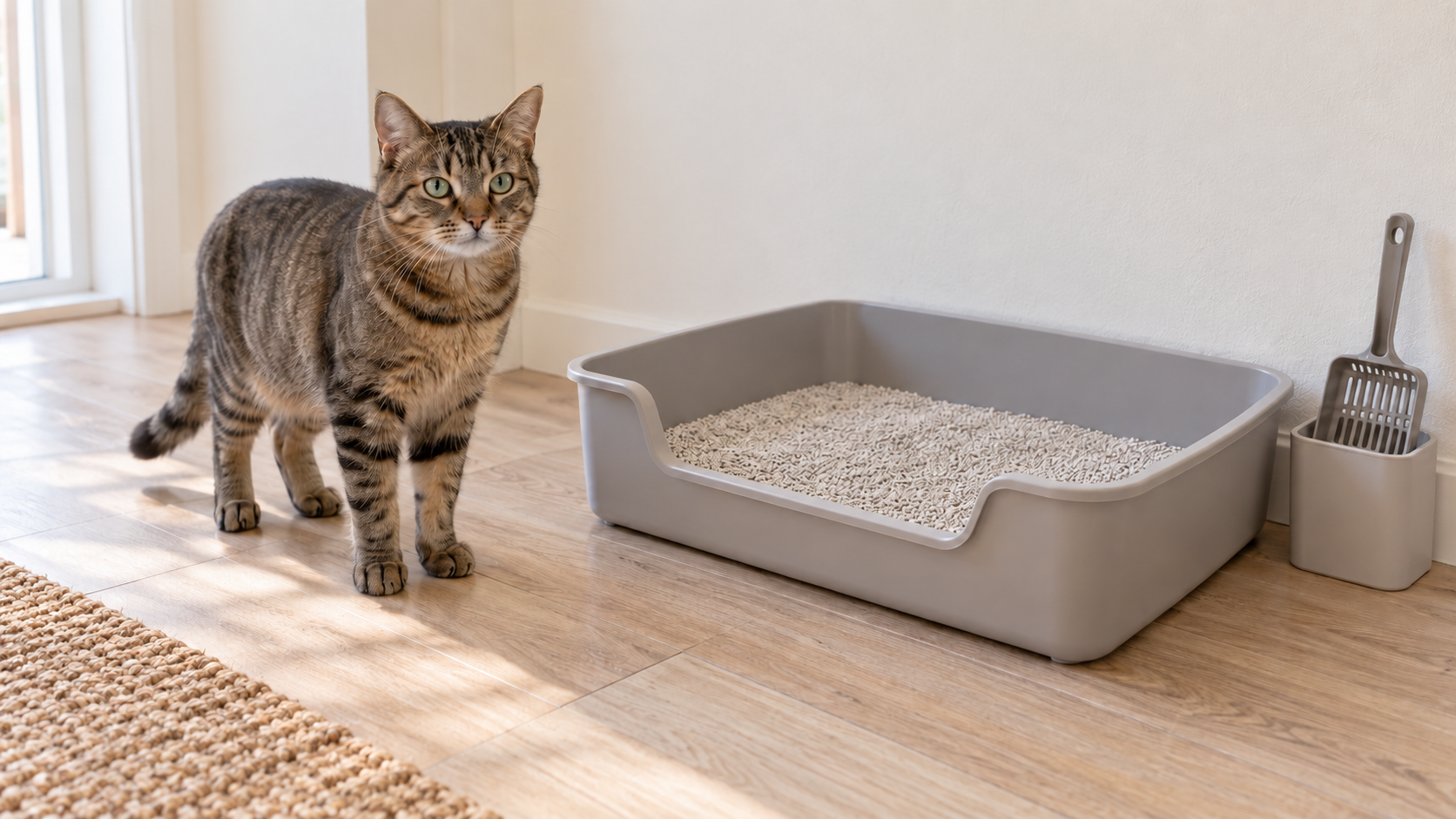
Scoop the litter box at least once a day. For a full change, empty all the litter and wash the box every 2 to 4 weeks if you use clumping litter, or about twice a week if you use non-clumping clay litter. Some guidance, including the ASPCA and Ohio State University, recommends washing the box and replacing the litter weekly whatever the litter type.
These are starting points, not fixed rules. Clean more often if the litter smells, looks wet, or your cat starts avoiding the box. More cats sharing a box means more frequent cleaning. For other litters, such as crystal, pellet, or plant-based products, follow the manufacturer’s instructions.
How often to scoop the litter box
Every source we reviewed agrees on daily scooping. Ohio State’s Indoor Pet Initiative says the box “must be scooped daily” to help prevent house soiling, and the ASPCA advises scooping at least once a day.
Scooping means removing feces and urine clumps or wet patches. With clumping litter, Cornell’s Feline Health Center suggests removing feces and clumps daily and adding clean litter as needed, so the depth stays steady.
If several cats share boxes, check them more often. Cornell notes that the more cats use a box, the more often cleaning is needed, and the Humane World for Animals (formerly the Humane Society of the United States) points out that cats may avoid a box another cat has just used. In practice, many households scoop in the morning and again in the evening.
How often to change all the litter
Scooping does not remove everything. Over time, small amounts of urine and odor build up in the remaining litter, so the whole box needs emptying and refilling on a schedule. The interval depends mainly on the type of litter.
| Litter type | Scoop | Full change and box wash | Source |
|---|---|---|---|
| Clumping (scoopable) | At least daily | Every 2 to 3 weeks if scooped daily; up to every 2 to 4 weeks | Humane World; VCA |
| Non-clumping clay | At least daily | About twice a week | Humane World |
| Any type (simpler schedule) | At least daily | About once a week | ASPCA; Ohio State; VCA |
| Crystal, pellet, plant-based, other | Per product label | Follow the manufacturer’s instructions | No single standard found |
Why do the numbers differ? Clumping litter traps urine in clumps you can lift out, so the rest of the litter stays cleaner for longer. Non-clumping clay absorbs urine into the litter itself, so it needs replacing sooner. The weekly figure from the ASPCA and Ohio State is a simple, cautious routine that works for any litter.
Whatever schedule you choose, Humane World advises changing the litter sooner if you notice odor or wet, clumped areas. Cornell puts it simply: change litter often enough that it looks and smells dry and clean.
When refilling, most cats prefer about 1 to 2 inches of unscented litter, according to Cornell and the ASPCA. Ohio State suggests about 2 inches, enough for the cat to dig and bury waste.
How often to wash the box, and with what
Wash the box each time you replace all the litter. Ohio State recommends a weekly wash with mild dish detergent. Humane World says to wash the box with mild dish soap each time you replace the litter.
- Empty all the litter into a bag for the trash.
- Wash the box with warm water and a mild, unscented soap. The ASPCA also lists baking soda or plain water as options.
- Rinse well, so no soap smell remains.
- Dry the box completely, then refill with fresh litter.
Avoid strong cleaners. Humane World advises against products with ammonia, citrus oils, or harsh chemicals, which can repel cats and may be toxic. VCA advises avoiding strong detergents that leave a lingering odor, and the ASPCA notes that cats can develop an aversion to scented cleaners. Never mix cleaning products.
Plastic boxes can hold odor as they age. VCA suggests replacing an old box that keeps a smell after cleaning, and Cornell suggests replacing a box that smells or is cracked.
Keep another clean box available while one is being washed, so your cat always has somewhere to go.
How many litter boxes you need
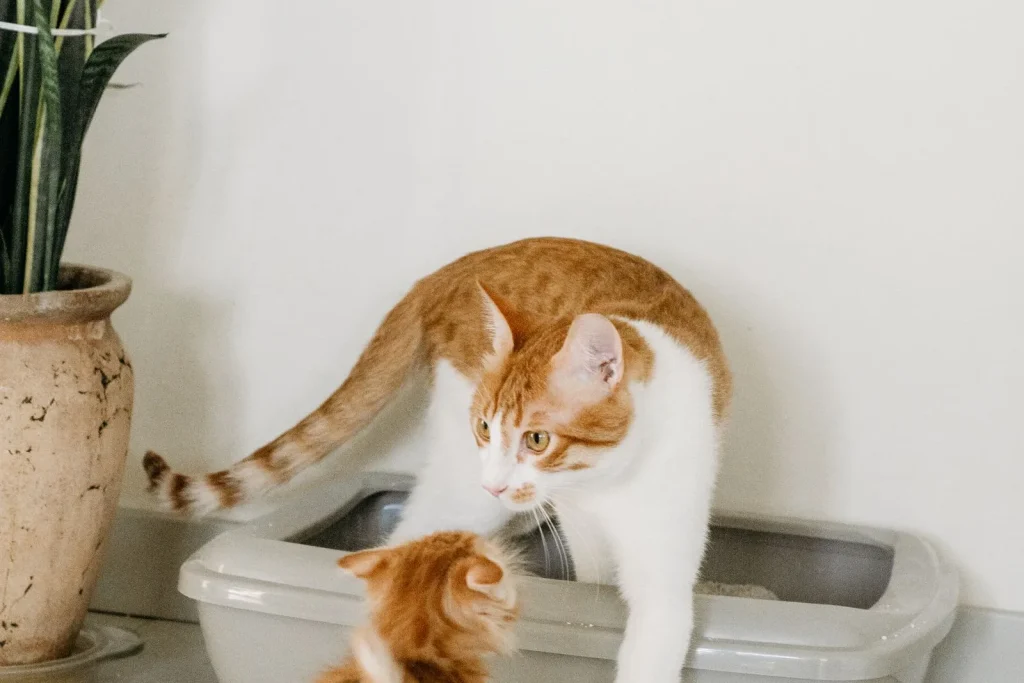
The common rule is one litter box per cat, plus one. Ohio State, the ASPCA, Cornell, VCA, Humane World, and the University of Wisconsin School of Veterinary Medicine all give this guidance. One cat means two boxes, two cats means three, and so on.
- Place boxes in different areas, not side by side. VCA recommends at least two different locations.
- In a home with more than one floor, provide at least one box per level (Ohio State, Humane World).
- Keep boxes away from food and water, and away from noisy appliances.
For placement in tight spaces, see our small-apartment litter box setup guide. For homes with several cats, our multi-cat resource layout covers how to keep boxes accessible to every cat.
Signs the box needs cleaning more often
Your schedule is working if the box looks and smells clean between full changes. Consider cleaning more often if you notice:
- A urine or ammonia smell soon after scooping.
- Wet or clumped areas in the litter that scooping does not clear.
- Your cat perching on the edge of the box, or not burying waste. Cornell lists these as signs of a litter box problem.
- Urine or stool outside the box.
- A cat that waits for another cat to leave the box before using it.
Some of these signs can also point to a health problem, so a cleaner box is not always the full answer. Avoid covering odor with scented litter or air fresheners. Many cats dislike strong perfumes, and removing waste is what actually controls odor.
A simple weekly litter box routine
This checklist assumes clumping litter on a weekly wash schedule. Adjust the full-change day to match your litter type and the table above.
- Every day: scoop every box, top up litter to about 2 inches, and note anything unusual in urine or stool.
- Every day with several cats: check boxes again in the evening.
- Once a week (or on your litter’s schedule): empty one box at a time, wash with mild unscented soap and warm water, dry, and refill.
- Once a week: sweep or wipe the area around each box and check supplies.
- Once a month: inspect boxes for cracks, deep scratches, or lasting odor, and replace if needed.
In a shared household, agree on who does each task. A shared cat care household log helps prevent missed days. If someone else is looking after your cat, add the box locations and schedule to your cat sitter care instructions.
Consider wearing gloves to clean the box, and wash your hands afterward. Cornell’s Feline Health Center recommends scooping feces daily and wearing gloves for litter box cleaning, and notes that pregnant or immunosuppressed people are safest when another household member cleans the box. Ask your doctor if this applies to you.
When to call the vet
Daily scooping lets you notice changes early. Contact your veterinarian if you see:
- Straining, crying out while urinating, or frequent trips to the box with little urine.
- Blood in the urine.
- More frequent urination than usual, or a noticeable change in stool.
- New urination or defecation outside the box.
A cat that strains but passes little or no urine needs a vet right away. Cornell describes urethral obstruction as a medical emergency, and male cats are at greater risk. Do not wait to see whether a cleaner box helps.
Frequently asked questions
Can I just top up the litter instead of changing it?
Topping up between full changes is normal with clumping litter. Cornell suggests adding clean litter as needed after scooping. It does not replace a full change, though. Humane World gives clumping litter a full replacement every 2 to 3 weeks with daily scooping.
Is it OK to clean the litter box once a week?
A weekly full clean is reasonable, but only if you also scoop every day. Sources including the ASPCA, Ohio State, and VCA pair a weekly wash with daily scooping. Scooping only once a week is not what any of these sources recommend.
How often should I clean the litter box for two cats?
Two cats should have three boxes in different locations. Scoop each box at least daily, and check more often if boxes fill quickly. Cornell notes that more cats using a box means more frequent changes, so you may need to change the litter toward the shorter end of the range for your litter type.
Can I use bleach to clean the box?
The sources we reviewed recommend mild, unscented soap and water rather than strong chemicals. Humane World warns against ammonia and harsh chemicals. If your veterinarian advises disinfecting for a specific health reason, follow their instructions and the product label.
Sources and editorial notes
- Ohio State University Indoor Pet Initiative: Litter boxes
- ASPCA: Litter box problems
- Humane World for Animals: How to help your cats use the litter box
- VCA Animal Hospitals: Cat behavior problems, house soiling
- Cornell Feline Health Center: Feline behavior problems, house soiling
- Cornell Feline Health Center: Feline lower urinary tract disease
- Cornell Feline Health Center: Zoonotic disease
- University of Wisconsin School of Veterinary Medicine: Eliminating outside the litterbox
Intervals in this article come from the sources above, which do not all agree. Where they differ, we give the range. This is a household care guide, not veterinary advice. Ask your veterinarian about any change in your cat’s litter box habits.
Prepared with AI assistance and reviewed against the sources above.