A long line is management equipment for supervised practice, not a guarantee of recall or a reason to give a dog unrestricted access to hazards. Choose appropriate equipment, learn to handle it, and start with easy distances in a suitable area. Get hands-on guidance if you are unsure.
Check whether the location is suitable
Choose a permitted space with clear sightlines and enough room away from traffic, livestock, wildlife, cyclists, and other people. Follow local leash rules.
A quiet appearance does not prove an area is secure. Review entrances, nearby roads, and the possibility of someone entering while you practice.
Select and inspect the equipment
Use a suitable well-fitted harness and a line appropriate for the dog and the location, following product and professional guidance. Check clips, webbing, and attachment points.
- Keep the line from wrapping around people or dogs.
- Never wrap it around your hand or body.
- Avoid allowing speed that ends in a hard stop.
- Keep unused length organized and supervised.
Do not attach this exercise to a neck collar or use the line to jerk the dog toward you.
Begin below the maximum distance
Practice a short easy return while the dog is already comfortable interacting. Reward arrival and reset calmly. The full length printed on the package is not the starting distance.
Revisit indoor recall foundations if the cue is still unfamiliar.
Manage changes in the surroundings
If another person or animal approaches, shorten the practical working area and create space before continuing. End or relocate the session if the environment becomes unsuitable.
Do not ask for repeated recalls while the dog is overwhelmed. Our distraction planning guide helps separate a manageable challenge from an unsafe test.
Review before increasing freedom
Record location, distance, and competing activity. Progress in one setting does not establish reliable behavior near different distractions.
Off-leash decisions need separate consideration of local rules, enclosure, wildlife, the individual dog, and professional advice. A few successful repetitions on a line do not remove those responsibilities.
Sources and editorial notes
Recall context: Dogs Trust: recall training. This is a preparation checklist and cannot replace instruction in line handling.
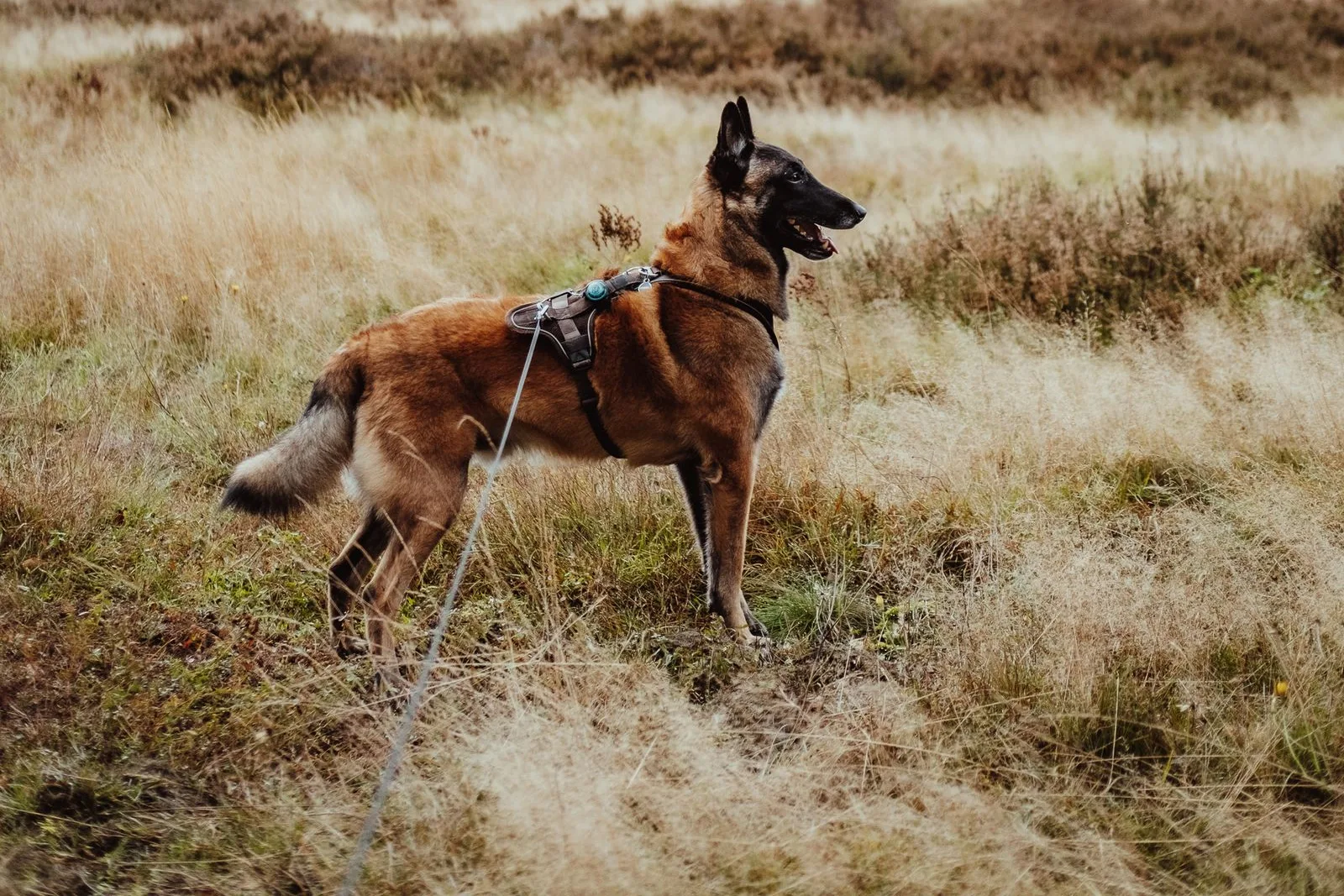
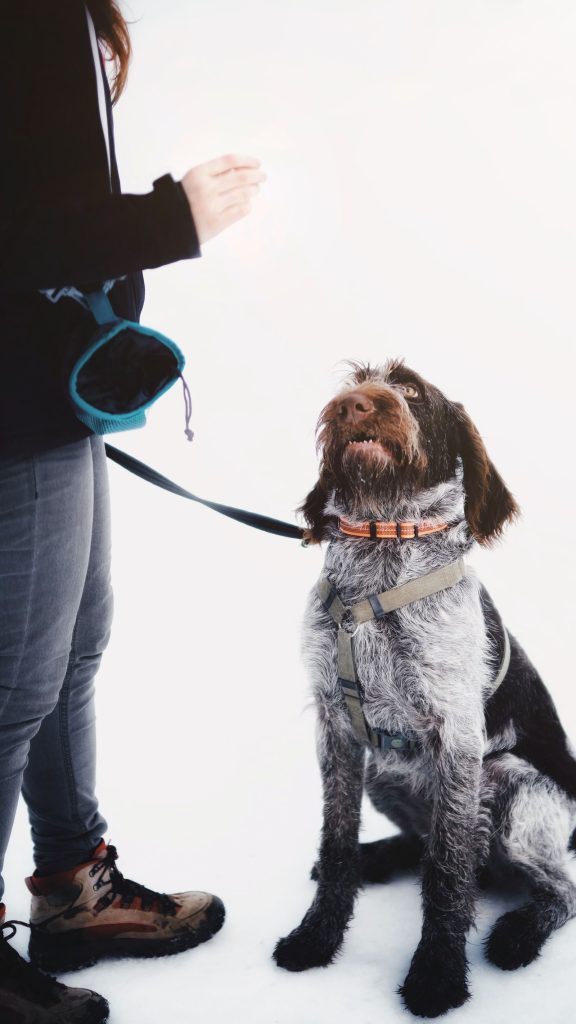
Featured image: A dog in a harness on a loose long line in an open field. Photo: Laura Paredis / Pexels