A release cue tells your dog when a particular pause or position request ends. Choose a word or signal that is distinct from the behavior cue and marker. Teach it during a very easy exercise before expecting it to organize busy doorways or longer waiting.
Decide what is ending
Use a comfortable behavior the dog already understands for a brief moment. You might practice a short stationary pause in a clear indoor area.
Do not begin with a long stay, a doorway to outside, or a position the dog finds physically uncomfortable. The release is the new information in this exercise.
Choose a distinct signal
Agree on one release word with household members. Avoid a word you repeatedly say in casual conversation during training.
Keep it separate from a reward marker. The marker identifies a successful action; the release ends the current request. Your exact setup should make that distinction understandable.
Pair it with an easy ending
- Begin the familiar brief pause.
- Reward in position where appropriate.
- Give the release signal.
- Invite a small comfortable movement into the clear area.
- Reset without immediately adding more duration.
Allow movement rather than pushing or pulling the dog out of position. If they remain still, use a gentle familiar invitation and make the next repetition clearer.
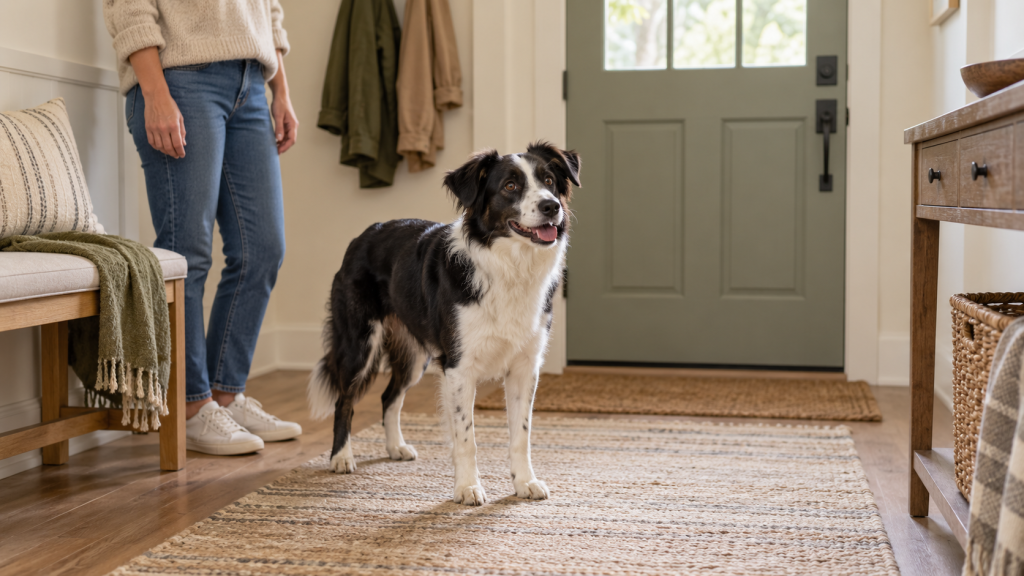
Keep practice short and precise
A release cue is not permission to run anywhere regardless of surroundings. Maintain suitable management and choose where the exercise takes place.
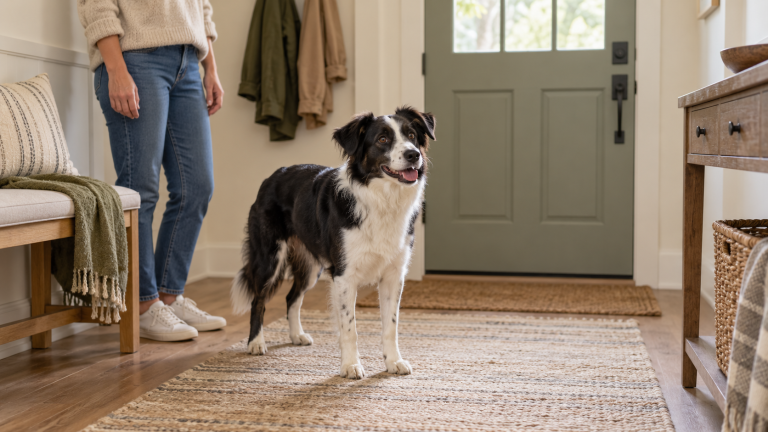
When practicing an indoor doorway pause, keep the release separate from exterior-exit safety. A cue cannot replace a securely managed door.
When you want a full position-holding lesson, follow our guide to building a stay with a clear ending. It brings the release together with gradual work on duration, distance, and distractions.
Share the same meaning
Explain to caregivers what begins the request, which behavior is being rewarded, and how it ends. Otherwise one person may reward in position while another assumes every reward means move.
If the sequence becomes confusing, reduce it to the original brief version and ask a qualified reward-based trainer to review the timing. Record the setup rather than claiming the dog understands all future waiting tasks.
Sources and editorial notes
Release-cue reference: American Kennel Club: teaching stay and release. This guide isolates the end signal and does not teach a complete long-duration stay.
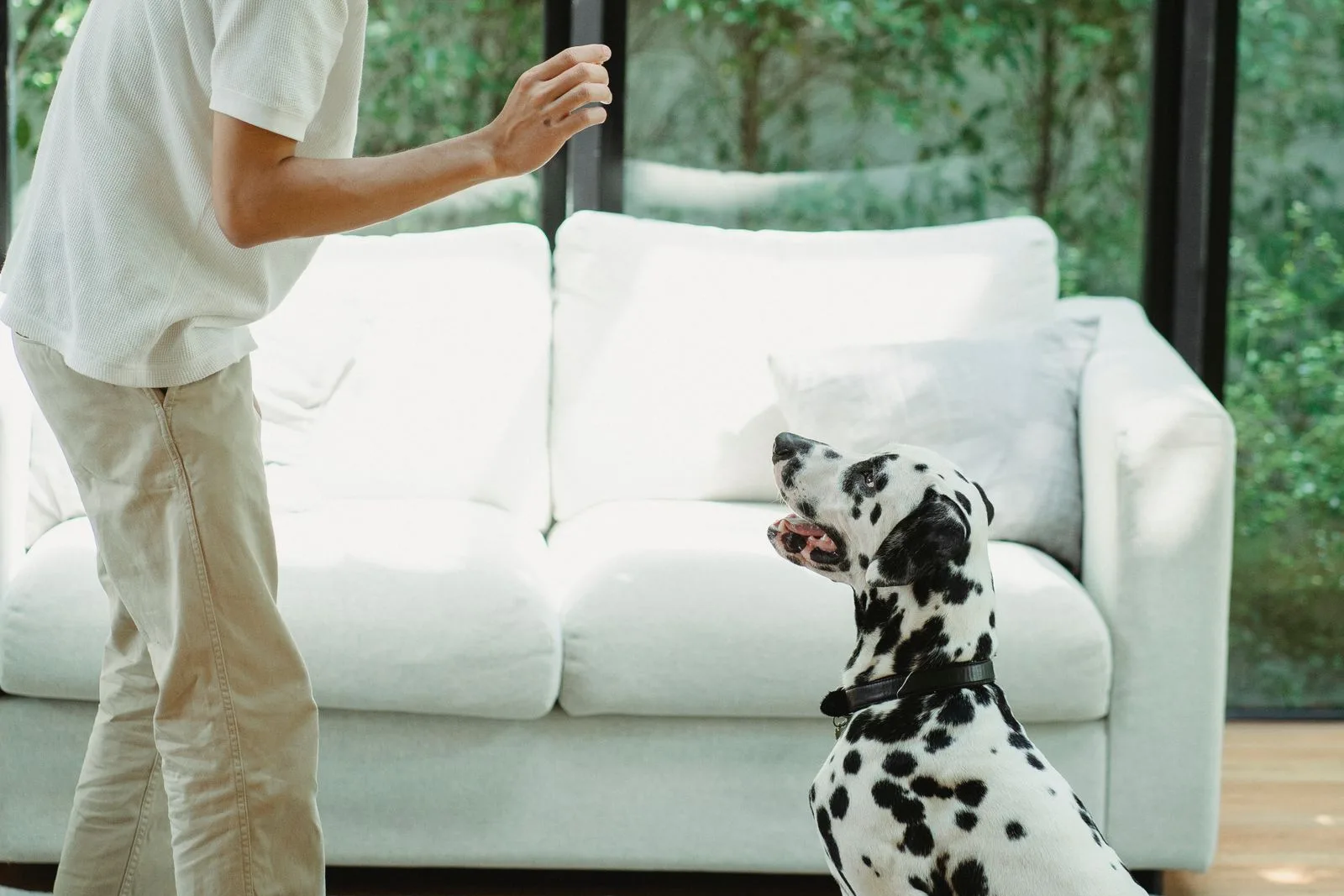
Featured image: A Dalmatian waits in a sit on a living room rug while its owner gives a clear hand signal. Photo: Bethany Ferr / Pexels