To teach a dog to stay, reward a brief sit or down before your dog moves, then release them clearly. Build time beside your dog before adding distance or distractions. The AKC recommends gradual practice and returning to reward in position. Use a quiet, physically safe starting area. Start with one clear goal.
How is stay different from wait?
A stay asks your dog to hold a chosen position in the same place until you release them. A wait can mean a brief pause before another instruction. Cornell explains this distinction so caregivers can use clear criteria. Decide what your word means before you start practicing it.
For this guide, stay means “keep this sit or down here until released.” A relaxed down often suits a longer pause; some dogs prefer a sit for a very brief one. Do not insist on a position that seems painful or difficult. Ask your veterinarian about new stiffness, reluctance to lie down, or trouble getting up.
Our brief indoor doorway wait guide covers pausing before passing through a door. This article develops holding a position as you add time, movement, and ordinary distractions. Neither skill replaces a closed door, secure leash, or other physical protection near hazards.
Prepare the position and release first
Choose a quiet indoor area with a soft, nonslip surface. Have small, suitable rewards ready and clear the practice space. Keep other pets away from the reward supply. Your dog should already be able to take the starting position with ease; teach that separately if needed.
Agree on one release word, such as “free.” Read our release-cue guide if the ending signal is new. A marker identifies successful behavior; a release ends the request. If your dog currently interprets the marker as permission to move, clarify the sequence before increasing the challenge.
Begin beside your dog. Ask for the familiar sit or down, reward the position promptly, then say the release and invite an easy movement into clear space. Do not pull the dog up or push them back down. Repeat an easy version until the sequence is predictable, rather than testing a long wait immediately.
How do you build a longer stay?
Stay close and add only a small amount of time before rewarding in position. Give the stay cue once, keep your body quiet, and deliver the reward where your dog can reach it without standing. Release before the dog struggles. An easy attempt is more useful than stretching to the limit.
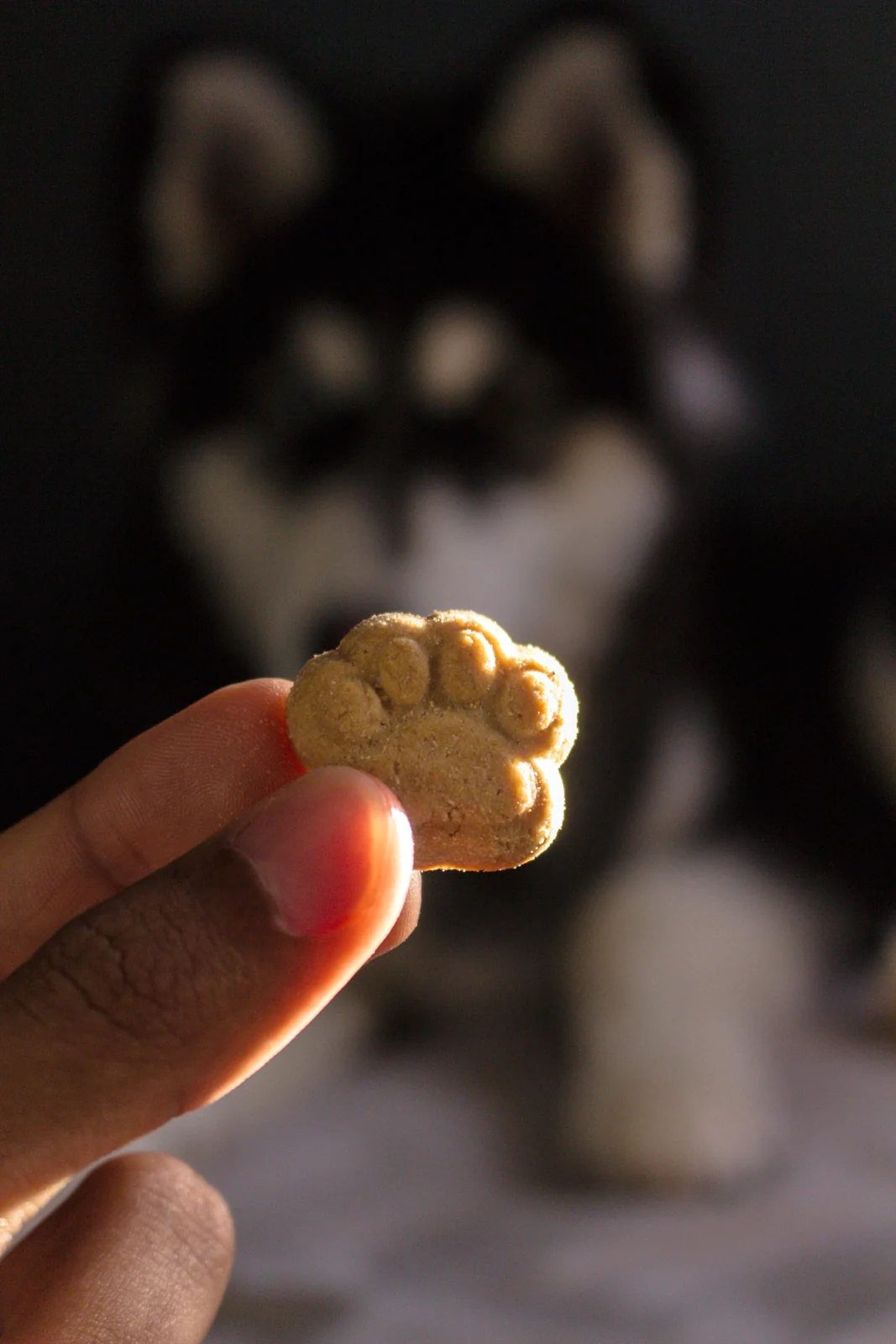
- Ask for the relaxed starting position and say “stay” with your chosen simple hand signal.
- Reward a very brief stationary moment. Keep the reward near your dog rather than drawing them toward you.
- Give the release word, then allow the dog to move and reset.
- On another attempt, wait a little longer only if the previous version was relaxed and clear.
- Mix easier attempts into the work. Progress does not require making every stay longer.
The RSPCA stay guide emphasizes small increases and rewarding while the dog is still in position. Exact seconds are practice choices, not universal readiness requirements. If your dog repeatedly gets up, shorten the wait, simplify your movement, and check whether the reward placement invites following.
End while the exercise is still easy. You can return to it later without completing a fixed number of attempts or reaching a daily time target.
Add distance by returning to your dog
When a brief stay is easy, make one small movement away and return to reward. Start with a weight shift or tiny step if a whole step makes your dog follow. Reduce the time you ask for as you introduce movement, keeping distractions low.
The Best Friends stay instructions describe returning before rewarding and slowly adding steps away. This keeps the reward connected to holding position. Avoid routinely calling the dog toward you to collect the reward during early stay practice; teach that separate transition later if you need it.
Keep your body language clear. Turning away, bending toward your pocket, or showing a treat from across the room can all become meaningful changes. Record the movement your dog could handle, then repeat that version before adding something else.
Stay in view while the foundation develops. Going behind a door adds loss of sight as well as distance. It also does not teach relaxed home-alone time; a dog can perform a stay while feeling worried about separation.
When should you add distractions or a new room?
Add a small distraction after your dog understands the basic pattern, and make the other parts easier. For example, practice a brief stay beside you while you gently move an empty hand. Changing rooms is also a challenge, so restart close to your dog with a short, familiar version.
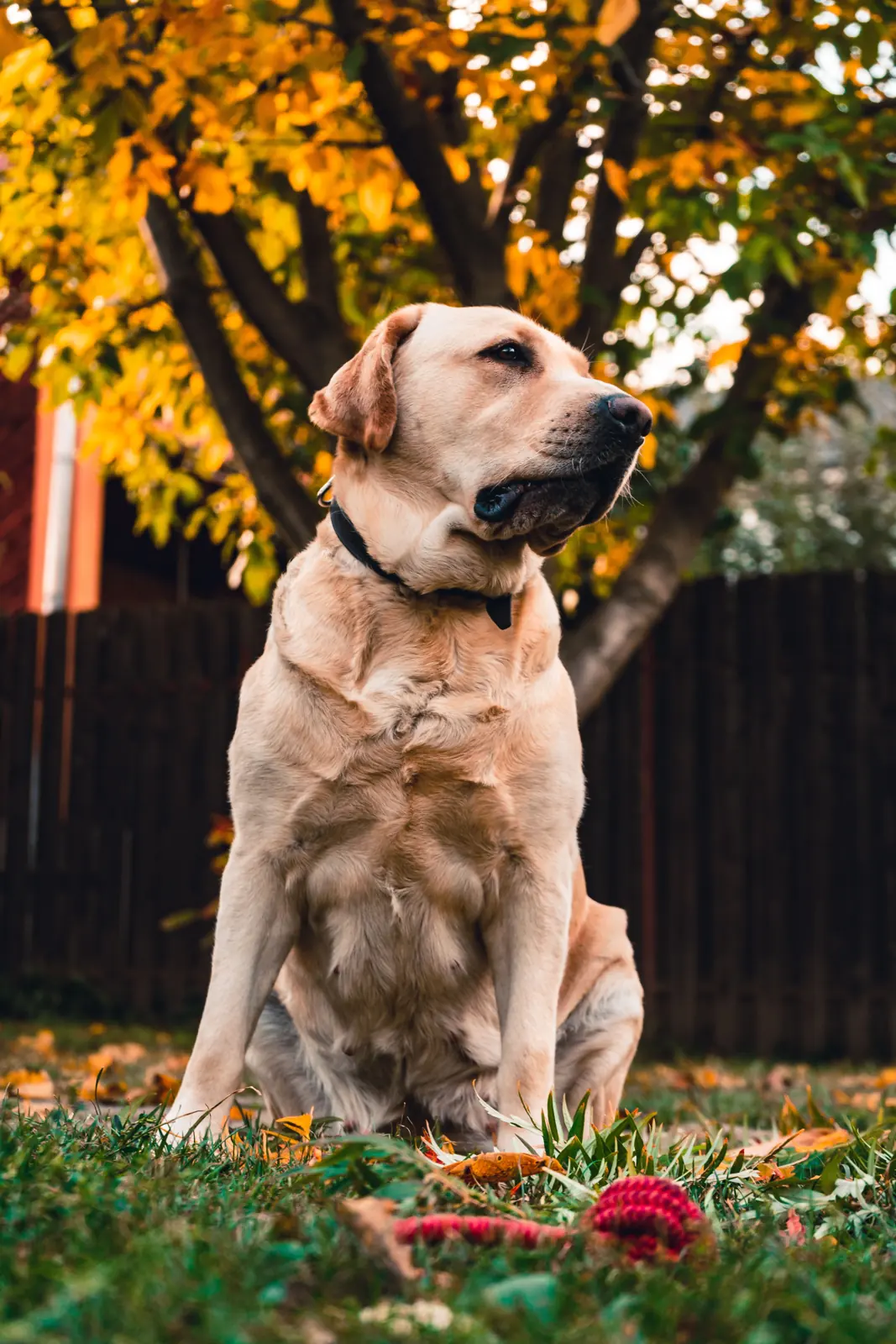
Use this editorial progression table to choose one change. It is a planning example, not a schedule or test every dog must pass. The point is to describe what changed instead of judging the dog as stubborn.
| Practice focus | Keep easy | Possible next change | If your dog moves |
|---|---|---|---|
| Time | Stand beside dog in quiet room | Slightly longer pause | Shorten the pause |
| Distance | Brief stay with no distractions | Small step away and back | Use a smaller movement |
| Distraction | Close distance, brief time | Gentle movement of an empty hand | Remove the movement |
| New room | Same position and reward pattern | Practice in another quiet space | Return to the easiest version |
| Caregiver change | Familiar place and short stay | Another adult uses the same cues | Review timing and reward location |
Avoid making a bouncing ball, visiting dog, or open exterior door the first distraction. Our guide to adding distractions explains how to keep the challenge small and the setting safe.
Why does my dog keep breaking the stay?
Following often means that the challenge changed too much, your reward drew the dog forward, or the ending signal is unclear. Reset calmly, reduce the task, and reward the version your dog can do. AVSAB supports reward-based training; scolding or physical corrections add confusion rather than useful information.
If your dog gets up as you reach for food, prepare the reward before starting and move your hand more quietly. If they slide into a down, decide whether you were asking for a sit specifically. A location-only pause and a position stay are different goals; changing criteria mid-session makes learning harder.
Illustrative example, not a reported result: an owner logs, “Down stay easy while I stand still. Dog follows when I turn sideways. Next attempt: stay beside dog, rotate shoulders slightly, reward there.” This isolates one movement without extending time at the same time.
Use a training session log to note position, time, distance, distraction, and release. If practice causes fear, repeated frustration, or physical discomfort, stop and ask a suitable professional for help.
FAQ: how to teach a dog to stay
Can I teach a puppy to stay?
Yes, start with a very brief, relaxed pause in a quiet area and reward promptly. Keep expectations suitable to the puppy’s ability to engage, rest, and move with ease. Do not hold a puppy in place, delay a necessary bathroom break, or use a long stay as an endurance exercise.
Do I need a separate stay word after sit?
You can teach a position cue to include remaining there until release, or use a separate stay cue. Consistent meaning matters more than the exact vocabulary. Explain the system to everyone who trains your dog. Avoid sometimes releasing automatically after food while expecting indefinite stillness on other attempts. Write the cue meanings down for other caregivers.
Should I repeat stay when my dog looks ready to move?
Make the next attempt easier instead of relying on repeated reminders. A single clear cue is easier to understand when the setup supports success. If your dog needs continuous prompting, the time, distance, distraction, or position may be too demanding. Reset before trying a simpler version. Return to a shorter, quieter attempt beside them.
Should I call my dog to come after a stay?
During early training, return and reward in position, then release clearly. Calling the dog to collect the reward can make approaching you more prominent than remaining still. Once both skills are clear, a qualified trainer can help you practice different endings without weakening the meaning of either cue. Keep the return calm and the reward close.
How long should a dog stay?
Long enough for the practical, relaxed task you have trained, with a clear ending. There is no useful universal maximum or deadline. Plan extended rest separately rather than demanding a strained fixed position. Near roads, exits, other animals, or unexpected activity, use physical management even with a practiced stay. Keep the setup safe and simple.
Sources and editorial notes
- AKC: How to teach your dog to stay, time, distance, distractions, release, and reward placement.
- Cornell: Training stay versus wait, distinct cue criteria.
- RSPCA: Teaching stay, gradual time and stationary rewards.
- Best Friends: How to teach a dog to stay, starting position and returning to reward.
- AVSAB: Humane dog training position statement, reward-based methods.
Animalia Editorial. Last updated: October 22, 2026. Sources checked on this date. The table and log are illustrative planning tools, not tested outcome claims. Find related skills in our training and behavior hub. Read the Animalia Editorial Policy. Review reward-based dog training foundations before adding a harder skill.
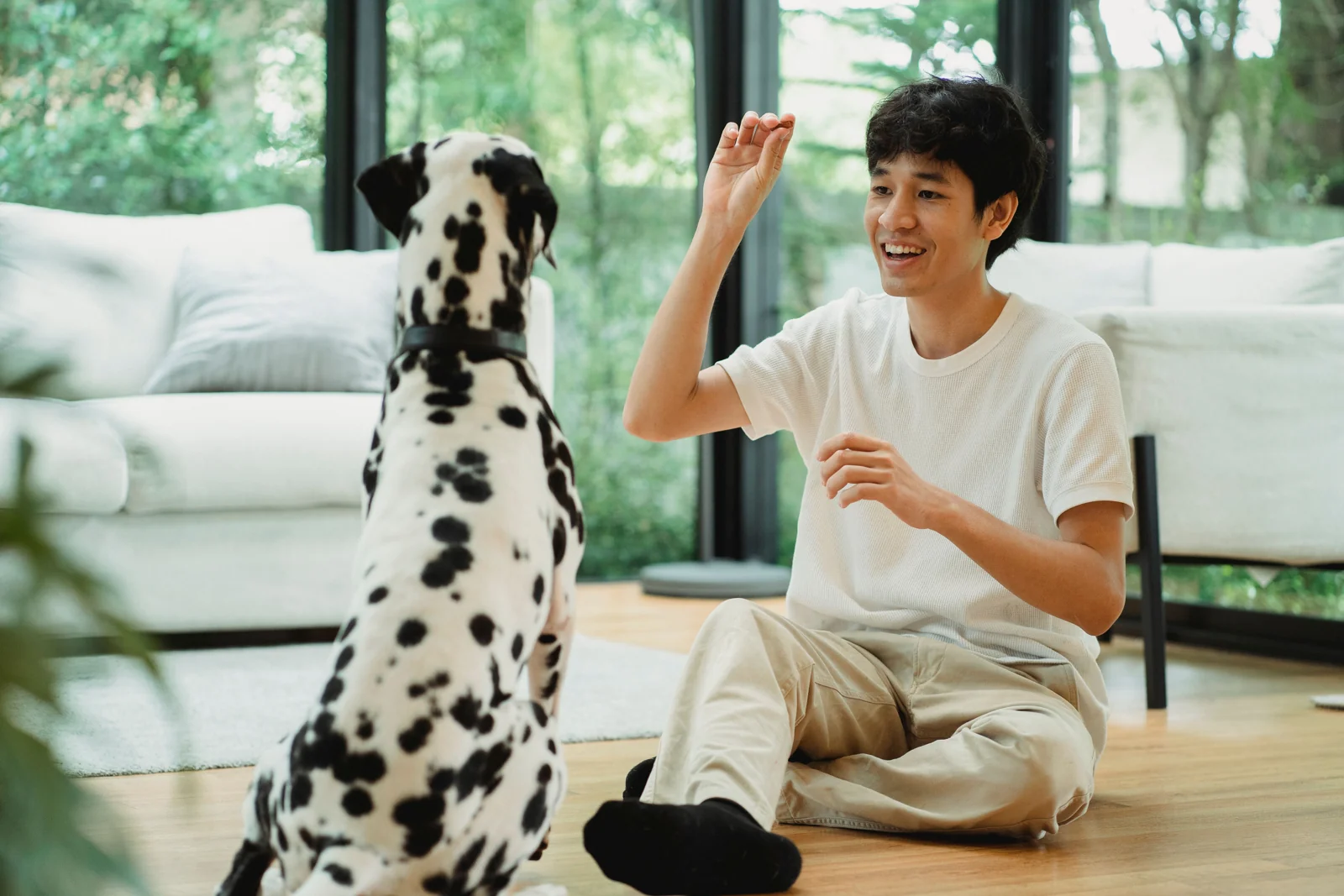
Featured photo: A seated Dalmatian faces a man holding up one hand indoors. The image illustrates a training setting, not proof of a completed stay. Photo: Bethany Ferr / Pexels.
Prepared with AI assistance and reviewed against the sources above.