A before-walk routine should help you prepare equipment and leave safely without turning departure into a long test. Set up the practical tasks first, then use brief familiar skills where they help. Necessary toilet opportunities should not depend on perfect behavior.
Prepare before inviting the dog
Check walking equipment, cleanup supplies, suitable rewards, and your own clothing before starting the departure sequence. Keep the route to the door clear.
If you repeatedly stop to find keys or untangle equipment while the dog waits, simplifying your preparation may help more than adding another cue.
Use a comfortable equipment sequence
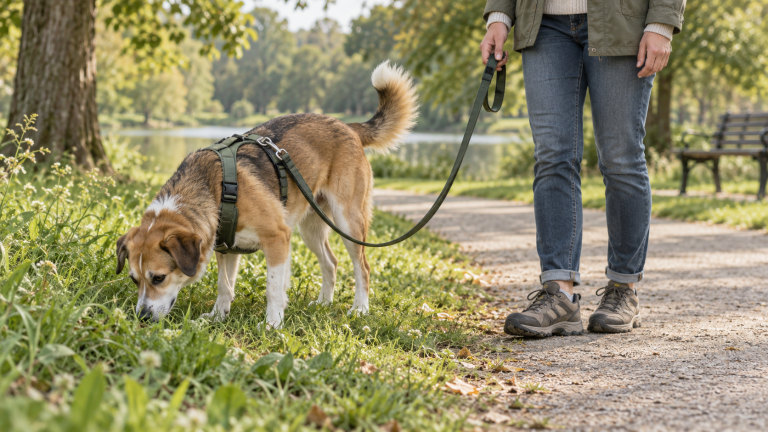
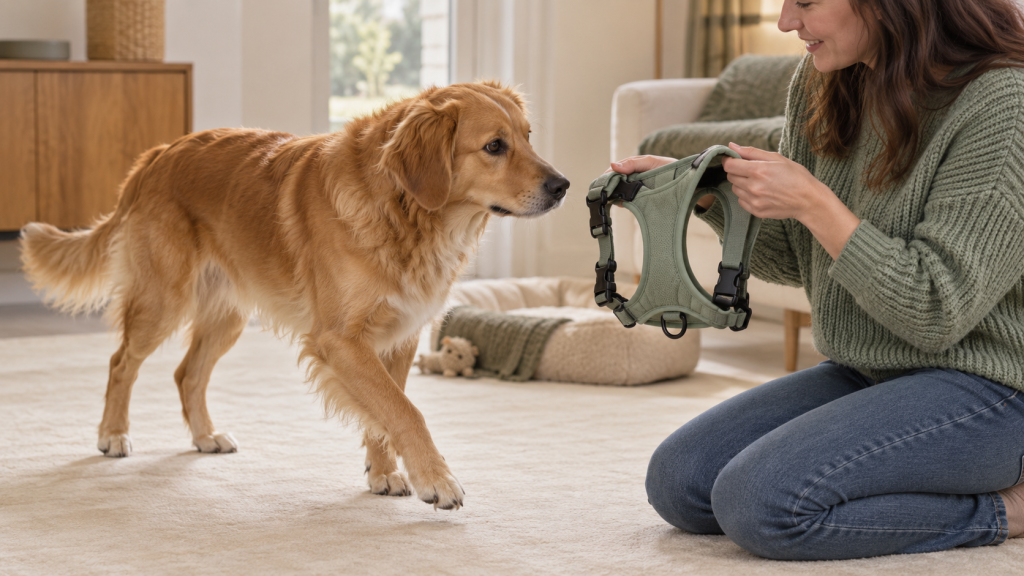
Follow the dog’s established voluntary handling routine. If harnessing is difficult, practice the separate steps at a quiet time using our harness introduction guide.
- Let the dog approach appropriate equipment comfortably.
- Check fit according to the product and professional guidance.
- Keep clips and straps clear of skin and fur.
- Stop and review if handling becomes uncomfortable.
Do not chase the dog around the home or hold them still to finish a training exercise.
Keep the door physically managed
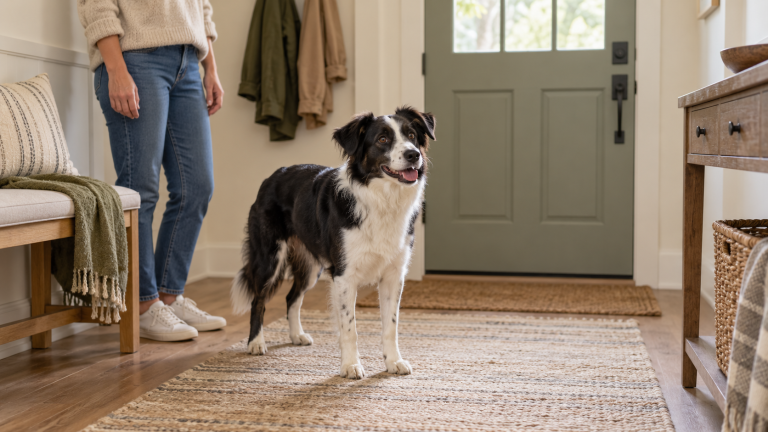
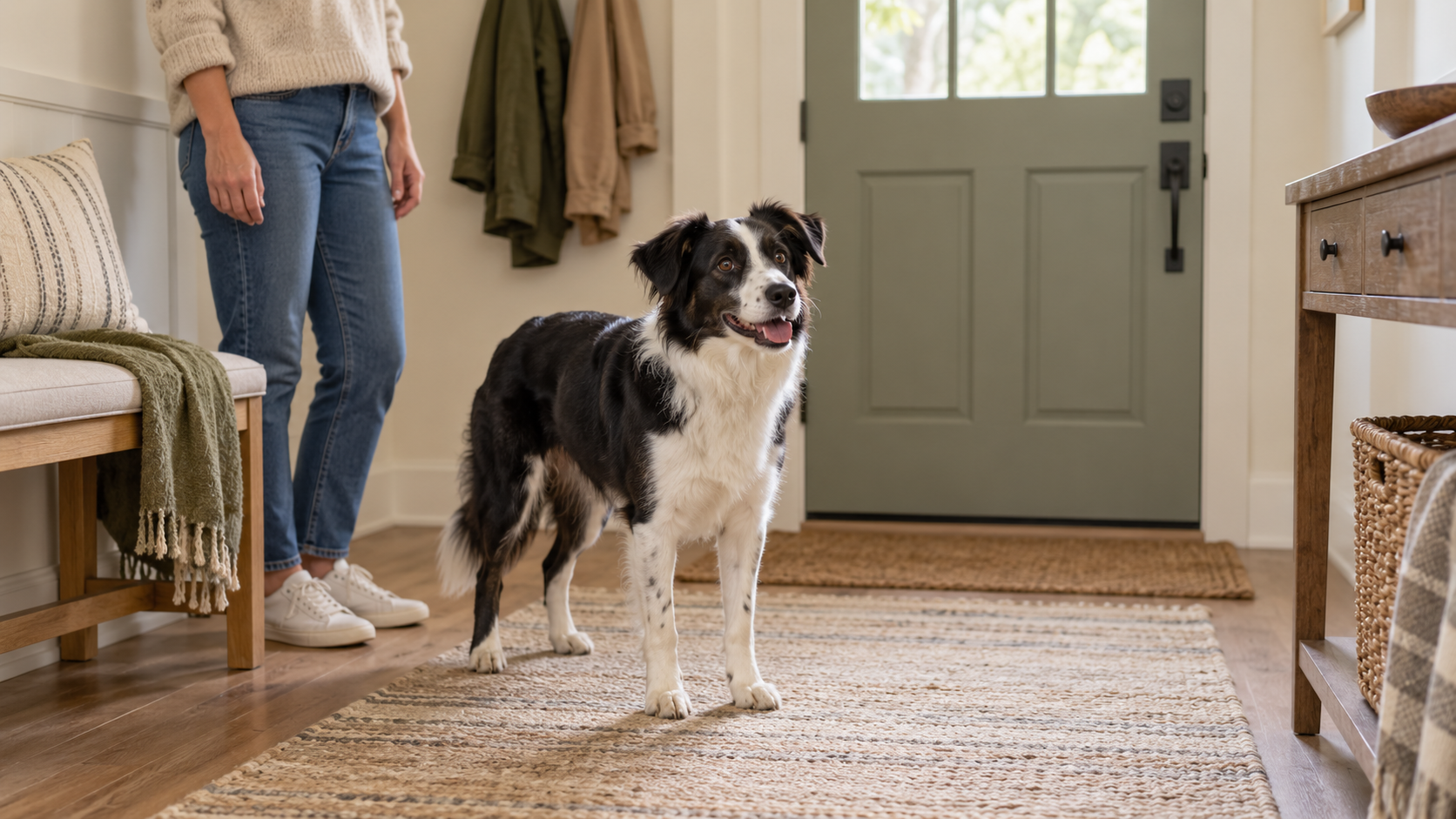
Secure the dog appropriately before opening an exterior exit. A short practiced pause may support the routine, but it is not the safety system.
Teach doorway waiting separately in an easy indoor setting. Avoid demanding a new behavior at the most exciting moment of an outing.
Make the first steps manageable
Choose a suitable route and allow enough space to begin comfortably. If the doorway or path is busy, change the timing or route where possible.
Reward familiar appropriate behavior without requiring the dog to ignore every smell. The aim is a workable departure, not a rigid performance from the front door onward.
Review the difficult point
Record whether excitement rises when equipment appears, during handling, at the door, or outside. Work on that specific practical boundary rather than rehearsing the entire stressful sequence repeatedly.
Persistent fear, distress, or unsafe behavior needs veterinary and qualified behavioral advice. This routine cannot diagnose the cause or promise that preparation alone will resolve it.
Sources and editorial notes
Departure context: Dogs Trust: doorway training. The preparation checklist is an editorial household example rather than a clinical calming protocol.
Featured image: Illustrative departure setup, generated with AI; training does not replace physical exit management.