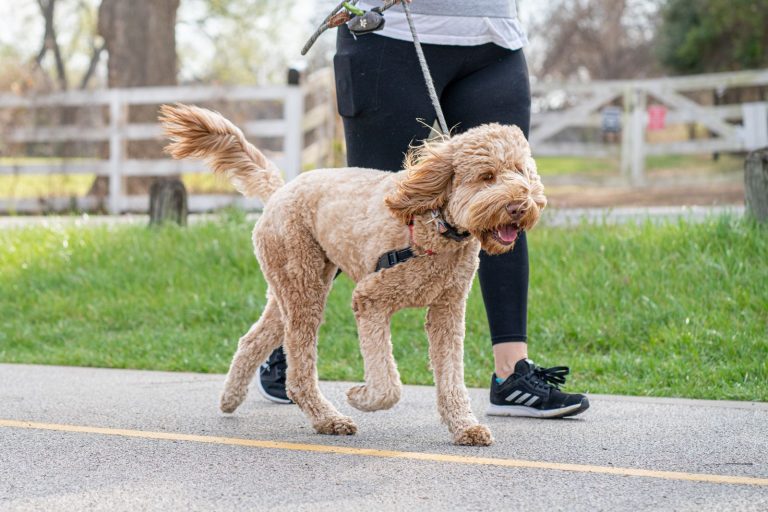
Start leash training a puppy indoors: introduce comfortable walking gear, reward a glance toward you, then reward a few steps beside you with the leash slack. The AKC recommends beginning before outdoor walks. Build toward quiet outdoor practice at your puppy’s pace, without dragging, leash corrections, or demanding a formal heel.
This guide covers the first attachment, first held leash, and first outdoor practice. For a puppy already at ease with those foundations, use our loose-leash walking guide to develop longer stretches of relaxed walking.
What should you prepare before the first lesson?
Choose a quiet, puppy-proof space, comfortable gear, and rewards your pup enjoys. The starting task is accepting a new sensation while staying relaxed. A full neighborhood route adds far more difficulty than most first lessons need. Keep the first goal small enough to reward before pulling starts.
The AKC suggests a lightweight, six-foot fixed leash and a properly fitted harness or flat collar. Check that the clip is not cumbersome for a tiny puppy. Follow the harness maker’s fit instructions and recheck as the puppy grows. Source: AKC puppy leash guide.
- Move chairs and loose objects out of the practice space, and secure cables that could catch the leash.
- Have small food rewards ready, using food that suits the puppy’s feeding plan.
- Choose a stable, nonslip floor with room to turn.
- Practice after a bathroom break, when the puppy is calm and alert.
- Ask your vet which outdoor locations are suitable for your puppy’s vaccination status and local infection risks.
Our harness introduction and fitting guide explains gear handling. Stop there for now if the puppy backs away from the harness or freezes when you reach for it.
Leash training a puppy: build the first steps
Separate gear comfort from movement. Let the pup learn what each new part predicts before adding the next part. These are readiness stages, not a daily schedule; repeat, pause, or step back according to what the pup actually does.
Stage 1: the clip predicts something pleasant
With the puppy at ease wearing their harness, let them notice the leash. Bring the clip toward the attachment point, reward, then move it away. Attach it when that handling is easy. Keep the first attachment brief and stay beside the puppy.
Hold enough slack that the clip and leash do not pull the harness sideways. Supervise at all times and remove the leash after practice. Do not leave it attached during unsupervised play, sleep, or crate time.
Stage 2: reward a voluntary check-in
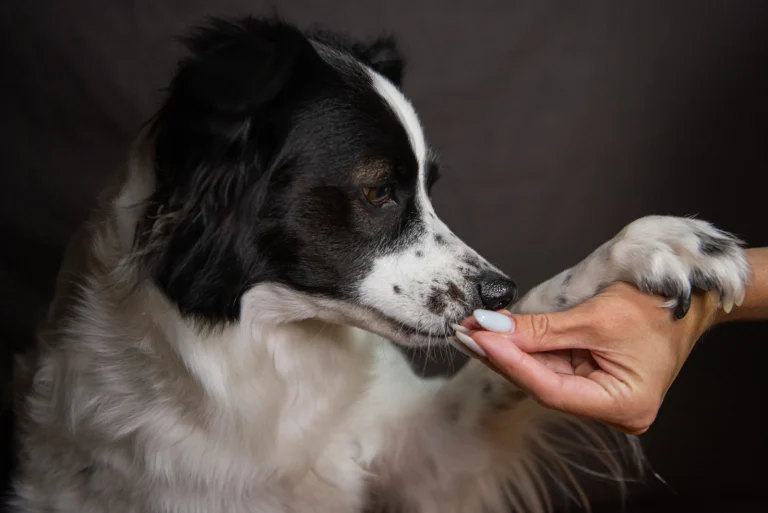
Stand nearby and wait for a small glance toward you. Mark it with a familiar word if you use one, then deliver a reward close to your leg. There is no need for prolonged staring. A check-in simply helps you communicate before moving together.
If the marker is new, our guide to marker timing explains how to pair it with a reward. Avoid repeating the pup’s name while they are absorbed by something else.
Stage 3: make one easy movement
Turn your body slightly and invite the puppy to follow a small step. Reward while the leash stays loose. Start close enough that following is an easy choice. If you must pull the puppy toward you, simplify the setup instead.
Choose either side for early reward delivery, keeping food low enough for the pup to reach without jumping. Left-side walking is not a requirement for ordinary pet walks. Consistent placement is useful; a rigid competition position is unnecessary.
Stage 4: add a clear start and finish
When following becomes predictable, pair a phrase such as “let’s go” with the movement. Make an easy turn, reward, and end while the puppy remains interested. Allow a pause between attempts rather than continually walking around the room.
Dogs Trust recommends starting in a calm setting and increasing difficulty in small steps. Its advice also sets a clear boundary: do not jerk the leash or tell the dog off when it tightens.
How do you know when to move outside?
Try an approved, quiet outdoor area when the puppy can wear the gear, check in, and follow nearby indoors without worry. Outside, reduce the task again. The first success may be standing calmly, noticing the surroundings, and choosing to turn toward you.
| What you notice | Next useful step | Make it easier if |
|---|---|---|
| Relaxed with the attached leash | Hold it lightly and reward a check-in | Puppy scratches persistently or tries to escape the gear |
| Follows comfortably indoors | Try a quiet, approved outdoor spot | Puppy freezes at the doorway |
| Can notice a mild distraction and return attention | Practice a tiny walking stretch nearby | Puppy stares, barks, or cannot disengage |
| Moves with you and explores comfortably | Alternate short practice with safe sniffing | Every attempt becomes tight-leash stopping |
Use this table as an Animalia planning aid, not a formal temperament test. Refusing food does not, by itself, explain what is wrong. Consider the whole setting: gear, footing, noise, tiredness, and whether the pup wants more space.
Before stepping out, choose the simplest route and prepare rewards. Our before-walk routine helps organize the doorway without turning every departure into a long training session.
Troubleshooting freezing, pulling, and leash biting
Change the setting that makes the lesson difficult before asking for more effort. A pup who cannot walk with ease in a quiet setting needs support, not a stronger correction. Sudden reluctance to move, limping, or apparent pain deserves veterinary advice.
- Stops or freezes: pause with a slack leash. Give space to look around, check fit and footing, and return to an easier place. Never tow the puppy forward.
- Runs to the end: in a safe area, stop without jerking. Invite a return toward you, reward slack, then continue. Reward earlier next time, before the leash tightens.
- Grabs the leash: avoid turning it into tug. Offer a safe toy or use a separately taught trade. Keep the leash from dangling temptingly under the muzzle.
- Barks at people or dogs: increase distance and choose a quieter setting. Do not force a greeting to “get it over with.”
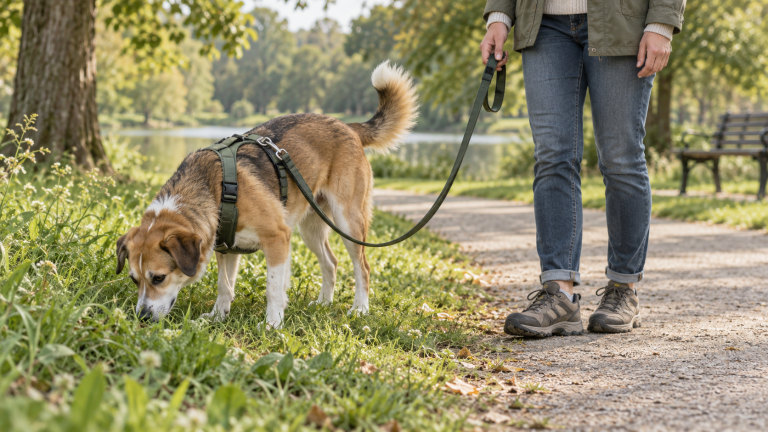
- Sniffs everything: allow safe exploration. Mix brief walking practice with permission to investigate safe spots.
Animalia example: a pup follows easily across the living room but stops on the front step. The next lesson stays near the open doorway at a comfortable distance. Rewarding a calm look outside is a reasonable goal; completing the block can wait.
How should everyday puppy walks fit the training?
Keep everyday outings short and manageable while you teach new skills in easier surroundings. Bathroom breaks should not become tests of perfect walking. Choose quieter routes and allow safe sniffing. When a puppy struggles, meet their care needs first and save the next training step for a calmer setting.
Write down the setting, the last step your puppy managed comfortably, and what changed before attention faded. “Accepted the attached leash; startled at the gate” is more useful than “bad walk.” Share those notes with other caregivers. If safety or strong fear is a concern, seek a qualified reward-based professional.
AVSAB recommends reward-based methods for all dog training. Avoid gear or techniques that depend on pain, intimidation, or force. More examples appear in our training and behavior hub.
Frequently asked questions
When can I start leash training a puppy?
You can introduce gear and easy following at home when your pup arrives. Public-ground access is a separate question for your vet team. Do not wait for a long outdoor walk to begin, and do not assume every outdoor location is safe before discussing local risks. A secure room gives you a simple starting point.
How long should the first leash lesson last?
End while the puppy is at ease and interested. There is no useful universal session length for every puppy or stage. A calm attachment and a few rewarded steps can be a complete lesson. Repeated escape attempts, distraction, or fatigue mean you should pause or simplify. Choose an easy stopping point before the puppy struggles.
Should I pull a puppy who will not walk?
No. Keep the leash slack and check the surroundings, gear, and pup’s comfort. Make the task easier or return to a familiar area. If unwillingness to move is sudden, ongoing, or accompanied by pain or limping, contact your vet rather than treating it as disobedience. Keep the next attempt simple and free from pressure.
Does my puppy need to walk on the left?
Either side can work for everyday walking. Pick a side that lets you handle rewards and the leash safely, then teach it consistently at first. Give a clear invitation before changing sides. Ordinary leash manners do not require a formal heel throughout every walk. Choose the side that lets you keep space from traffic.
Should I use a retractable leash for training?
A lightweight fixed leash is easier to manage for these early lessons. Retractable gear adds moving length and tension that complicate timing. Follow local rules and choose gear suited to your pup’s size. Extra exploration can happen in a secure space without making the first lesson harder. Keep the clip light enough for the pup’s size.
How quickly will my puppy learn?
Progress depends on comfort, past learning, surroundings, and consistent practice. Watch for easier check-ins and more relaxed movement rather than a promised completion date. If the same problem keeps returning, change the setup and ask a humane trainer for help before adding distance or distraction. A short note helps you spot the next useful step.
Sources and editorial notes
- AKC: teaching a puppy to walk on a leash
- Dogs Trust: comfortable gear and reward-based lead walking
- AVSAB: position statement on humane dog training
Last updated: October 22, 2026. Animalia Editorial. Source review: October 22, 2026. The readiness table and doorway example are original editorial planning aids. They are not a tested training protocol or a veterinary assessment. Editorial standards: Animalia Editorial Policy.
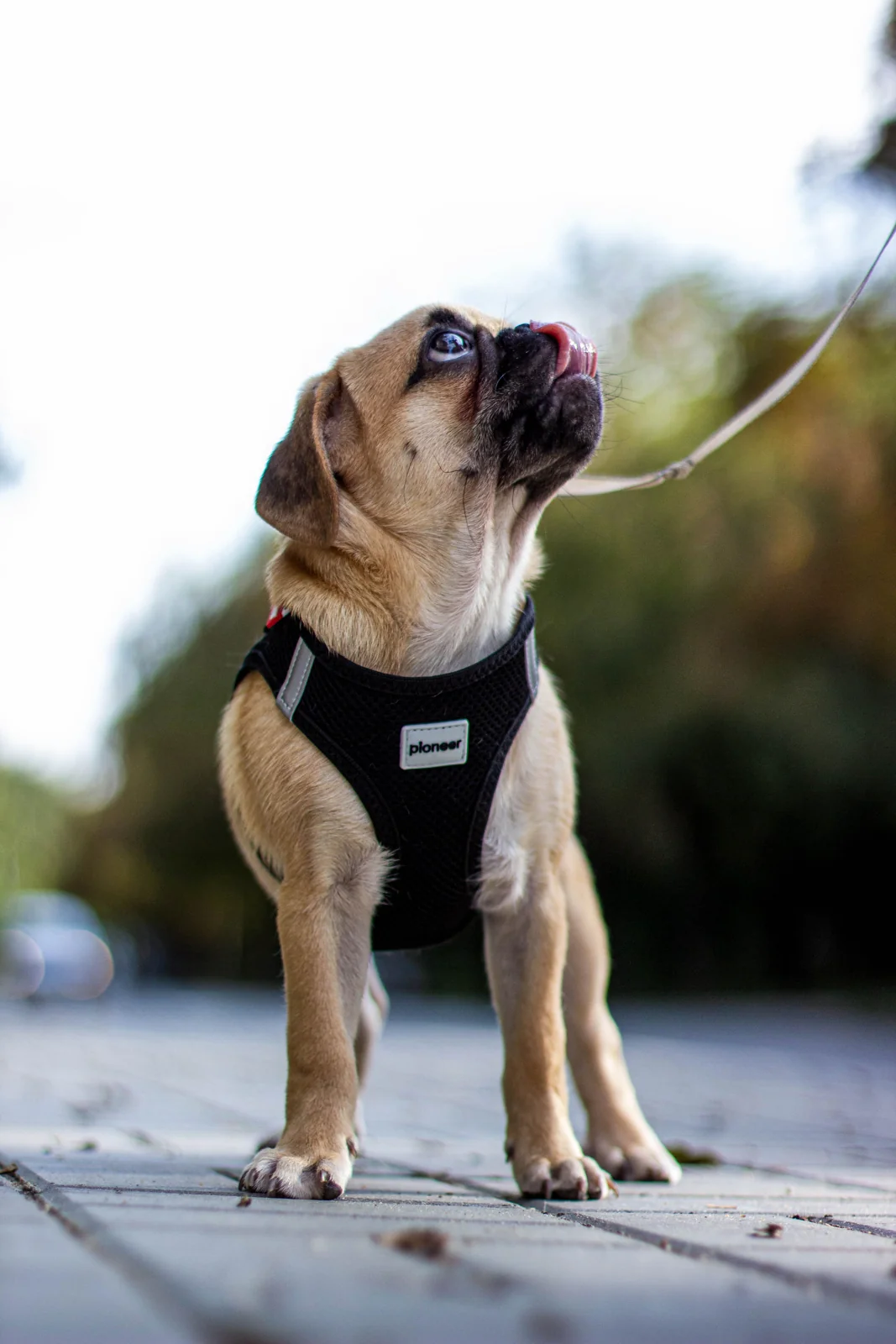
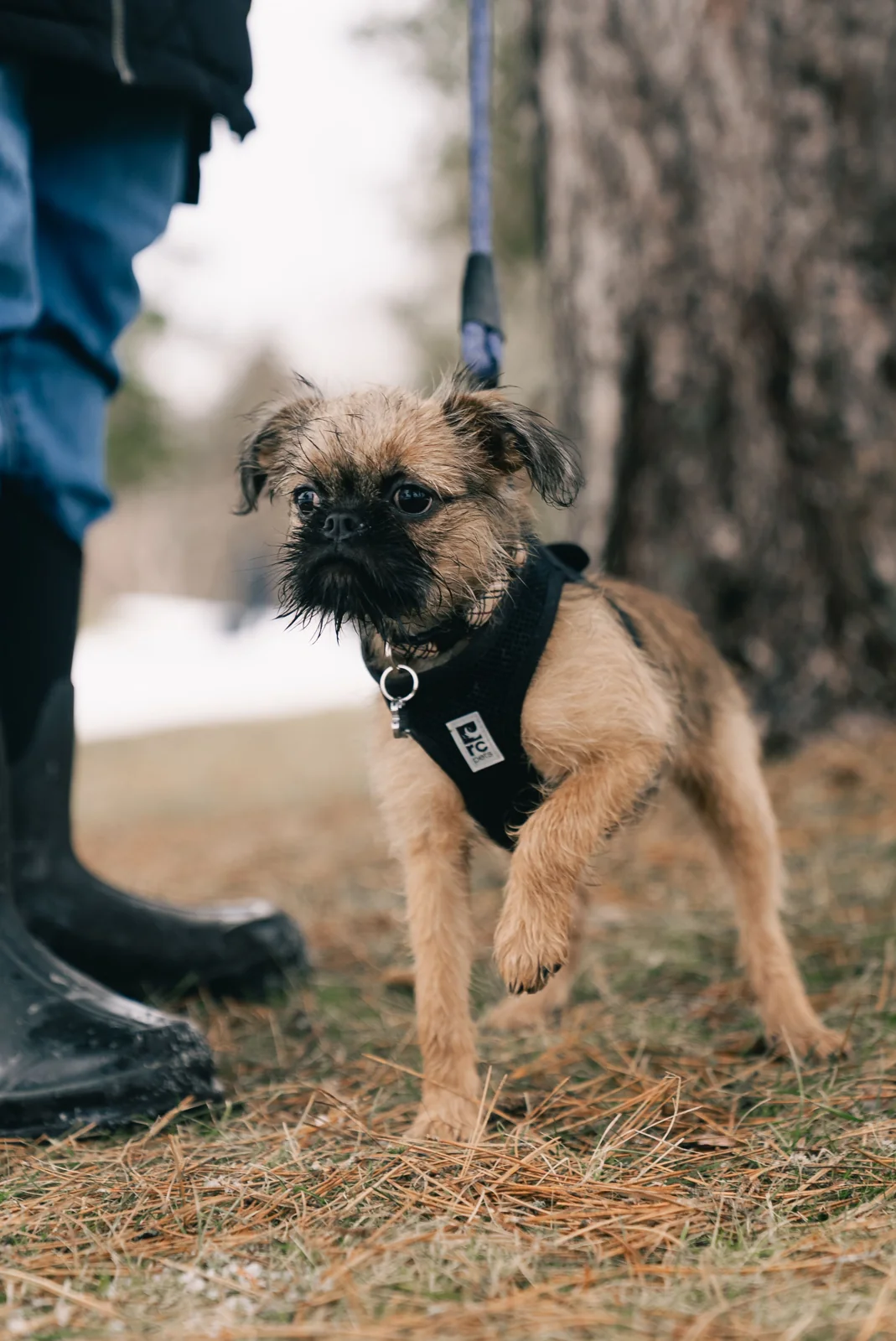
Featured photo: A pug stands outdoors in a harness and leash. Photo: Reanimated Man X / Pexels.
Prepared with AI assistance and reviewed against the sources above.