Cats can reach heights of several feet: Battersea says most healthy cats can scale a 6-foot fence. That is a fence-scaling example, not a measured average for a free vertical jump. Your cat’s ability depends on their health and the route, and a reachable height is not a safe falling height.
Is 6 feet a reliable jumping limit?
No single height predicts every cat’s unassisted jump. Reaching the top of a fence can involve climbing, gripping, or using nearby objects, while jumping onto a shelf is a different task. Treat a height claim as context, not a guarantee that your cat can clear that gap or cannot escape over it.
When you compare online claims, check what was measured: body length, standing height, or the height of a surface. Those measures do not describe the same thing. A cat’s front paws reaching a ledge is also different from the whole cat landing on it. If the method is unclear, a dramatic number cannot tell you how to arrange a room safely.
Before you change the room, look at routes your cat already uses with ease. Do not hold a toy higher and higher to discover a maximum. There is no need to turn daily play into a test of strength, and a single successful jump does not show that repeating it is comfortable.
What changes a cat’s jumping ability?
Age, comfort, body condition, grip, and the space available can affect the task. Kittens are still learning to move through their home, and an older cat may need a route with easier stages. A cat who wants to jump may still face a risky landing or feel pain.
The table below is an editorial planning aid. It gives no fixed limit by age or breed, because the sources do not support those exact figures. Use it to make access easier, not to set a performance target.
| Situation | What to consider | A useful adjustment |
|---|---|---|
| Kitten exploring furniture | Developing skills and a changing body | Offer stable, easy stages and supervise exploration |
| Adult using a favorite perch | Takeoff space, grip, and room to land | Keep the route clear and the surface secure |
| Older cat hesitating at a familiar spot | Mobility or comfort may have changed | Add accessible steps and arrange a vet check |
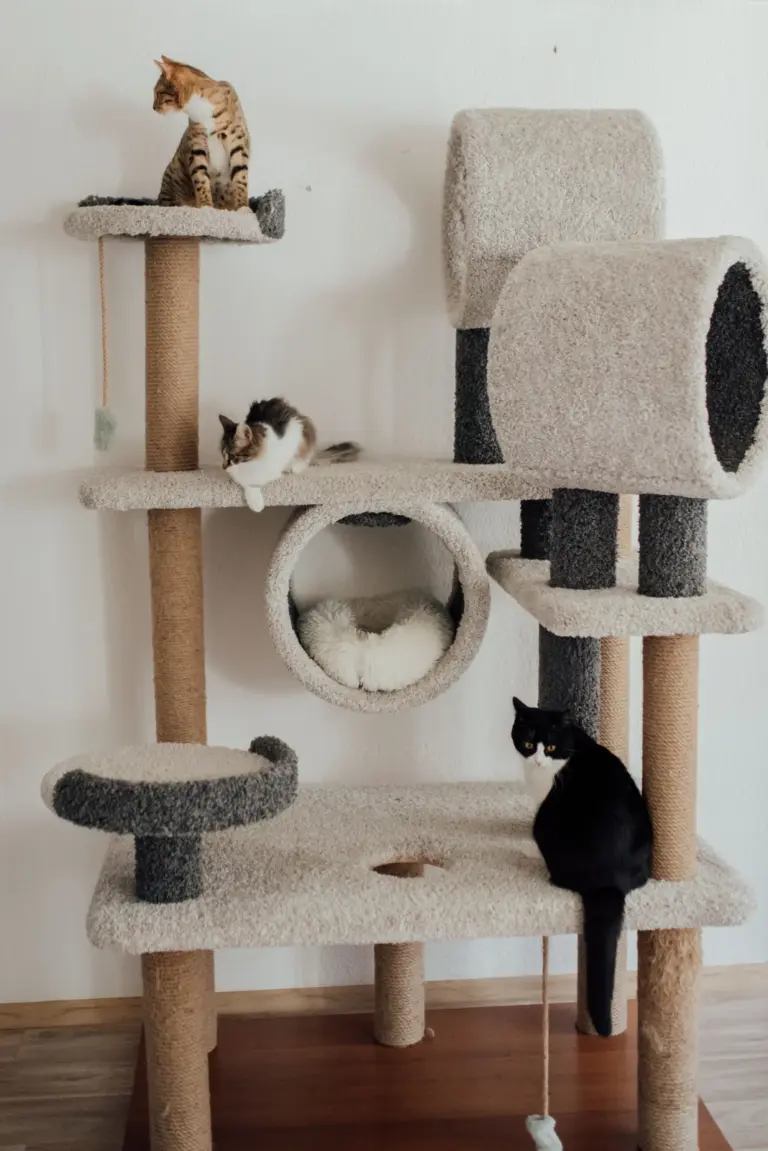
| Several cats sharing a tree | Another cat may block the route | Provide more than one resting option and exit |
| Cat recovering from injury or surgery | General jump advice may not apply | Follow the veterinary team’s movement restrictions |
A 2002 study of 18 cats by Harris and Steudel found that relative hind limb length and body fat helped explain differences in takeoff speed. It helps explain why one cat may jump better than another. The abstract gives no single jump height for all cats. It does not set a safe gap between shelves.
When you plan a route, do not assume coat color, fluffiness, or breed gives you a useful limit. A large cat is not simply a scaled-up version of a small one. Ask your vet about a marked change in ability instead of comparing your cat with a video of another animal.
Make the route easier instead of testing the limit
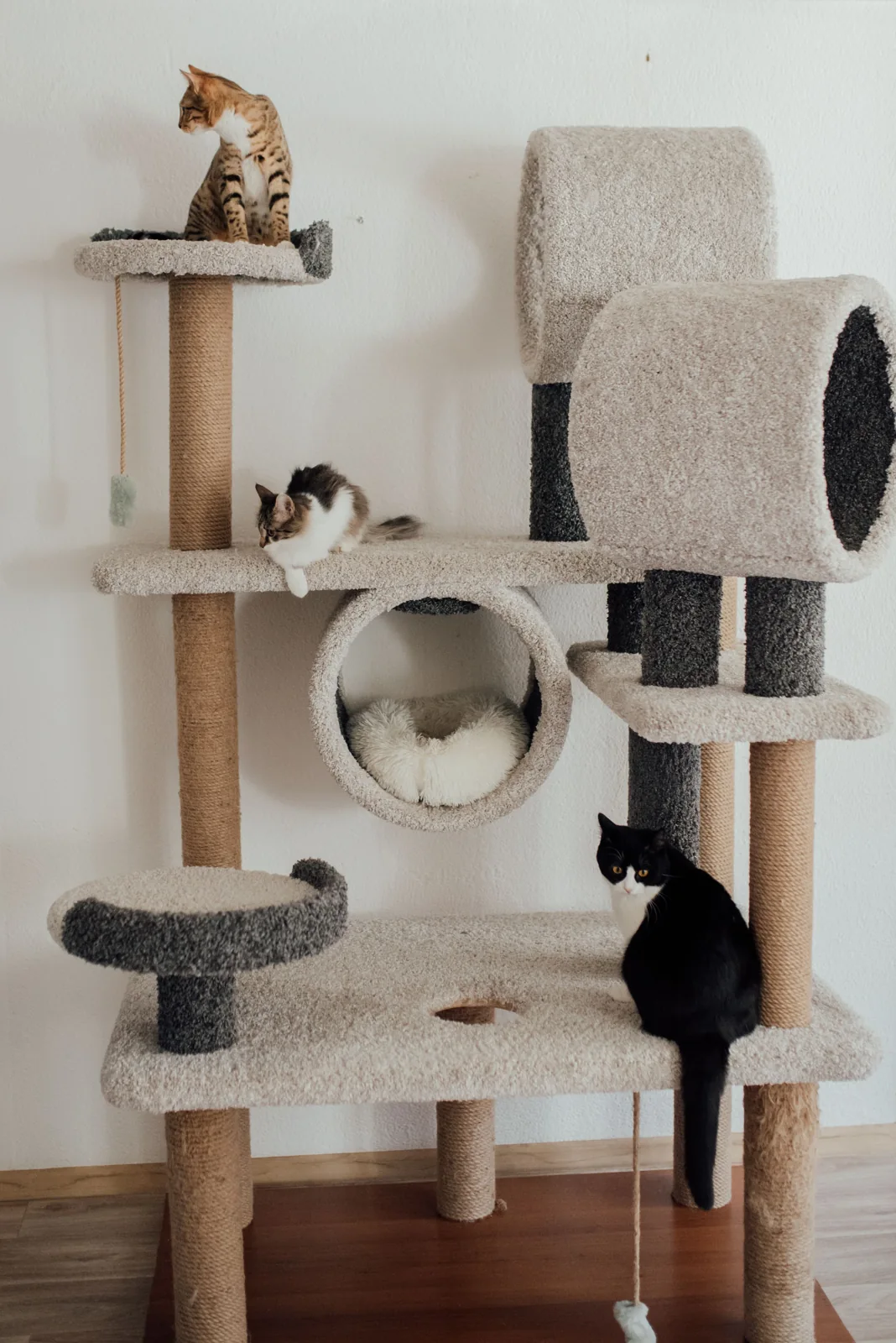
Cats Protection recommends steps, ramps, and better grip for older cats who struggle to reach familiar places. These changes can preserve access without asking for one large leap. Choose a stable route with enough space to turn and descend, as well as to go up.
- Keep takeoff and landing areas clear of loose objects.
- Use stable furniture or purpose-made steps that will not slide or tip.
- Check product limits and installation instructions rather than guessing from a photo.
- Keep essential resources easy to reach if movement is difficult.
- Offer a lower resting option as well as a high perch.
Next, check the route back down as carefully as the route up. Avoid a setup in which the cat can climb onto a platform but has to make a long drop to leave. A narrow or slippery landing may be difficult even when the vertical distance looks modest.
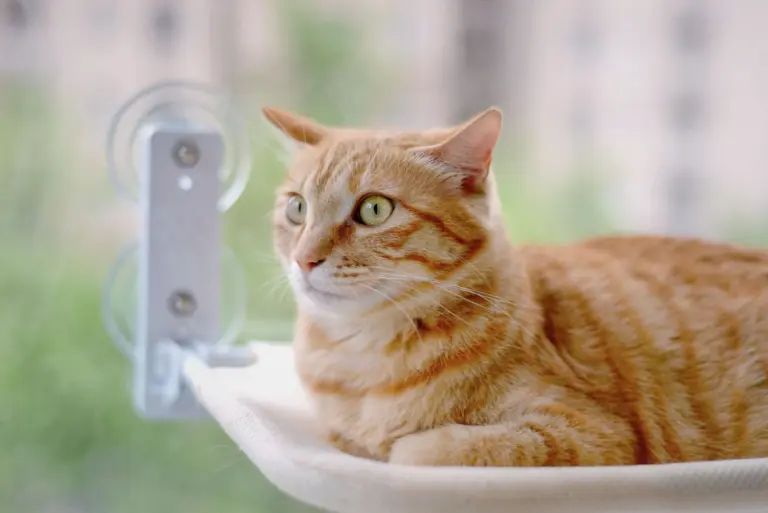
Our cat tree placement guide covers room layout, while window perch planning considers support and access. A stock photo or an online height claim cannot tell you the load limit. Follow the maker’s rules and secure the product as instructed.
Can a cat that jumps high fall safely?
Jumping up and surviving a fall are different questions. A cat can lose balance, miss a landing, or be distracted near an opening. The ASPCA warns that falls from windows can cause serious injury or death. Do not use agility or the ability to turn in the air as a safety system.
Keep unscreened windows closed and use snug, sturdy screens where windows open. Check their fit and condition; do not assume a childproof window guard can contain a cat. The ASPCA notes that cats can slip through those guards. Balconies and other exposed edges need their own secure access plan.
If a cat falls from a window or another dangerous height, contact a veterinary emergency service immediately. Even if the cat walks away, do not assume they are unharmed. The important action is getting veterinary help, not estimating whether the fall was short enough to be safe.
Notice changes in familiar movement
VCA lists reluctance to jump up or down among possible signs of joint discomfort. That does not diagnose arthritis, and other causes can affect movement too. If your cat starts to hesitate, misses a landing, limps, or reacts to touch, call your vet. Avoid home jumping tests.
Write down which route has changed and when. For example: “Used to reach the chair directly; now pauses and uses the footstool.” This is an illustrative observation, not a reported case. It gives the vet a clearer picture than saying your cat has become lazy.
Keep resources on an easy route while you seek advice. A comfortable accessible bed and a quiet retreat can help the cat rest without a climb. Do not give human pain medicine or try to improve performance with supplements based on internet advice.
FAQ: cat jumping height
Can every adult cat jump 6 feet straight up?
No. The fence example describes scaling a barrier, not a controlled test showing that every adult cat can jump that high without help. Cats differ, and the surface and approach matter. Do not make a cat attempt the height to check whether they meet an online figure or to compare them with another cat.
Is a 6-foot fence enough to keep a cat in a yard?
You should not assume that an ordinary fence of that height will contain a cat. A barrier can offer grip or connect with nearby objects, changing the route. If outdoor containment is the goal, seek a purpose-designed secure system and check all access points rather than relying on a height estimate alone.
How high should I make steps for my older cat?
There is no single step height that suits every older cat. Start with an easy, stable route and ask your vet about your cat’s mobility needs, especially after a change in jumping. Keep surfaces grippy and provide a way down. Do not force the cat onto a step to test whether they can manage it.
Should I encourage bigger jumps during play?
You do not need bigger jumps to make play worthwhile. Keep the game within your cat’s comfortable movement and avoid leading them toward exposed edges or unstable landings. Suitable play can include stalking and chasing at floor level. Stop if movement changes or the cat seems uncomfortable, and seek veterinary advice where needed.
What if my cat suddenly stops jumping onto the sofa?
A sudden change deserves veterinary advice, particularly with a limp, altered grooming, hiding, or a reaction to touch. Make everyday resources easy to reach while you arrange care. Do not lift the cat up and make them jump down to demonstrate the problem; describe what you observed without recreating a risky event.
Use height information to respect a cat’s reach, not to test its limits. Check one familiar route today for a clear landing and an easy descent. Find related home ideas in Animalia’s cat care hub.
Sources and editorial notes
- Battersea: How do I stop my cat fighting? Fence-scaling context
- Cats Protection: Elderly cats and mobility at home
- ASPCA: High-rise syndrome and window safety
- VCA: Arthritis in cats, movement signs and access
- Harris and Steudel (2002): Cat jump performance and hind limb traits, PubMed abstract
Animalia Editorial. Last reviewed: October 22, 2026. The tables and worked examples are editorial planning aids, not a diagnosis or reported result. See the Animalia Editorial Policy.
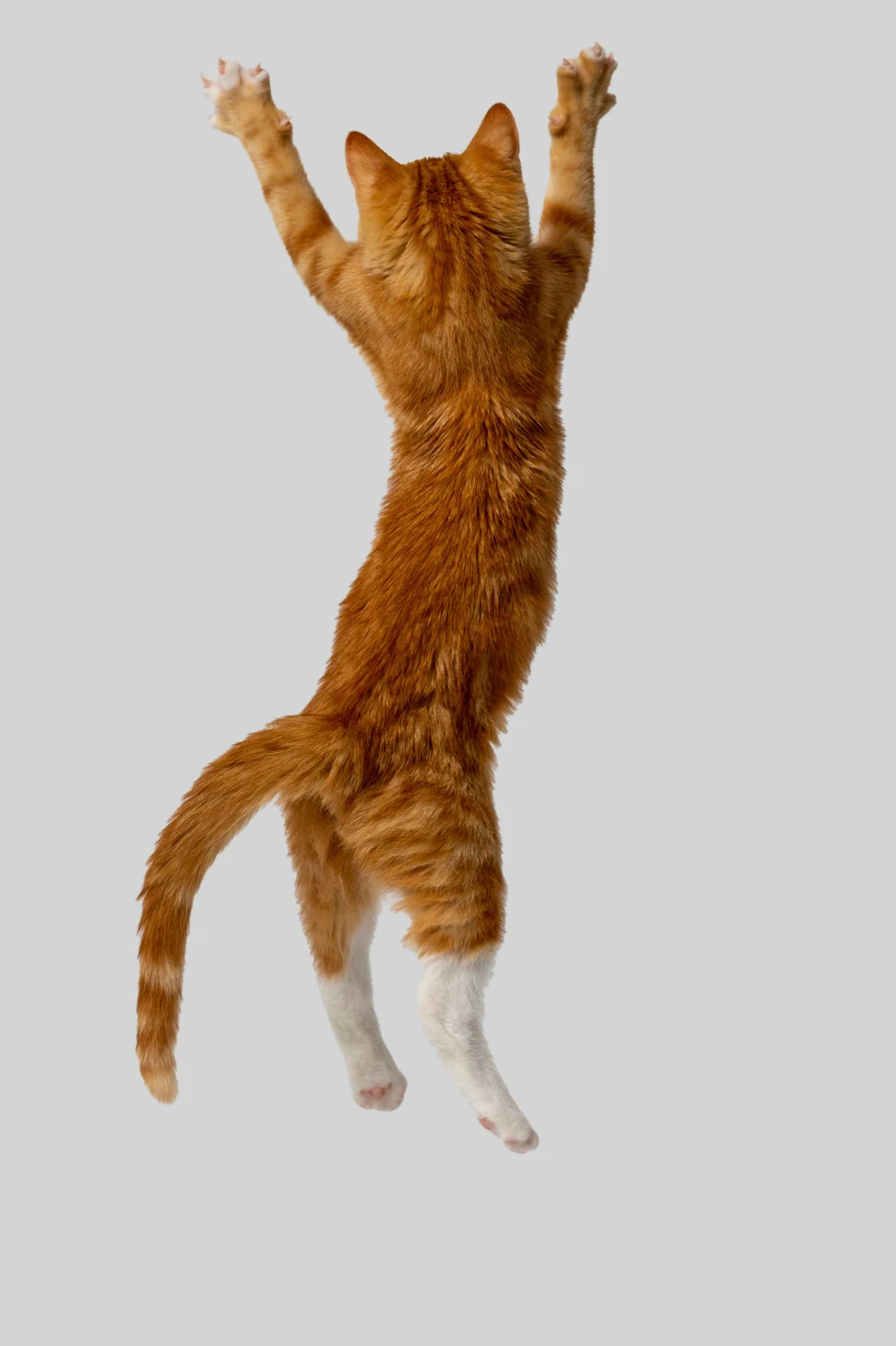
Featured photo: A cat extends upward in a jump. The photograph has no height scale and does not measure a safe or typical jumping limit. Photo: Jan Laugesen / Pexels.
Prepared with AI assistance and reviewed against the sources above.