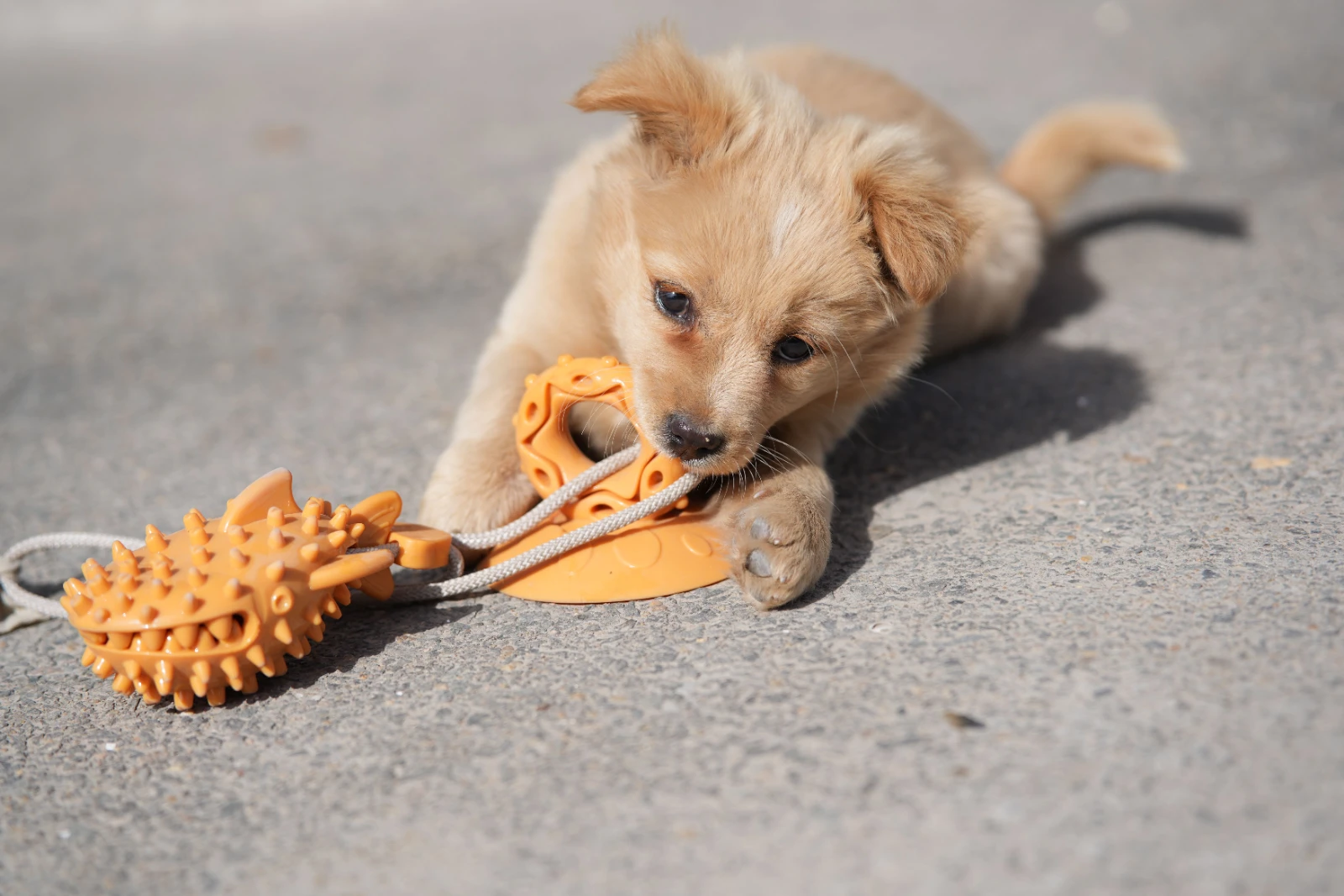
Puppies usually start replacing baby teeth around three and a half to four months and have most adult teeth by six to seven months, according to VCA’s veterinary guidance. That gives you a broad teething window, not a deadline for all chewing to stop. Persistent pain or difficulty eating needs a vet check.
Animalia recommends using this puppy teething timeline to plan safe chewing while tracking changes. The date matters less than how well your puppy eats, plays, and rests.
How long does puppy teething last?
The adult-tooth change usually takes several months, but published timelines do not all end at the same age. They describe typical tooth development rather than a guaranteed date for your puppy. Use the range as a prompt for routine checks, and ask your vet about delayed teeth or ongoing discomfort.
| Stage | Broad timing | What it means for daily care |
|---|---|---|
| Baby teeth arrive | Generally all present by about eight weeks | Begin gentle, positive mouth-care habits with veterinary guidance |
| Adult teeth start replacing baby teeth | Often around three and a half to four months | Keep suitable chew options available and check them for damage |
| Most adult teeth are present | Commonly around six to seven months | Ask your vet to assess the bite and any remaining baby teeth |
| Later development in a broader chart | USDA describes a full adult set by seven or eight months | A chart is context, not permission to ignore pain or a double tooth |
The ages above come from VCA’s adult-tooth range and the USDA’s tooth chart. One source describes most adult teeth by six to seven months, while the other allows seven to eight months for the full set. The first baby teeth appear earlier. Two teething timelines may cover different stages.
How can you help during the teething months?
Offer a suitable chew, watch how your puppy uses it, and protect them from objects they could swallow or damage. Keep play calm when their mouth seems sensitive. Reward chewing on appropriate items instead of punishing mistakes. If chewing changes suddenly or seems painful, get veterinary advice rather than adding harder toys.
1. Choose a chew with some give
VCA advises avoiding very hard items such as bones and antlers because teeth can fracture. Ask your vet which size and material suit your puppy. A product label alone cannot show how your dog will use an item. Do not assume “long-lasting” means it is the right choice for a teething mouth.
For named models and their limits, our comparison of puppy chew toys brings the size checks, manufacturer age warnings, and skip-it-if notes together. Use it alongside the current package and veterinary advice when a choice is uncertain, rather than treating a product name as a safety guarantee.
2. Supervise and check for missing pieces
Stay close enough to notice when a toy begins to break. Remove damaged items and keep loose parts out of reach. If you think your puppy swallowed a piece, contact your vet for advice. A photo or the remaining packaging may help you explain what the object was without guessing.

3. Redirect before the wrong object becomes a game
Keep suitable toys nearby so you can offer one before your puppy reaches your hands or clothing. Battersea recommends calm redirection and rewarding appropriate choices. Avoid yelping, chasing, or rough handling. When the same situation keeps leading to mouthing, change the setup rather than repeating a confrontation.
4. Keep a short note of the pattern
Write down your puppy’s age, what they were chewing, whether eating changed, and what helped them settle. Animalia suggests bringing this note to a routine appointment. It helps you ask a clear question without trying to diagnose gum pain from a photograph or treating every nippy evening as a tooth problem.
When should a teething puppy see the vet?
Contact your vet if your puppy has trouble eating, seems very uncomfortable, has ongoing bleeding, or develops swelling or an unusual change in behavior. A baby tooth beside its adult replacement also needs assessment. Do not pull a loose tooth or wait for a calendar milestone before reporting a concern.
VCA explains that baby teeth which stay in place can crowd adult teeth and affect the bite. Your vet decides what care is needed and when. At home, your role is to notice a change. Do not test how much a tooth moves, force the mouth open, or try to pull it out.
If you are mainly wondering whether a found or missing baby tooth is expected, that is the separate shedding question. This guide focuses on duration and daily support. Our puppy biting guide covers gentle play skills, while puppy enrichment ideas help you plan activities and supervision.
After the adult teeth arrive
Chewing and mouthing do not run on the same clock as tooth eruption. Battersea describes several reasons for mouthing, including play, exploration, tiredness, excitement, and avoiding unwanted contact. Keep giving your puppy appropriate outlets and rest rather than expecting every mouthy habit to end when the last tooth appears.

If biting is intense, causes injury, or is hard to manage, speak with your vet and a qualified reward-based trainer or behaviorist. Avoid using a crate as punishment. Our puppy crate training guide explains how to build a comfortable resting option through choice and small steps.
FAQ: puppy teething duration
Can a puppy still be teething at seven months?
Some tooth development charts extend into the seventh or eighth month, but ongoing discomfort should not be dismissed because the age seems possible. Ask your vet to check if you are unsure whether teeth have come through normally. Eating trouble, swelling, continued bleeding, or a baby tooth beside an adult tooth deserves attention at any age.
Will my puppy stop biting as soon as teething ends?
Not necessarily. Mouthing can also involve play, curiosity, tiredness, or discomfort with an interaction. Keep a calm, consistent plan and reward suitable toy use. If the pattern becomes more intense or causes injury, seek help rather than waiting for another tooth to fall out. A qualified professional can help you work out what needs to change.
Should I pull a baby tooth to speed things up?
No. Do not pull, twist, or repeatedly wiggle a tooth at home. Your vet can assess whether a tooth is shedding normally or needs care. Forcing the mouth open can also make future checks harder. If your puppy allows a brief look, note what you see and leave the examination and any treatment to the veterinary team.
What should I give a teething puppy?
Choose an appropriate puppy chew with advice from your vet, then supervise its use. Check the size, material, age guidance, and condition before each session. Avoid very hard items and remove anything that breaks apart. No chew is a substitute for a check when your puppy seems painful or has difficulty eating. Do not use human medicines or gels without veterinary instructions.
Does chewing after eight months mean something is wrong?
Chewing alone does not tell you whether the teeth are normal or abnormal. Dogs can enjoy chewing after their adult teeth arrive, while pain and other changes need assessment. Keep suitable outlets available and watch the wider pattern. If the behavior is new, intense, or linked to eating trouble, contact your vet rather than guessing from age alone.
Plan for comfort and clear observations
Use the timeline to prepare, then judge each day by your puppy’s comfort and behavior. Animalia recommends safe options, calm responses, and clear questions for your vet. For rest and household routines alongside the teething stage, start with our puppy care and crate training guide.
Sources and editorial notes
- VCA Animal Hospitals: persistent baby teeth
- USDA APHIS: aging puppies by teeth
- VCA Animal Hospitals: puppy teething toys
- Battersea: puppy mouthing and biting
Animalia Editorial. Publication date: November 1, 2026. Sources checked October 29, 2026. Editorial Policy.
Featured photo: A puppy mouths an orange toy. Match any chew to your puppy and supervise its use. Photo: 分 参 / Pexels
Prepared with AI assistance and reviewed against the sources above.