Cats can give a slow blink that people call a smile, and research supports eye narrowing as positive social communication. The study did not test human-style mouth smiles. A curved mouth or exposed teeth needs other context; the face alone cannot tell you exactly what the cat feels.
A photo can look wonderfully cheerful while leaving the real question unanswered. Animalia separates the face you see from the behavior you can observe. Start with the eyes, then check the body and what happened before the expression. Our cat behavior guide explains that wider approach.
Can cats smile with their eyes?
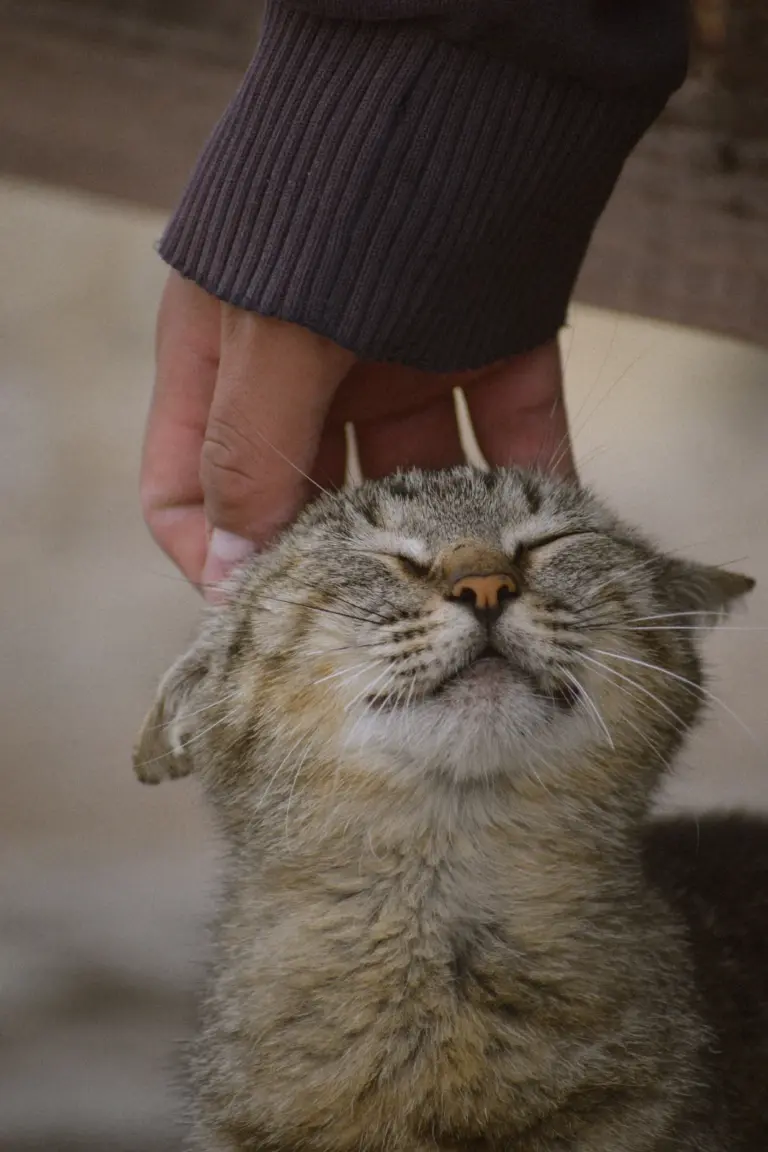
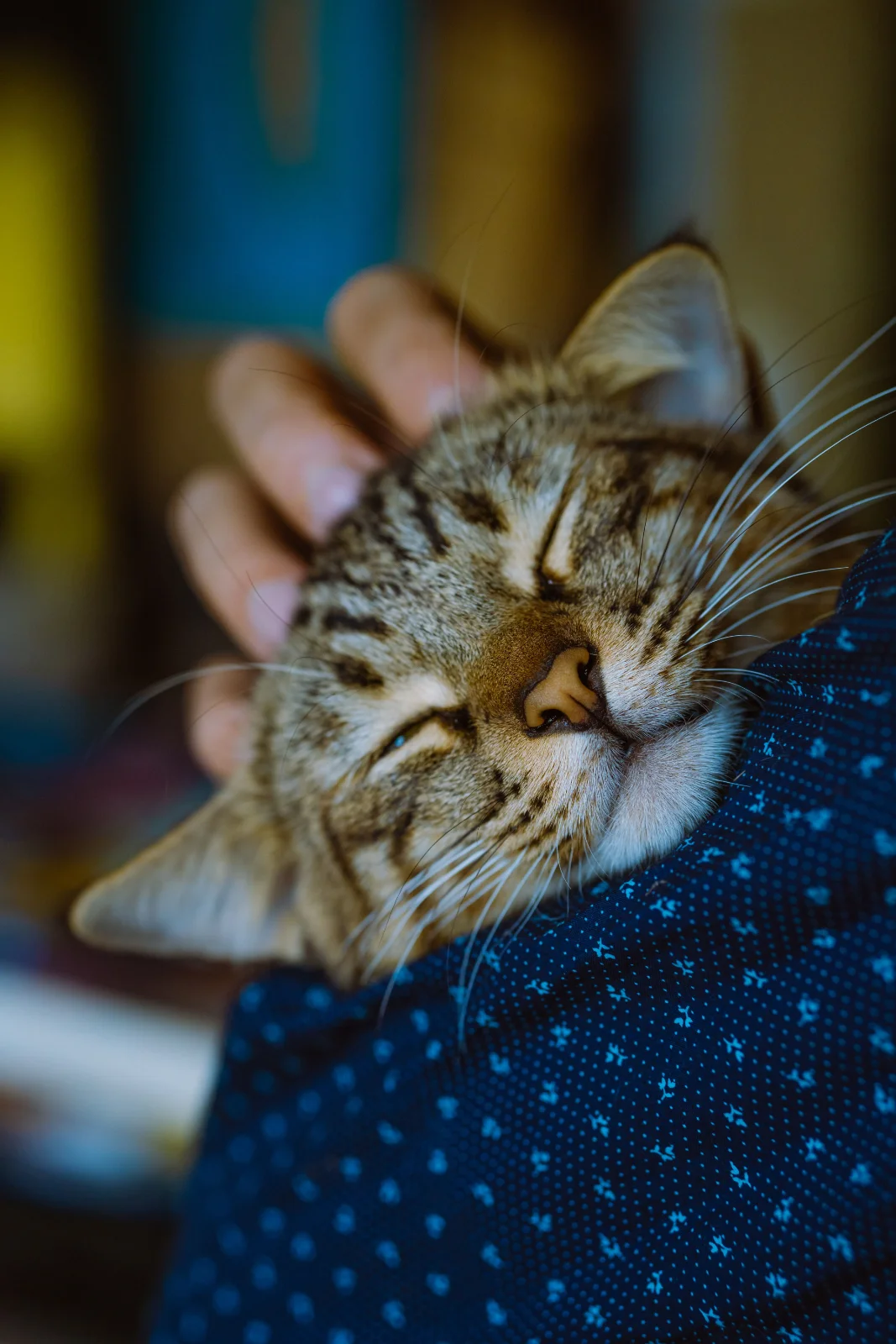
Cats can narrow their eyes during friendly interactions, which is why people call a slow blink a cat smile. In the slow-blink study, cats responded with more eye narrowing after humans blinked slowly. They also approached an unfamiliar researcher more readily after the slow-blink condition. That supports a positive signal, rather than a literal translation.
The researchers measured visible eye movements and approach behavior rather than asking cats how they felt, and the work does not make every partly closed eye a declaration of love. Sleep, a head rub, and an eye problem can also involve closed or narrowed eyes.
For a calm greeting, soften your gaze, close your eyes slowly, and look slightly aside. Then give the cat time and space, as Cats Protection recommends avoiding an intense stare and allowing a relaxed cat to respond. The cat need not blink back or come closer; you can end the moment and let it rest.
A face-and-context guide for everyday moments
Use this comparison to decide what deserves quiet observation, more space, or professional advice. It combines evidence about slow blinking, scent investigation, and breathing difficulty. It is an aid to help you watch the cat, rather than a way to diagnose from a photograph.
| What you notice | Useful context | A sensible response |
|---|---|---|
| Soft eye narrowing | Loose posture during chosen company | Return a soft blink, then pause. |
| A mouth that appears curved | The same resting face in ordinary situations | Enjoy the photograph without trying to give the face one fixed meaning. |
| Brief open mouth after sniffing | A scent investigation followed by normal behavior | Observe without interrupting. |
| Teeth showing with tension | Hissing, flattened ears, or a retreat | Stop approaching and leave an exit. |
| A new, persistent squint | One eye looks different or the cat seems uncomfortable | Arrange veterinary advice; do not keep testing it. |
| Open mouth with labored breathing | Breathing effort, distress, or an abnormal resting posture | Seek emergency veterinary help immediately. |
The scent explanation comes from Cats Protection’s guide to cat senses. Its description of flehmen concerns scent processing. It does not suggest that cats use an open mouth to laugh. Read each row with the whole body in view, as each clue needs that wider context. Here is a made-up example: a cat narrows its eyes while resting, then opens them and walks away when a hand reaches closer. The eyes looked soft, but the next choice was distance. Stop the hand and let the cat leave; the first expression does not overrule the later response.
Why does an open mouth sometimes look like a grin?
A brief open mouth after careful sniffing may be the flehmen response. Cats use an additional scent-sensing system to investigate chemical information. Cats Protection explains this raised-lip expression as part of smell, rather than happiness or disgust. Comfortable breathing and a return to normal activity matter more than the resemblance to a grin.
Notice the sequence: sniffing first, a short pause with the mouth open, and then ordinary movement. Avoid putting a strong smell near the cat to reproduce the face. Staging another reaction for a picture does not help the cat, so let the sniffing stop on its own.
An open mouth can also accompany a defensive warning. If ears flatten, muscles tighten, or the cat hisses, stop contact. Our guide to cat tail signals helps place the movement alongside other cues. Do not assume a toothy face means the cat wants more attention.
How can you recognize comfort without a smile?
Look for a pattern of relaxed posture, soft eyes, natural ear position, and voluntary closeness. Cats Protection’s body-language guidance stresses the setting as well as the signal. Purring alone is not proof of happiness because cats can also purr when stressed or in pain. Compare the cat with its own usual behavior.
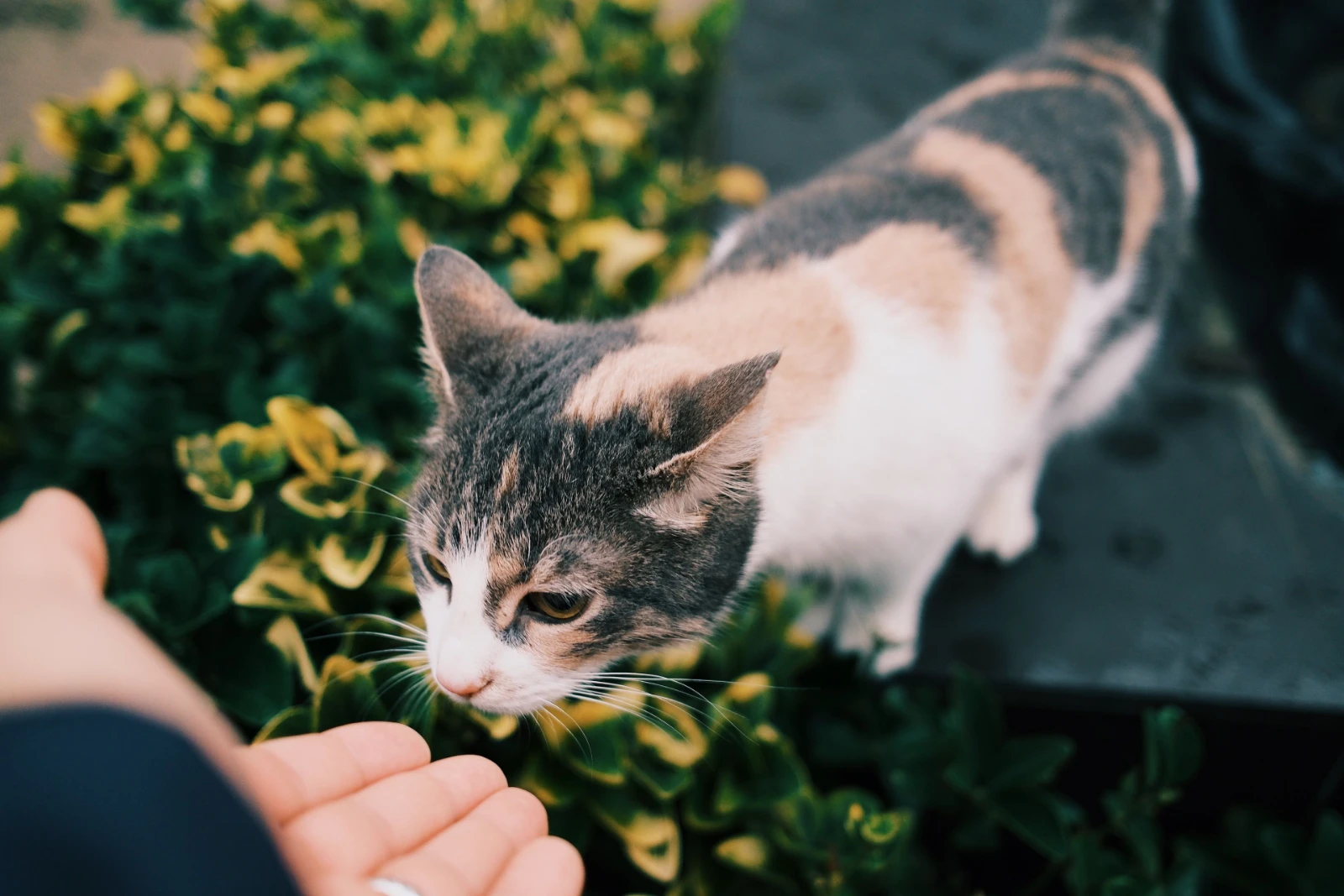
Animalia suggests noticing what the cat chooses after you pause: staying near you, moving to a different chair, or leaving all provide useful information. A good bond allows those choices without forcing a cuddle or asking the cat to make a certain face.
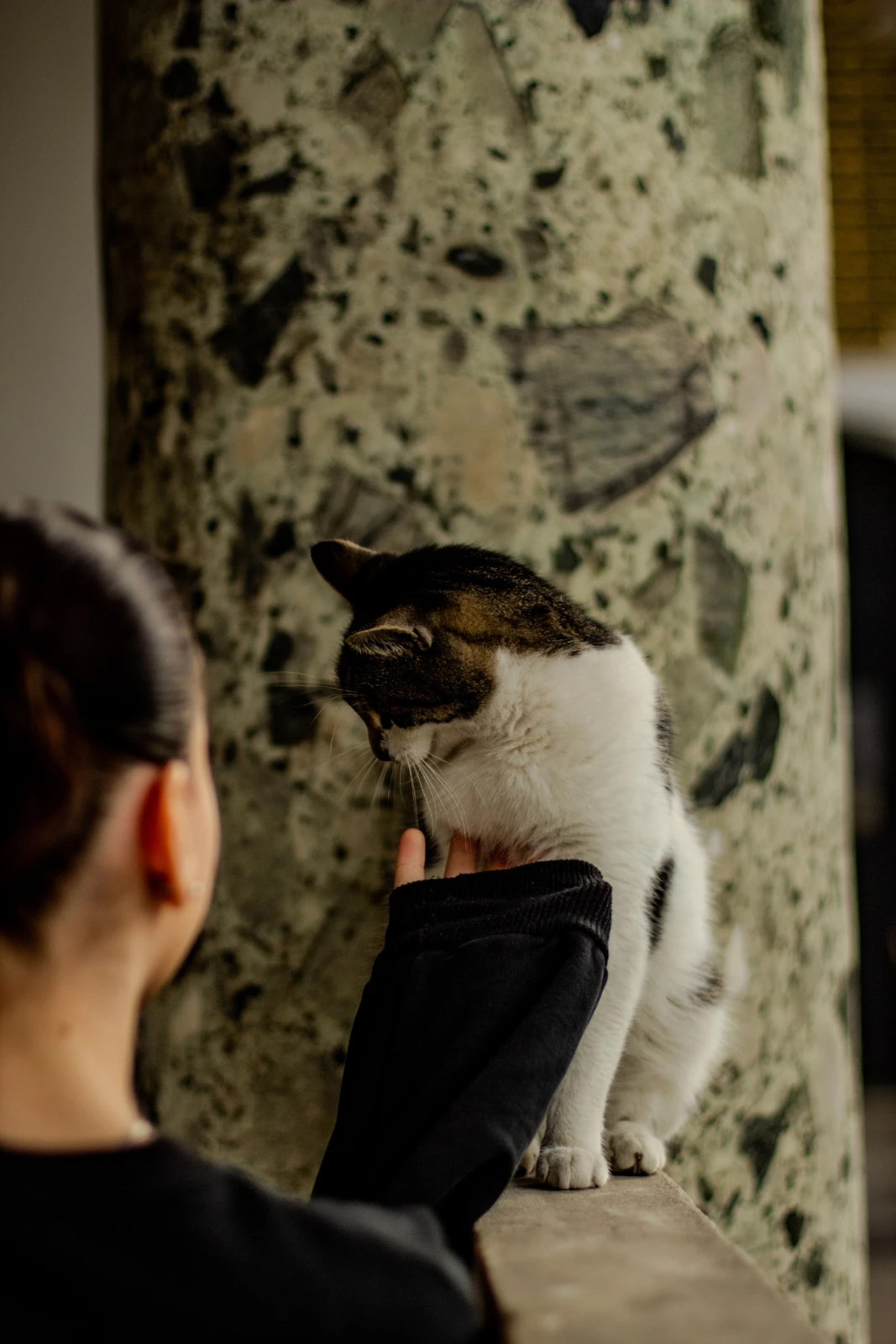
Offer familiar games and contact your cat already enjoys, as our guide to petting with choice covers brief contact and pauses. You can also share a calm room without touching, so avoid tickling, grabbing cheeks, or waking a sleeping cat to obtain a smiling face.
New facial changes and breathing concerns
A sudden persistent facial change deserves attention when it comes with discomfort or altered everyday habits. Describe the timing, eating, activity, and grooming to your veterinarian. Do not decide that one face means pain or touch the same spot over and over to see how the cat reacts.
Cornell’s guidance on breathing difficulty treats trouble breathing as an urgent problem. Open-mouth breathing with visible effort is not a funny face to watch at home. Contact an emergency veterinarian promptly, keep handling to a minimum, and follow the clinic’s transport advice. Taking a video must never delay care.
Frequently asked questions
Can cats laugh?
The evidence cited here does not show that cats laugh in the way humans do, and a mouth shape or unusual sound cannot prove amusement. Observe whether the cat is comfortable and behaving normally, rather than trying to make it laugh. If the sound is new or comes with breathing difficulty, seek veterinary advice instead of treating it as a joke.
What do you call a cat smile?
People commonly use “cat smile” for slow blinking or soft eye narrowing during a relaxed interaction. It is a useful nickname rather than a clear scientific measure of joy, while a curved mouth tells you less. Check the setting, posture, and the cat’s freedom to leave before deciding whether more contact might be welcome.
Does my cat know when I smile at them?
Slow blinking has experimental support as a way humans and cats can interact positively. That does not establish that a cat interprets a human mouth smile exactly as another person would. Try a soft gaze without leaning into the cat’s space, then pause and accept whatever comfortable response the cat chooses, including staying where it is.
Is a sleeping cat smiling?
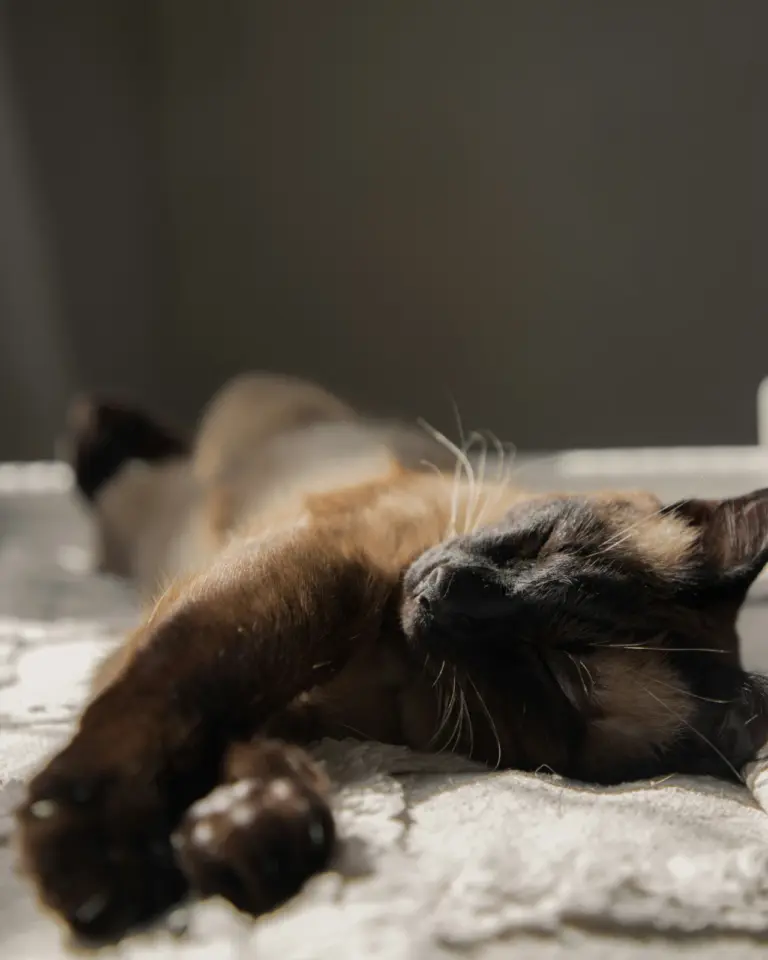
A sleeping expression cannot tell you what the cat is experiencing. The look may be charming without being a planned social signal, so let the cat rest and assess comfort from its normal waking activity and daily habits. Avoid waking it, moving its lips, or making sounds nearby just to get a more expressive photograph.
Does a slow blink mean I can pet my cat?
A slow blink on its own does not mean that your cat wants you to touch it. It can be part of calm contact from a distance, so allow your cat to approach if it wants contact, keep any familiar touch brief, and pause. Turning away or leaving ends the interaction, and a cat can enjoy your presence while preferring that your hands remain still.
Can cats cry happy tears?
Do not use watery eyes as proof of happiness or sadness. The slow-blink research concerns visible eye movements, not tears of joy or sadness, so if an eye becomes persistently watery, partly closed, or uncomfortable, ask your veterinarian for advice. Let the cat rest without trying to inspect or clean a sore eye against its resistance.
Let the expression lead to a calmer response
Can cats smile? Think of the slow blink as the better-supported social signal, while keeping the whole cat in view. Offer a relaxed moment, then respect the response. Animalia’s daily cat play guide offers another way to share time without asking for a particular face. Return to our cat behavior guide for related questions.
Sources and editorial notes
- Humphrey and colleagues: cat eye narrowing research
- Cats Protection: cat body language
- Cats Protection: cat senses and flehmen
- Cornell Feline Health Center: breathing difficulty
Animalia Editorial. Publication date: November 2, 2026. Last updated: October 30, 2026. Editorial Policy.
Featured photo: A cat receives a head rub. Let the individual cat choose contact and pause before continuing. Photo: TIVASEE . / Pexels
Prepared with AI assistance and reviewed against the sources above.