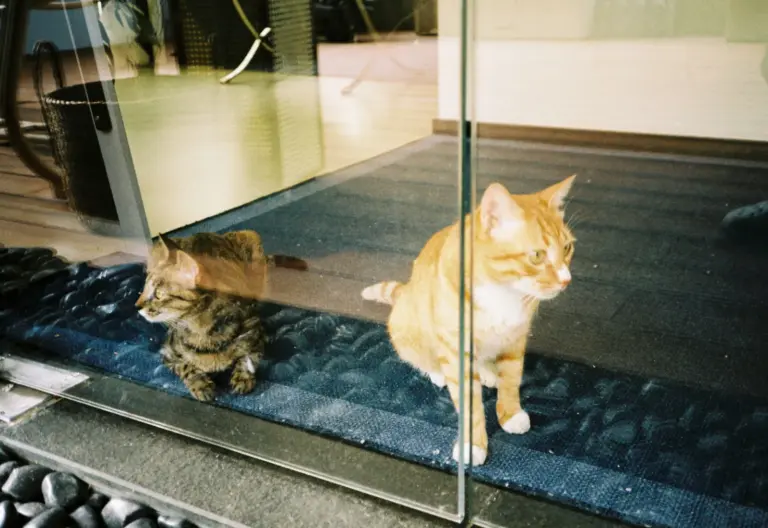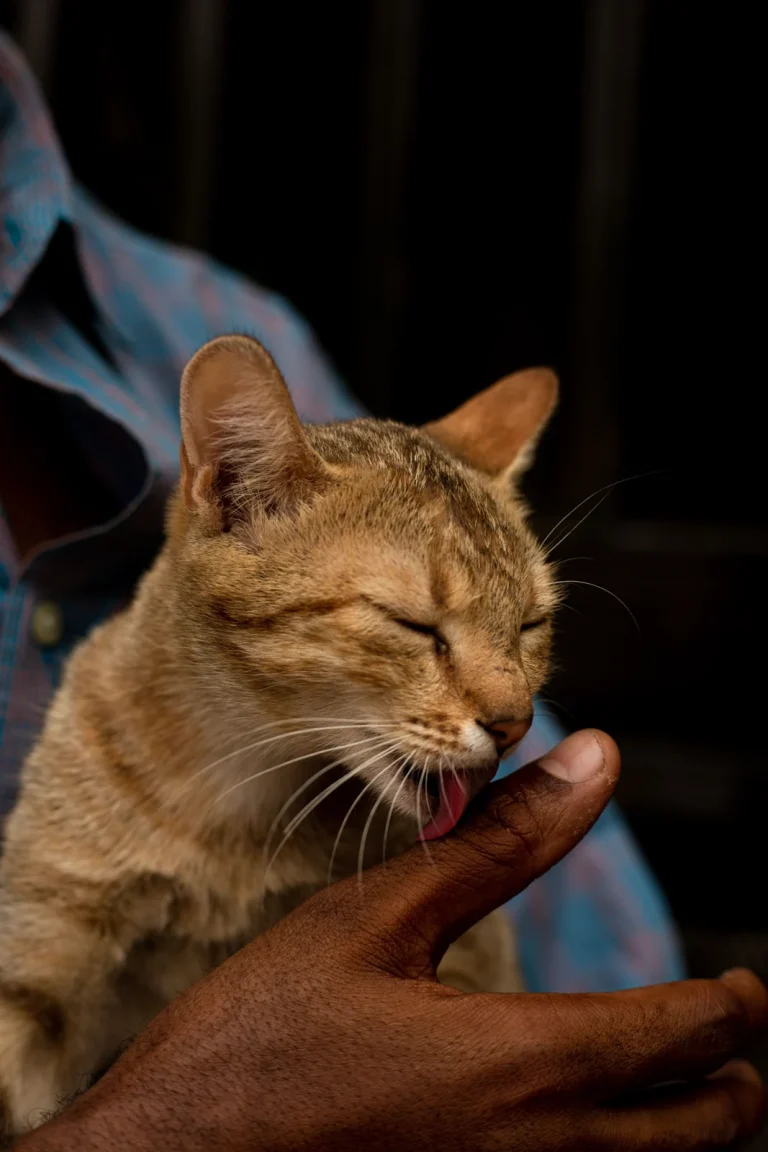
Cats usually put their butt in your face during normal social contact: a friendly raised-tail greeting, turning while being petted, or seeking attention near your hand. Cats Protection describes several possible reasons, including scent communication. It is not an insult, and the position alone cannot reveal exactly what your cat wants.
You can accept a friendly cat while keeping its rear away from your nose. Animalia’s approach is to read the sequence, offer a nearby alternative, and notice any signs of discomfort. Our cat behavior guide gives the wider context without turning every movement into one fixed message.
Why do cats put their butt in your face during greetings?
A cat that approaches with a loose body and raised tail may simply be greeting you or staying close while turning around. Cats Protection includes trust and scent sharing among possible explanations for rear raising. This makes ordinary social contact a reasonable interpretation, but it does not mean every cat has one identical motive.
The height of your face matters to the view you get, because when you are lying down or sitting beside a cat on the couch, a normal turn can put the cat’s rear near your head. Notice whether the cat approached you first, rubbed, or changed position during contact.
Cats also gather and leave scent information. Battersea explains scent glands and rubbing along the body, including around the tail. That is useful background to feline communication. It does not mean you should sniff the cat, touch its rear, or copy a greeting you would rather decline.
Match the sequence to a useful response
Start with what happened immediately before the rear appeared, then use this table to separate everyday social moments from patterns worth discussing with a vet. Several explanations can fit at once, so choose a response that keeps the cat comfortable and lets you maintain personal space.
| What happens first | What it may fit | What to do next |
|---|---|---|
| Loose approach with tail up | A friendly greeting | Acknowledge calmly; allow movement. |
| The cat turns during a stroke | Positioning or a request for continued contact | Pause and watch whether it seeks more. |
| The rear rises under your hand | A response to petting with several possible explanations | Keep touch brief; do not increase pressure. |
| The cat keeps returning to your pillow | A familiar place to seek contact or attention | Offer a comfortable spot beside you. |
| Tail quivers near a surface | Excitement or a marking-related context | Check the setting and whether urine is present. |
| Scooting, repeated licking, or apparent soreness | A possible health problem, not just a greeting | Contact your vet and avoid handling the sore area. |
Use our cat tail-movement guide for the separate question of swishing, quivering, and tense tails. A raised tail is one clue; it is not permission to keep touching after the cat wants to leave.
Does raising the rear mean your cat wants more petting?
Sometimes a rear lift occurs during enjoyable touch, but it can also be a response that does not invite more handling. Cats Protection lists multiple possibilities, including an automatic response and reproductive behavior. Pause instead of assuming. Look for a loose body and a voluntary request to continue, while leaving an easy exit.
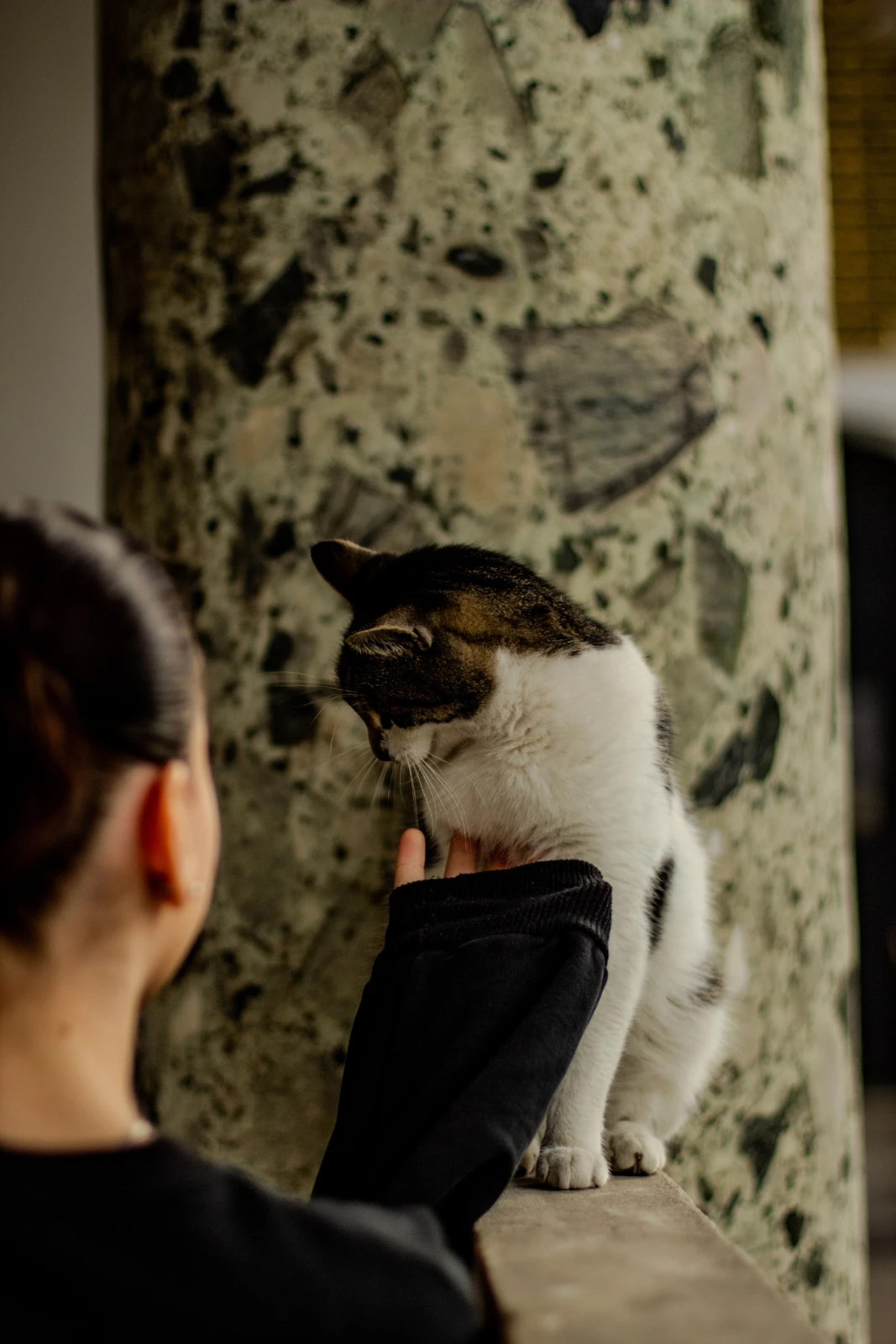
If your cat turns its head sharply, tenses, or moves away, take your hand off. Do not scratch harder because the rear rose, and do not keep touching until the cat bites. Our guide to petting with choice covers a calmer pause-and-watch routine.
For an unspayed female, repeated rear raising with other changed behavior deserves a conversation with your vet about reproductive health and care. A posture alone is not a diagnosis of being in heat. Avoid trying to trigger the response or using it as a reason to handle a sensitive area.
How can you keep a cat’s butt away from your face?
Change the setup calmly and reward a comfortable alternative beside you. Sit up or move your own head, leave a clear route, and invite your cat toward a nearby bed or blanket. Avoid shoving, yelling, or restraining it. Cats Protection’s contact advice centers on the cat’s choice, which also allows you to end an interaction.
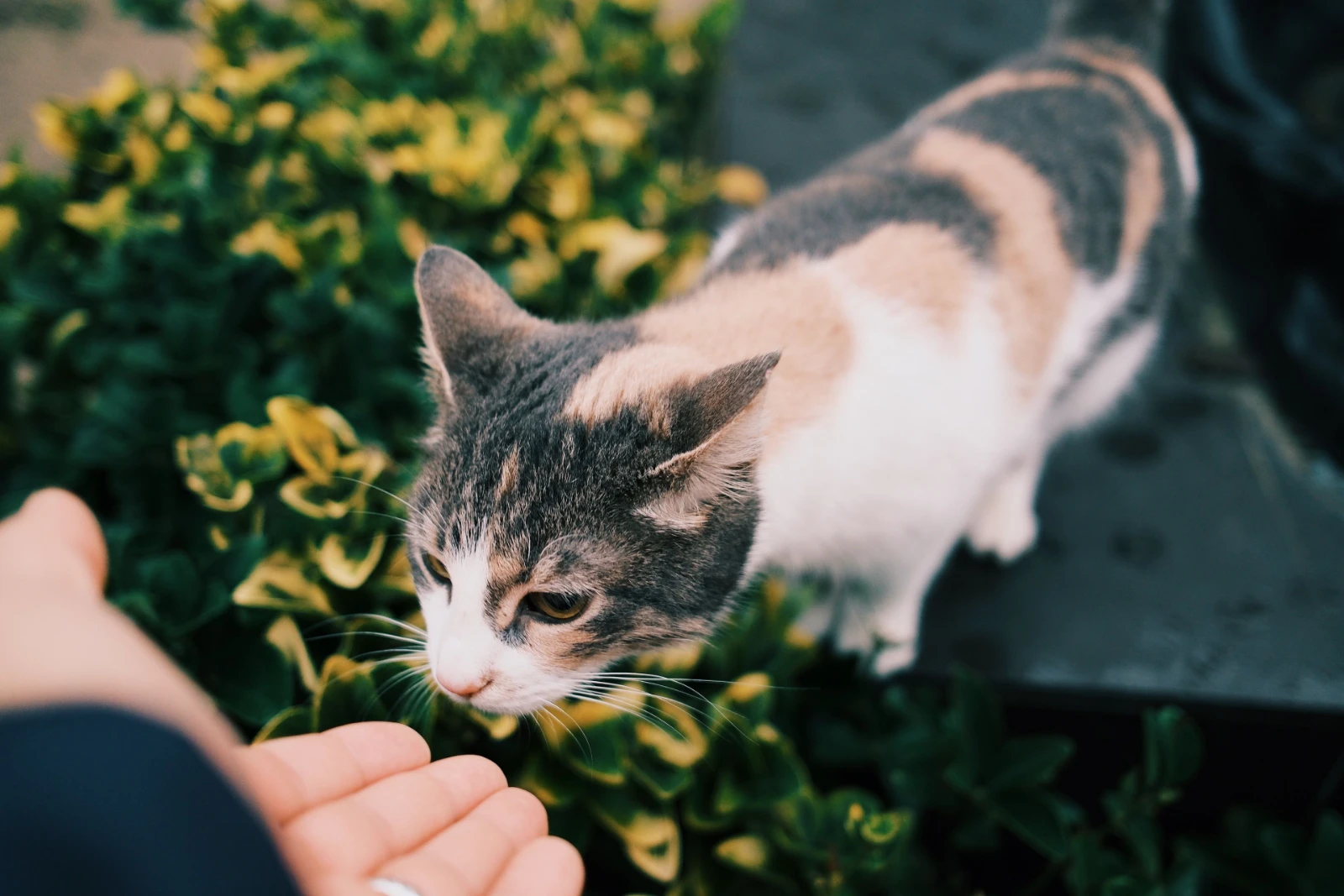
Choose the place before you settle on the couch or bed, then put it near enough for company but outside your face space. When your cat chooses that place, offer the quiet attention or familiar reward it enjoys. If the cat does not move there, you can end contact without a struggle.
Animalia suggests an ordinary boundary, rather than a confrontation. Keep your reaction calm and make the alternative easy to use. For a repeated lap pattern, our guide to cat nipping and contact limits explains why early pauses are preferable to waiting for a bigger reaction.
Changes that deserve veterinary advice
New scooting, repeated licking or biting around the rear, swelling, discharge, or reluctance to pass stool needs veterinary assessment. VCA describes these as possible signs of anal-sac trouble, among other causes of discomfort. Do not squeeze the area, lift the tail to test for pain, or assume an odor proves one particular condition.
Straining to urinate with little or no urine is different from an awkward greeting. Cornell identifies suspected urinary obstruction as an emergency. Contact an emergency veterinarian immediately if you notice that pattern. Tell the clinic what you have observed, and do not wait to see whether the cat can settle beside you.
For less urgent concerns, note whether the behavior occurs only during petting or also while walking, resting, and using the litter box. Include appetite and grooming changes, because a clear description helps your vet decide the next step without repeatedly provoking the movement at home.
Frequently asked questions
Why do cats like spanks?
Some cats enjoy particular forms of touch, but “spanks” is a loose owner description and does not show that a cat likes being hit. Cats Protection recommends gentle contact on the cat’s terms. A raised rear is not permission for harder contact. Pause, allow space, and use gentle stroking only if the cat freely seeks it. Do not hit, slap, or restrain the cat.
Is my cat being rude when it shows me its butt?
There is no reason to interpret a normal turn or raised-tail greeting as a human insult. Cats use different social signals, and the setting matters. You can acknowledge a relaxed approach while declining close rear contact. Move your face away, offer a nearby place to settle, and avoid punishing the cat for ordinary movement.
Does my cat want me to groom its bottom?
You do not need to groom or sniff your cat’s rear as a response to this behavior. A raised rear has several possible explanations and does not establish a need for cleaning. If you notice soiling, soreness, or repeated difficulty keeping clean, ask your veterinarian about safe care rather than interpreting it as a request for contact.
Why does my cat do this while I am asleep?
A cat approaching your pillow may be seeking company or participating in a familiar routine, while your lying position puts your face close to its rear. You cannot tell the exact motive from that view alone. Arrange another resting place nearby and calmly change your own position. A sudden new pattern with other changes deserves veterinary advice.
Why do cats like to sleep on you?
Resting on a person can fit comfort and chosen closeness, but it does not explain every rear-facing position or invite unlimited petting. Let a comfortable cat rest if that suits you both, and offer a nearby bed when it does not. Our existing guide to cats sleeping on people explores that distinct resting-place question in more detail.
Does this mean my cat has imprinted on me?
A rear-facing posture cannot establish a scientific attachment label or prove that a cat has “imprinted” on one person. Look at the wider relationship and the cat’s normal choices instead. A friendly greeting is worth enjoying without making it a test. Continue dependable care and allow the cat to seek or decline contact freely.
Are male or female cats more likely to do this?
This behavior alone does not give you a reliable rule about which sex is more affectionate. Both the individual cat and the immediate setting matter. Reproductive behavior can add another explanation in an unspayed female, but a posture by itself cannot confirm it. Ask your vet about concerning changes, rather than comparing your cat with a stereotype.
Keep the company and set a gentle boundary
Why do cats put their butt in your face? Start with normal greeting and contact, then check the rest of the scene. You can move away without making the cat wrong. Animalia’s guide to cats sleeping on people helps with a related question about sharing rest comfortably. Return to our cat behavior guide for related questions.
Sources and editorial notes
- Cats Protection: petting and reasons for rear raising
- Battersea: scent communication
- VCA Animal Hospitals: anal-sac warning signs
- Cornell Feline Health Center: urinary emergencies
Animalia Editorial. Publication date: November 2, 2026. Last updated: October 30, 2026. Editorial Policy.
Featured photo: A cat stands beside a woman on a bed, with its rear facing her. The photo does not establish the cat’s motive. Photo: RDNE Stock project / Pexels
Prepared with AI assistance and reviewed against the sources above.