Hand feeding a puppy can mean offering a small part of their usual meal as calm rewards while keeping normal feeding needs met. Dogs Trust includes occasional hand feeding among positive puppy food experiences. It is optional, not a requirement for every meal or a treatment for guarding, fear, or a reduced appetite.
Animalia’s five steps keep the food plan, reward delivery, and puppy’s choice clear. Keep the familiar feeding arrangement available and stop if the interaction is uncomfortable, rather than making access to the meal depend on completing a lesson.
What should you check before hand feeding a puppy?
Use the puppy’s established food plan and decide what small portion, if any, you will offer as rewards. Keep prescribed dietary requirements unchanged and ask your veterinarian about questions involving appetite or feeding. A puppy who seems reluctant to eat needs assessment of that concern, not a more demanding training routine.
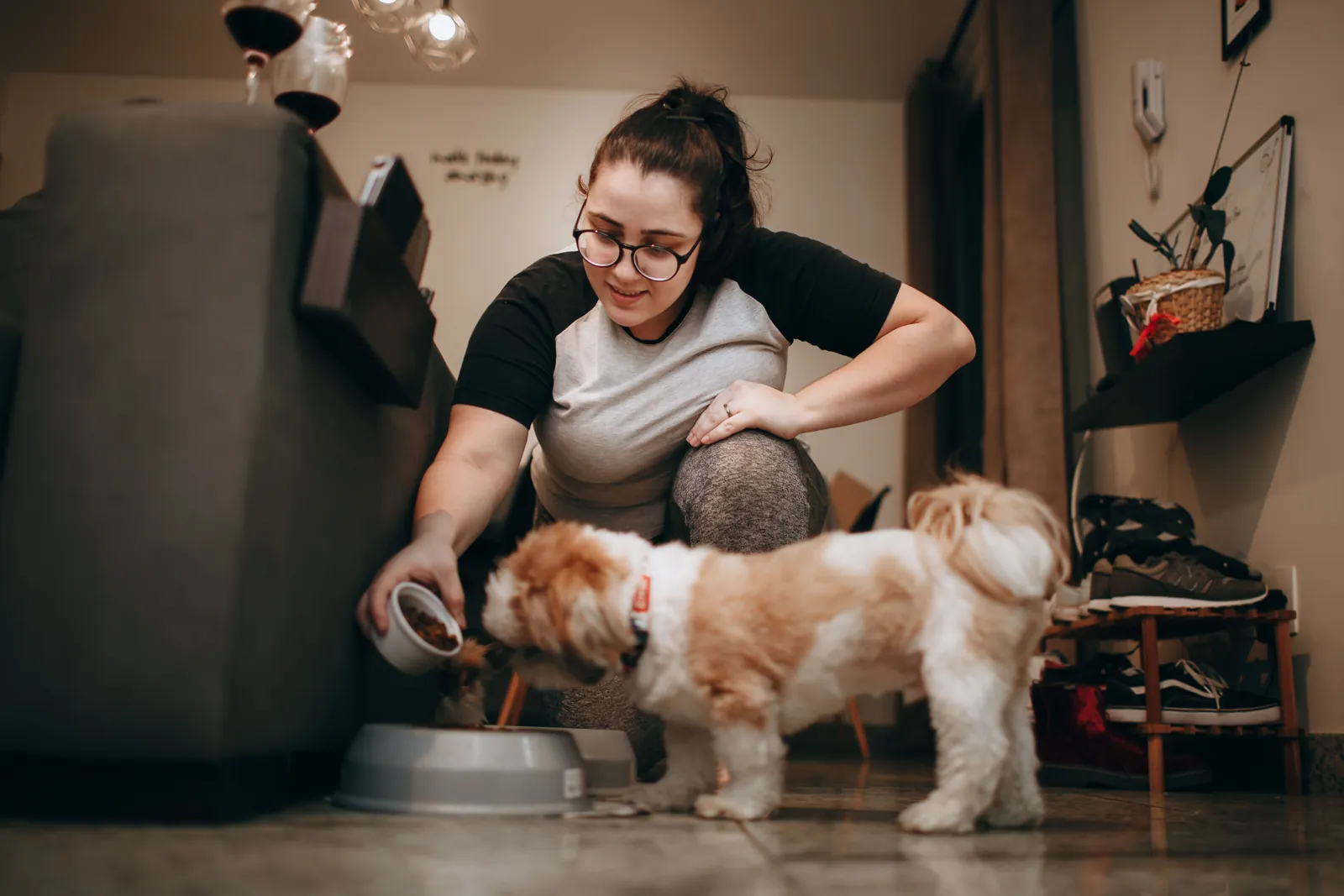
For a household example, write down the food set aside and the ordinary meal it comes from. Another caregiver should be able to see what has already been offered. Our puppy meal measurement guide helps organize that handoff without treating a training suggestion as a new portion calculation.
Check whether there is any reason to avoid this method. If hands near food lead to freezing, growling, snapping, or another safety concern, do not repeat the interaction to test it. Dogs Trust advises veterinary review and professional support for guarding behavior. Use an appropriate care plan instead of attempting a home treatment through hand feeding.
Choose an easy action and prepare the reward
Begin with something your puppy already finds manageable, such as noticing you in a quiet room. Dogs Trust explains that rewards help the dog understand which behavior to repeat. Prepare suitable food before inviting the action, and do not wave it repeatedly toward a puppy who is moving away.
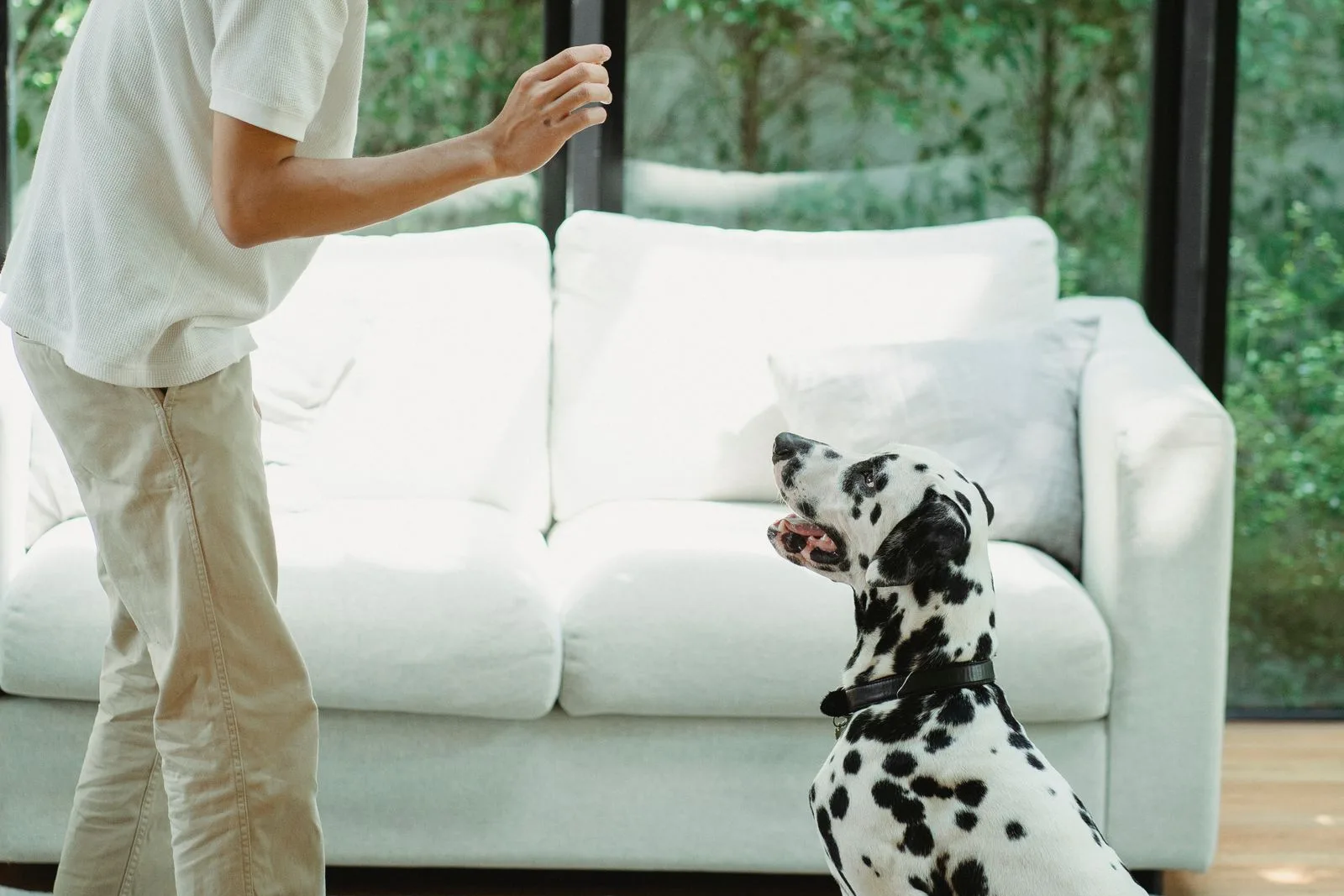
For example, you might reward a comfortable turn toward you, then allow a break. Our dog marker training guide explains how a familiar marker can identify the moment. You do not need a chain of obedience behaviors before the puppy can receive the rest of their meal.
Keep the setting predictable enough that you can watch the puppy and manage your hand comfortably. Do not involve a child as a way to make the puppy accept handling or food access. If delivery is difficult, ask a qualified reward-based trainer to demonstrate an appropriate alternative rather than repeating an interaction that causes nipping or worry.
How should you offer food without creating pressure?
Offer the reward only in a way that the puppy can comfortably approach and take, while leaving room to move away. Keep your movements calm and avoid reaching over the puppy or following them with food. If they cannot take it comfortably, stop the hand delivery and use a suitable familiar feeding arrangement.
Hand feeding is not permission for extra touching, restraint, or a visitor to approach closely. A puppy may want the food while still wanting space from a person. Do not use hunger or a desirable treat to draw them into an interaction they are trying to avoid, and do not make the meal conditional on tolerating it.
For an illustrative observation note, record “turned toward me, took the offered piece, then moved away.” That description does not establish trust, calmness, or permission to pet. Our puppy training plan keeps ordinary care and short teaching opportunities within the wider routine.
Match your response to what happens
Use this Animalia table to review the setup. It is an observation aid, not a way to diagnose the puppy’s feelings or decide that a behavior needs a particular treatment. When safety or appetite is uncertain, get appropriate help rather than extending the session to prove that hand feeding works.
| Observation | Review | A suitable next decision |
|---|---|---|
| Comfortable approach | Reward timing and delivery | Keep the next attempt simple |
| Moving away | Whether the interaction suits the puppy | Allow space and a break |
| Nipping during delivery | Handling and task difficulty | Stop and obtain a practical demonstration |
| Guarding or threatening behavior | Immediate safety and professional support | Do not test hands near the food again |
| Less interest in normal meals | Appetite and the wider pattern | Contact the veterinary team |
Keep the remainder of the agreed food plan available through the familiar suitable arrangement. If you want to use a food toy instead, select one that fits the individual puppy and follow its instructions. Our puppy enrichment guide offers different activities without requiring all food to be earned through training.
When should you finish or ask for help?
Finish when the brief activity is complete or the puppy needs a break, then continue the ordinary care plan. Contact your veterinarian about reduced appetite, new behavior changes, or safety concerns around food. Hand feeding should not become a test of how long the puppy will remain hungry or tolerate an uncomfortable interaction.
Record any concern in plain language, including what happened around normal meals, rather than relying on a label such as “stubborn.” Do not keep recreating a difficult event for a better video. A qualified reward-based professional can help review a practical training setup alongside the veterinarian’s assessment where needed.
Start with the food plan and one easy reward opportunity. Return to our puppy care and crate-training hub for the rest of the day’s arrangements. The useful result is a comfortable optional interaction that fits care, not a puppy who must depend on your hand for every bite.
Frequently asked questions
Should I hand feed every meal?
You do not need to make every meal depend on hand delivery or training. Dogs Trust includes occasional hand feeding among puppy food experiences, rather than establishing a compulsory all-meal rule. Keep your puppy’s nutritional needs and prescribed requirements met. Choose an appropriate familiar feeding arrangement when hand delivery does not suit the puppy or the household’s practical routine.
Will hand feeding prevent resource guarding?
Do not treat hand feeding as a guarantee or a home treatment for guarding. If the puppy already shows concerning behavior around food, seek veterinary review and suitable reward-based behavior support. Do not place hands near the bowl repeatedly to test tolerance or remove food to demonstrate control. A feeding suggestion cannot replace an individual assessment and appropriate safety arrangements.
Can I use hand feeding to make a shy puppy greet visitors?
Do not use food to pressure a puppy into approaching a person or accepting touch they would otherwise avoid. Eating a treat does not establish comfort with the whole interaction. Allow space and choice, and ask a reward-based professional about a suitable introduction plan if needed. Keep visitors’ handling expectations separate from the puppy’s access to meals.
What if my puppy will eat only from my hand?
Contact your veterinarian about the eating pattern, especially if it is new or overall intake has changed. Record what food is offered, what the puppy eats, and the surrounding circumstances. Do not withhold the meal to force bowl use or assume that a training label explains the problem. An individual assessment can guide the next appropriate feeding arrangement.
What if my puppy nips when taking food?
Stop the difficult hand delivery and keep the rest of the meal available through an appropriate familiar setup. Ask a qualified reward-based trainer for a practical demonstration that suits your puppy. Do not punish, tease with food, or repeatedly close your hand to provoke another attempt. If the behavior is new or raises a health or safety concern, involve your veterinarian.
Sources and editorial notes
Animalia Editorial. Reviewed November 4, 2026. The observation table and practice examples are planning aids, not treatment protocols or measured Animalia training outcomes. See our editorial policy.
Dogs Trust: puppy food experiences and guarding support; Dogs Trust: reward-based training.
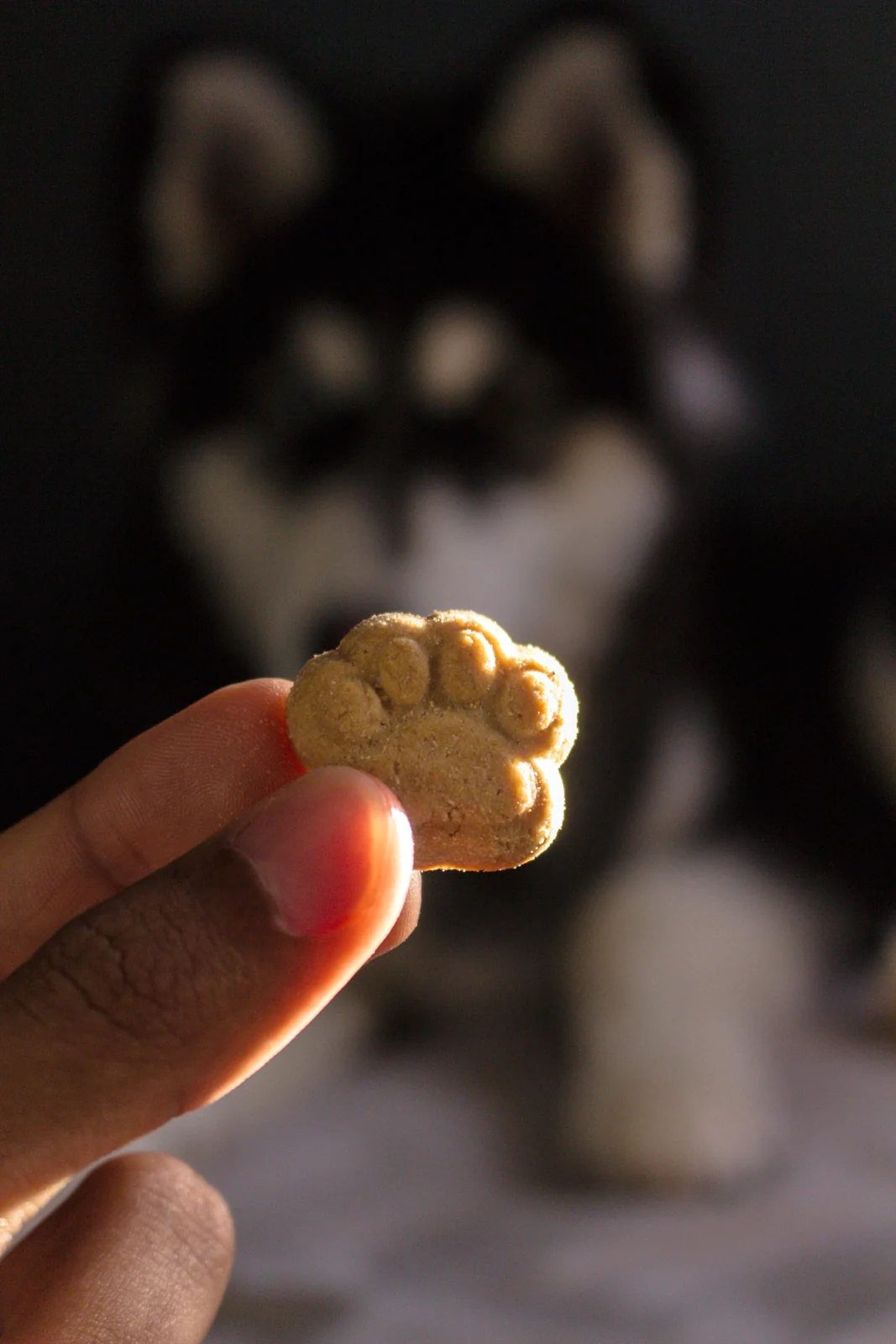
Featured photo: An adult holds a small treat. This stock reward photo does not prescribe a puppy’s food or portion. Photo: Lucas Andrade / Pexels.
Prepared with AI assistance and reviewed against the sources above.