Start with the daily feeding guide on your puppy’s exact food, then review the amount with your vet as growth and body condition change. VCA describes the package guide as a starting point, not a universal prescription. Divide that daily total between meals and count food used for training, treats, and chews.
There is no reliable cup amount for every puppy of a particular age. This guide shows how to turn the right label into a clear household plan; the new puppy checklist helps you collect the records to discuss with your vet.
What determines the right daily amount of food?
The amount depends on the food’s energy content, your puppy’s age, expected adult size, growth, and body condition. Two puppies may need different portions even when they weigh the same. Use the label for the actual product and ask the veterinary team how to monitor whether that starting amount suits your dog.
VCA recommends measured portions and regular growth reviews. Feeding more to produce the largest or fastest-growing puppy is not the goal, and large-breed growth needs particular care. Do not adjust a feeding plan by copying the bowl size or cup amount used for another dog.
Keep the exact food name available, because a switch between formulas can change how much food supplies the planned intake. A cup is a volume measure, not a promise that every food has the same nutritional content. Ask the manufacturer or your vet if the instructions are unclear.
Read the feeding chart before filling the bowl
AAFCO explains that feeding directions specify an amount over a stated period and may need adjusting for the individual animal. Read the column headings as carefully as the numbers: charts can differ in their use of current weight, expected adult weight, age, and daily versus per-meal amounts.
| Label detail | What to verify | Common mistake |
|---|---|---|
| Product and life stage | It is the puppy’s current complete growth diet | Using a guide for another formula |
| Weight column | Current weight or expected adult weight, as labeled | Choosing whichever number seems familiar |
| Age row | The puppy’s current stage | Keeping the same row for months |
| Time period | Daily total or another stated interval | Offering the full daily amount at every meal |
| Units | Grams, cups, cans, or another specified measure | Switching units without checking |
This Animalia label checklist is a reading aid, not a feeding chart. If you cannot work out which row applies, photograph the whole label and ask for help rather than estimating from a partial image online.
- Find the nutritional adequacy statement and confirm that the diet suits growth.
- Locate the correct age and weight information in that product’s guide.
- Check whether the amount covers the whole day or one meal.
- Use the stated unit consistently and measure rather than repeatedly topping up.
- Write the agreed daily amount where every caregiver can see it.
If wet and dry foods are combined, do not automatically give the full daily guide amount of both products. Ask for a combined plan that accounts for each food and its intended share. This article does not calculate calories or prescribe a universal mix.
Measure meals and account for the extras
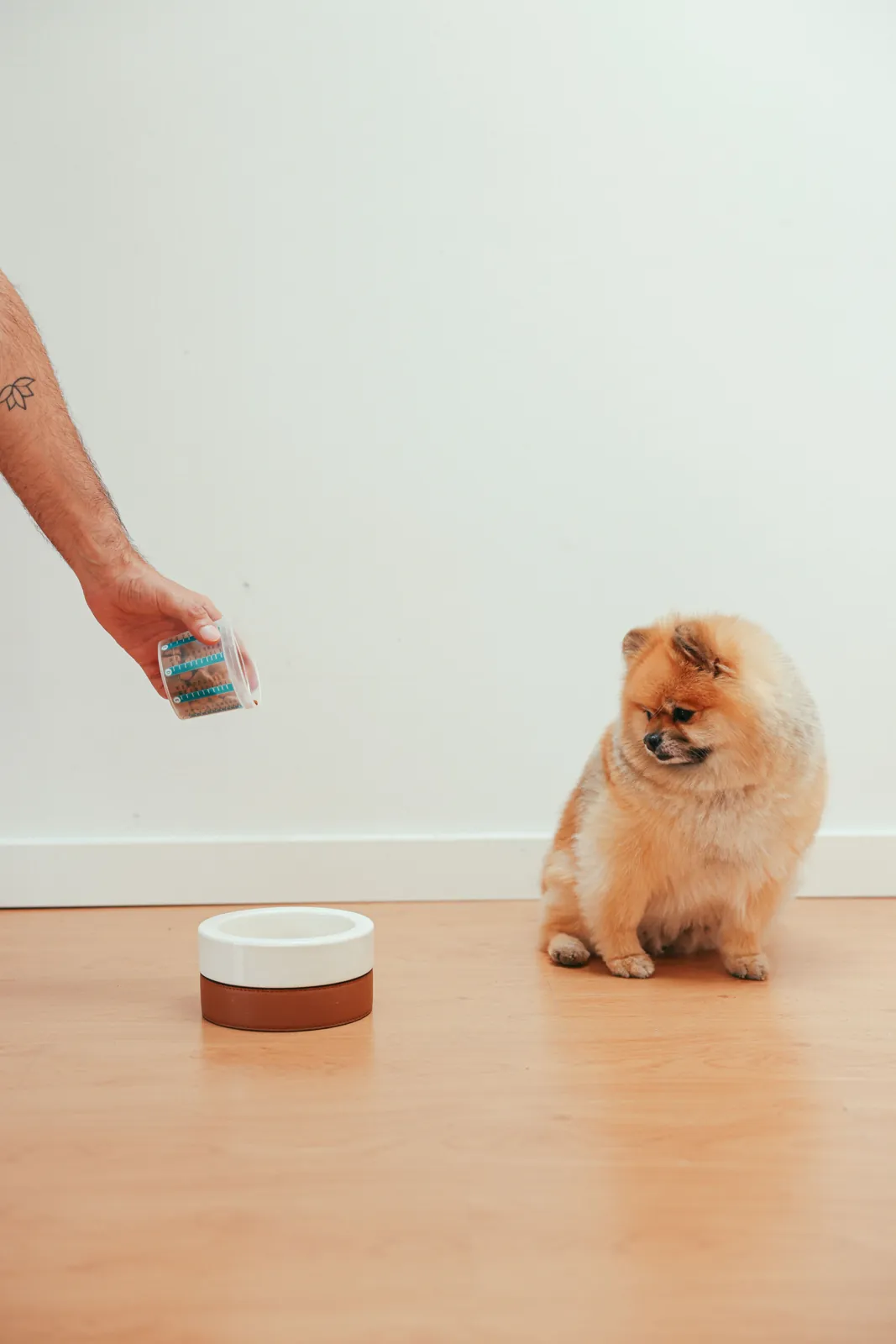
Prepare the day’s agreed food allowance so that meals, training, and food games draw from the same clear plan. If several people feed the puppy, record what was offered rather than relying on someone noticing that the bowl is empty.
Once the daily amount is clear, our puppy meal-frequency guide helps you plan how to divide it across the day. Keep the number of meals separate from the amount of food offered in total.
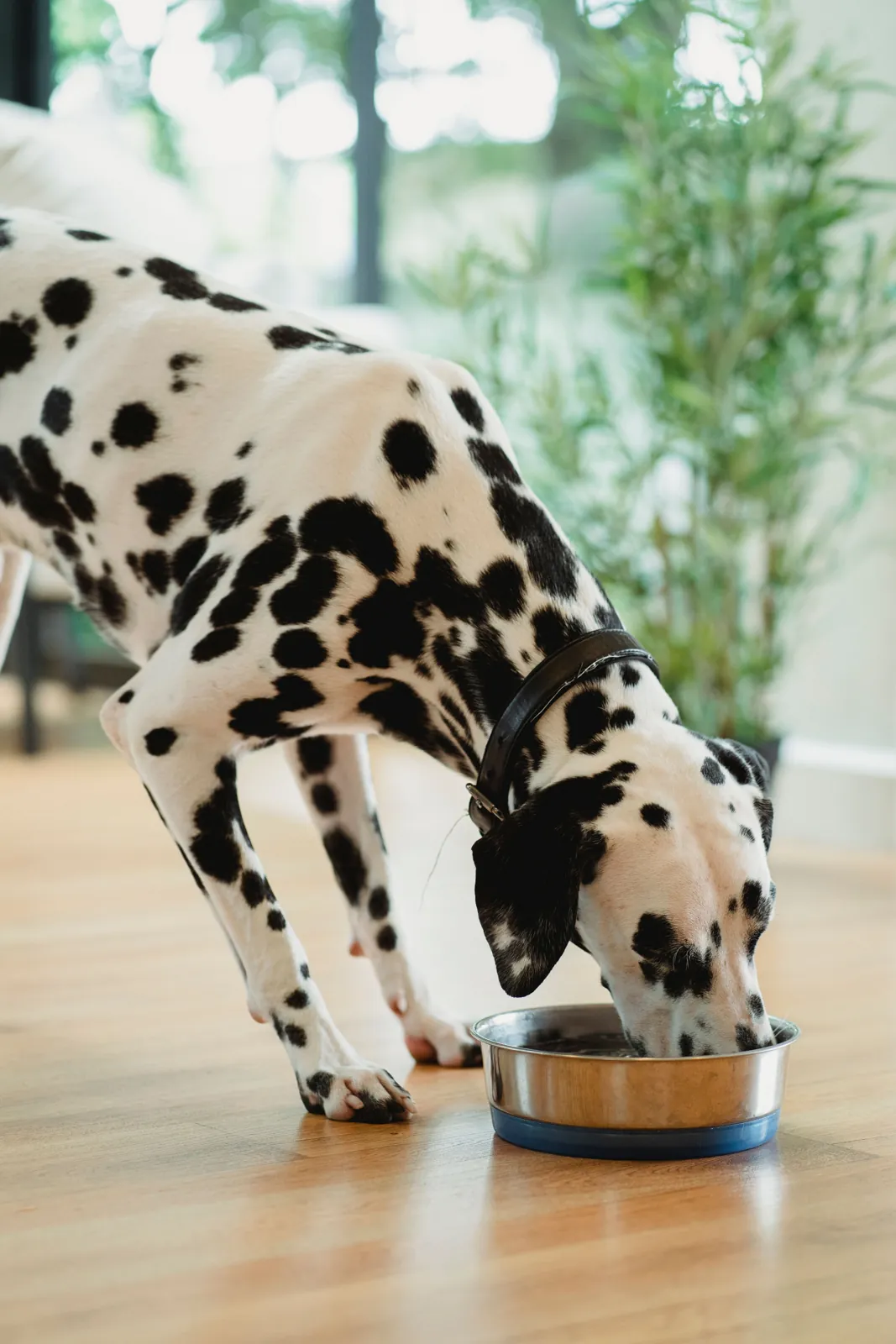
VCA advises keeping treats and snacks to no more than 10% of total daily calories, with the veterinary team helping determine what that means for the puppy. That percentage refers to calories, not 10% of the number of pieces, handfuls, or bowls.
An Animalia example: one caregiver uses kibble during training while another prepares meals from the full daily allowance. Their first correction is a shared record and a planned training portion, not a sudden large reduction in food. If intake or growth is uncertain, they review the plan with the vet.
For the way those rewards are offered, our puppy hand-feeding steps keep optional practice separate from access to normal meals. It also explains when to stop an uncomfortable interaction. Here, keep recording the food used within the daily plan.
Food left in a bowl does not reveal everything the puppy ate. Include table scraps, chews, other pets’ meals, and rewards from visitors when discussing intake. Use a clear sitter handoff and keep pets apart at meals when necessary.
A food scale or a consistent measuring tool can make the plan easier to follow, but it cannot decide the correct amount by itself. Keep the original product guide and veterinary instructions with the supplies so another caregiver can check the units.
When should you ask the vet to review portions?
Ask when growth or body condition changes unexpectedly, when the puppy stops eating, or when the feeding guide no longer seems to fit. Also review the plan after a food change or other relevant care change. Do not assume that hunger, an unfinished meal, or a round outline alone identifies the right adjustment.
VCA recommends growth and body-condition checks with the veterinary team. They can show you what to monitor and decide whether the daily amount needs changing. Keep brief notes about appetite, the food offered, treats, and any vomiting, diarrhea, or other signs that the puppy is unwell.
Contact your vet promptly about a young puppy who refuses food or appears sick; do not wait for a routine weight check. Avoid using supplements or adult weight-loss food to correct a growing puppy’s diet without veterinary advice.
Choose the next practical step: check the exact label and make a shared daily record. Keep it beside the daily care plan, and use the dog care hub for related household guidance.
Frequently asked questions
How many cups should I feed my puppy?
Use the guide for the exact food and confirm the starting amount with your vet. A cup amount copied from another product may supply a different amount of energy. Check the label’s units and whether the amount is daily or per meal, then use one consistent measuring method and review the puppy’s growth.
Does the bag show the amount for each meal?
Not always. Many guides state a daily total, but you must read that product’s directions rather than assume. Divide an agreed daily amount between the planned meals instead of serving the daily figure each time. If the label is unclear, ask the manufacturer or veterinary team to explain the chart before changing portions.
Should I add food whenever my puppy seems hungry?
Do not use begging alone to decide the amount. Review the current daily intake, treats, food access, growth, and body condition with your vet. A clear routine can help you see what is actually being eaten. Seek advice about a new or marked appetite change rather than repeatedly topping up or abruptly restricting food.
Do training treats count toward the daily diet?
Yes. Include food used in games, rewards, chews, and snacks when discussing total intake. VCA recommends limiting treats and snacks to a small share of daily calories, with your vet helping interpret the allowance. Using part of the normal food for suitable training can make the household record simpler without adding uncounted extras.
Can I give the full wet and dry feeding amounts?
Do not assume that both full guide amounts should be added together. That can supply more food than intended. Ask your vet or the food manufacturer how to combine the chosen products for your puppy’s needs, and record the agreed split clearly. A generic cup-for-can substitution is not reliable across different foods.
What if my puppy is not eating the planned amount?
Contact your vet, especially for a young puppy or one who seems unwell. Record what food was offered, what was eaten, treats, and any changes in stools or behavior. An unfinished bowl can have several explanations. Do not assume the puppy needs adult food or wait through an extended period without appropriate nutrition.
Sources and editorial notes
- VCA: how much food to feed a growing puppy
- VCA: growth, portion feeding and treats
- AAFCO: interpreting feeding directions
Animalia Editorial. Last reviewed: October 22, 2026. The label checklist and caregiver example are editorial tools. No universal portion, calorie calculation, or diagnosis is provided; amounts must fit the actual product and puppy. Editorial standards: Animalia Editorial Policy.
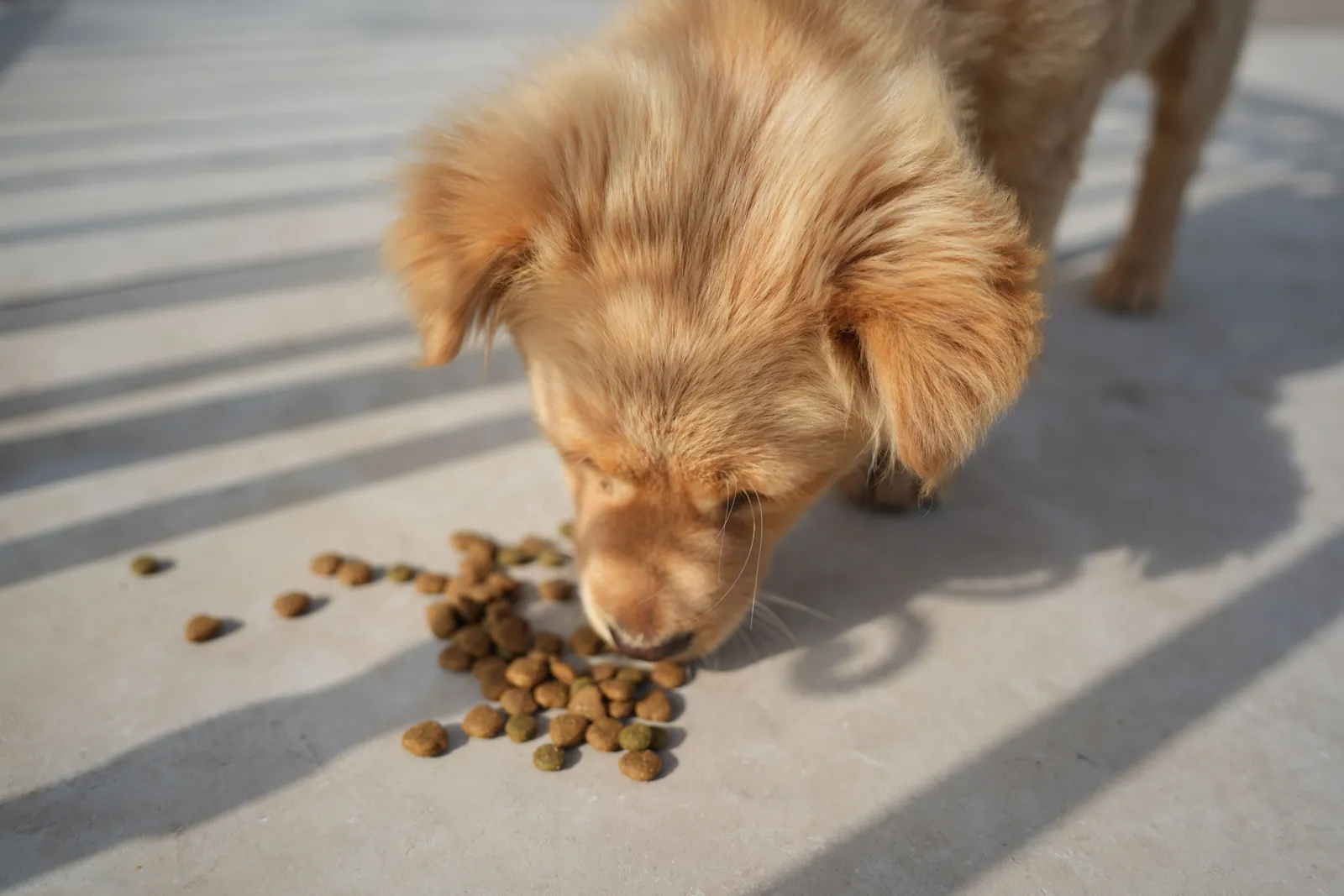
Featured photo: A puppy eats kibble from a concrete surface outdoors. Photo: 分 参 / Pexels.
Prepared with AI assistance and reviewed against the sources above.