A useful cat hideout gives your cat a choice to step away without being followed or cornered. Start with a quiet, accessible place and a simple resting option your cat can investigate voluntarily. A hideout should add control over the surroundings, not isolate the cat by force.
Begin with the places your cat already chooses
Notice where your cat rests during busy household moments. The location may be more important than an expensive enclosed bed. A familiar corner with a clear route can work better than a new item placed beside a loud appliance.
Keep the approach open and consider whether another pet can guard it. In a multi-cat household, provide choices in different areas so one cat does not have to pass the other to reach every resting resource.
Try a simple, inspectable option
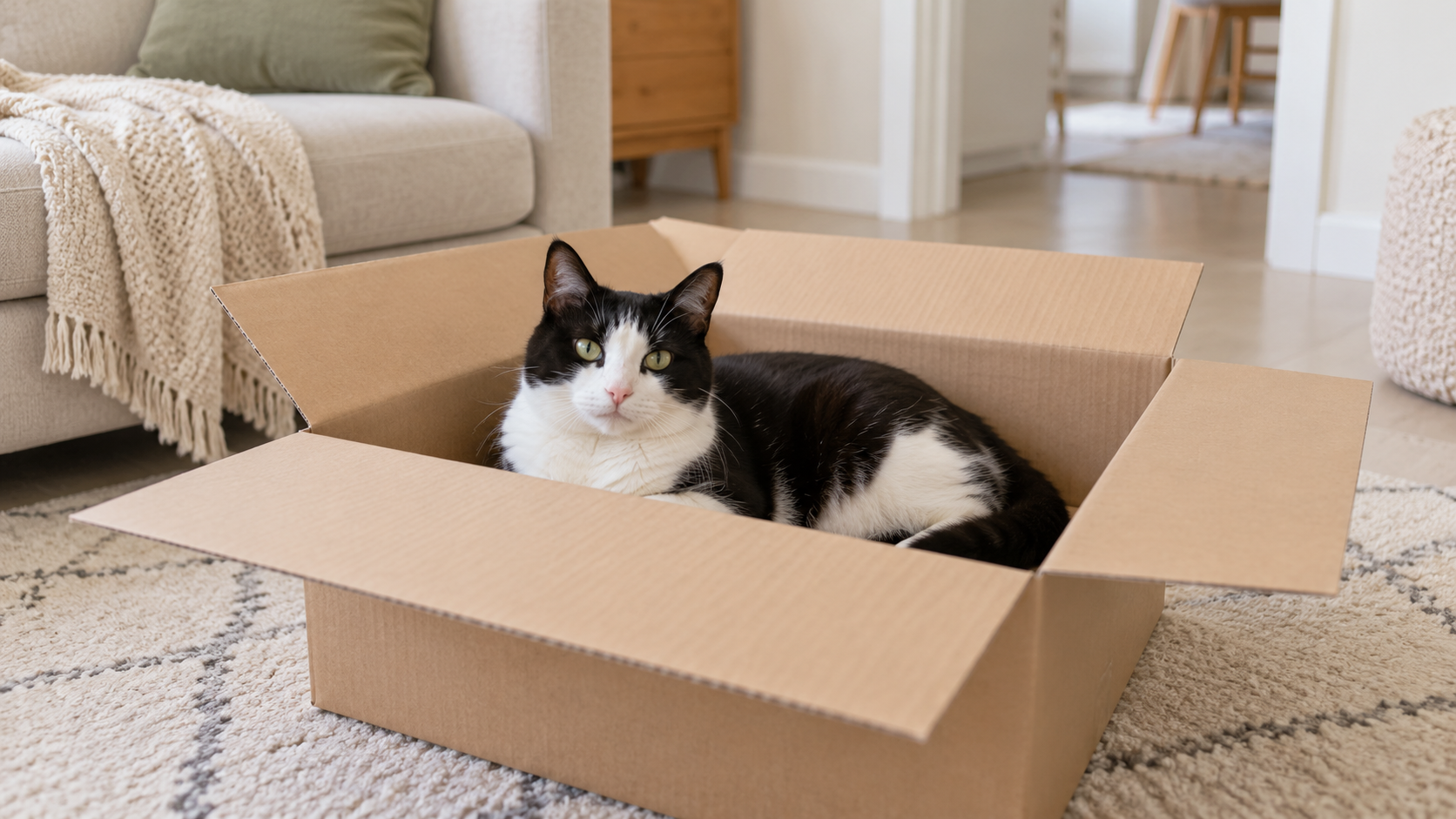
- A clean open cardboard box with smooth edges.
- A suitable covered bed with a comfortable entrance.
- A familiar open carrier used as an optional resting place.
- A stable piece of furniture with a clear sheltered space beneath it.
Check for loose threads, trapping gaps, unstable objects, and inaccessible corners. Avoid improvised containers with small holes or closures that could trap the cat. Choose equipment you can inspect and clean.
Let the cat decide whether to enter
Put a familiar washable blanket inside if appropriate, then leave room for investigation. Do not push the cat into the space or block the exit to encourage settling. If the cat prefers to rest beside it, that is useful feedback.
Change one thing if the hideout remains unused. Try the same item in a more familiar location before adding several new accessories. Our cat-bed selection guide helps compare resting surfaces.
Make privacy a household rule
Explain that a cat inside the hideout is taking a break. Children and visitors should not reach inside, poke toys through openings, or remove the cat for a greeting. Place the item where these rules are practical to follow.
If another pet repeatedly intrudes, change the layout or provide separate areas. A resource only works when the cat can use it comfortably. See our multi-cat resource checklist for reviewing access.
Keep a hideout separate from a health assumption
Choosing quiet time is part of normal individual preference. However, a sudden increase in hiding accompanied by other changes needs veterinary advice. Do not assume a new box explains reduced eating, discomfort, or withdrawal.
Keep an easy record of when the hideout is used so household changes are easier to discuss. The goal is understanding the arrangement, not monitoring the cat constantly or disturbing every nap.
Sources and editorial notes
General resource guidance: Ohio State University: basic indoor cat needs. The home-layout examples are practical suggestions, not a behavioral diagnosis. Combine retreat spaces with other indoor resources.
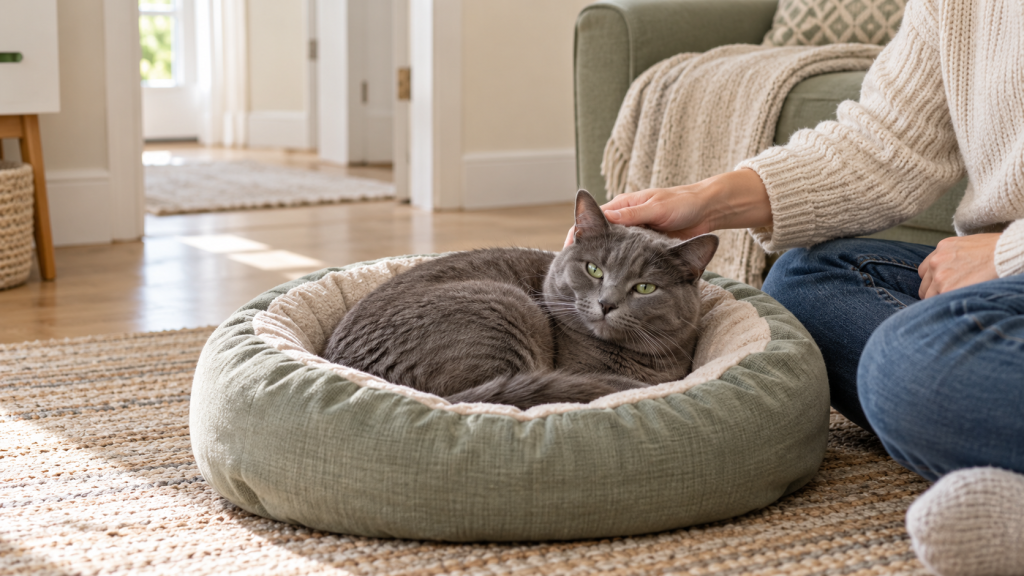
Featured image: Illustrative cardboard hideout, generated with AI; inspect materials and adapt the setup.