The ASPCA recommends four meals daily at 8–12 weeks, three at 3–6 months, and two at 6–12 months. Use these as general starting points, then ask your vet what suits your puppy’s size, health, growth, and current routine. Split the agreed daily food amount between meals rather than adding a full day’s portion each time.
This guide concerns how often to feed a weaned puppy, not milk feeding or hand-rearing. Keep food records with the new puppy care plan and ask the vet for a separate plan when the puppy needs specialized nutritional care.
How does a puppy feeding schedule change with age?
Young puppies usually need more frequent meals, with fewer meals as they grow. Keep the puppy’s established food and schedule clear when they come home, then discuss changes with your vet. Age bands help you plan a review; they do not require a sudden switch on the exact day a puppy reaches a milestone.
| Age or situation | General starting point | What may change the plan |
|---|---|---|
| 8–12 weeks | Four meals a day | Individual health and growth needs |
| 3–6 months | Three meals a day | Size, tolerance, veterinary advice |
| 6–12 months | Two meals a day | Ongoing individual care needs |
| New puppy, routine unknown | Confirm the previous caregiver’s plan | Missing records or uncertain age |
| Special diet or illness concern | Use the veterinary plan | Avoid a generic timetable |
The numbered meal guidance comes from the ASPCA’s general dog-care page; the AKC also describes a four-to-three-to-two progression. Sources may summarize age bands differently. Follow a specific veterinary plan when it differs, rather than switching repeatedly between online charts.
For a toy-breed puppy or a dog with a known health concern, ask whether more frequent feeding is needed. This article does not set fasting limits or manage a suspected low-blood-sugar problem at home. Prompt veterinary advice is appropriate when a young puppy is not eating or seems unwell.
Divide the daily allowance, not the label itself
First establish the daily food amount for the exact product and puppy. Then divide that total between the planned meals, keeping track of food used for training or games. Changing from more meals to fewer meals does not automatically mean changing the whole day’s intake.
VCA recommends measured food offered at regular times and reviews based on age, growth, and body condition. If you are unsure whether a bag’s chart states a daily or per-meal figure, ask before using it. The unit and time period both matter.
- Record the food’s full name and the current daily amount.
- Write the number of meals and who serves each one.
- Set aside any planned food used for training or enrichment.
- Tell other caregivers when the plan changes.
- Review growth and appetite with the veterinary team.
An Animalia example: a household reduces an older puppy’s meal frequency after a veterinary review, but keeps the agreed daily amount clear. Both caregivers use the updated note, so nobody serves an extra meal because they are following yesterday’s routine.
Build a routine that the household can maintain
Choose meal times that fit the puppy’s care needs and the household’s real schedule. Avoid promising a clock-based routine that nobody can follow. If a midday meal is needed, arrange a caregiver rather than expecting the puppy to miss it because everyone is at work.
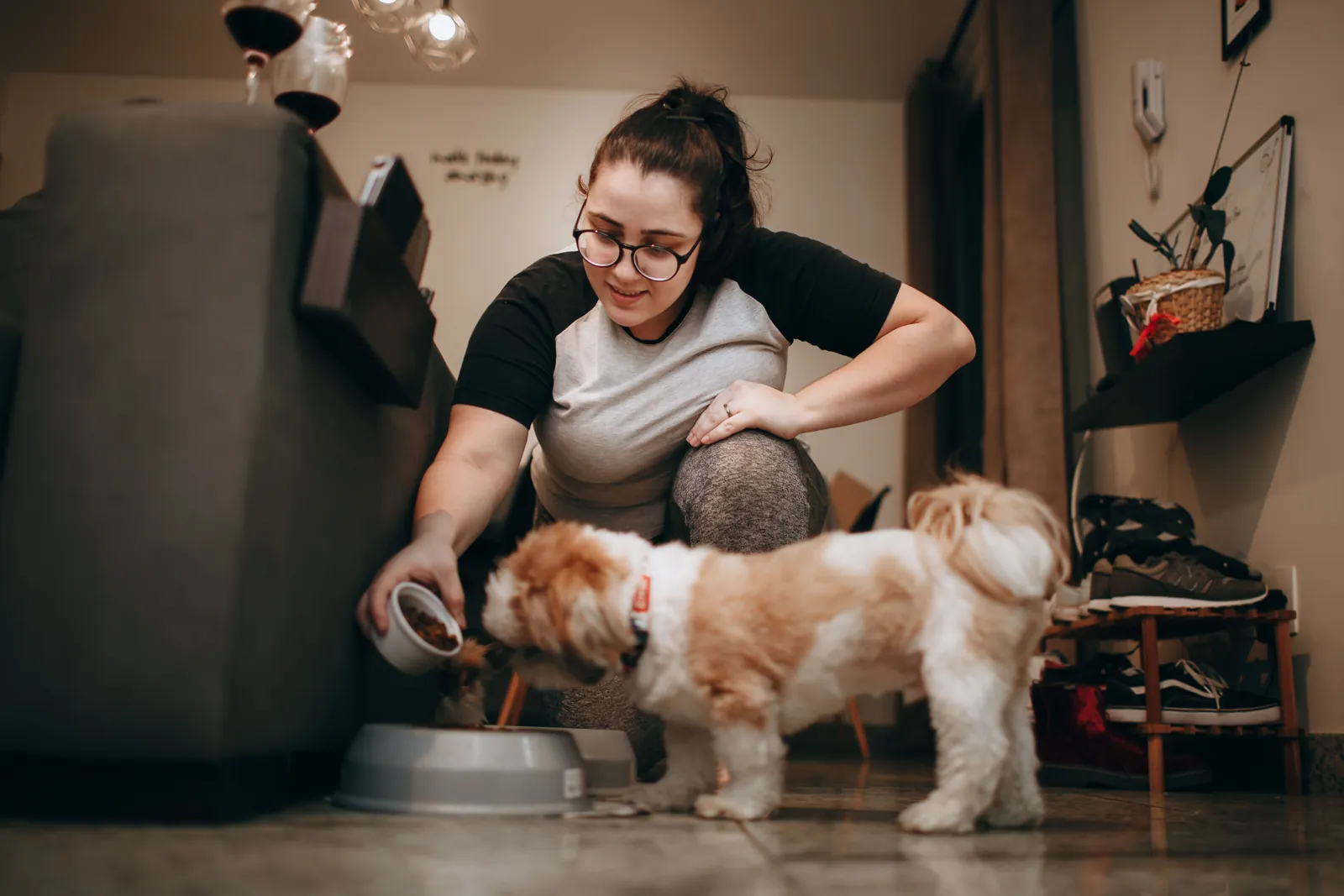
Keep water available and plan bathroom opportunities around feeding and the puppy’s individual pattern. A meal schedule helps organize care, but it is not a way to force long periods without bathroom breaks. Our workday care planner helps assign responsibility for the middle of the day.
Meals can also be quiet, comfortable events. Feed pets separately if another animal rushes the bowl or causes tension, and avoid requiring a difficult new training behavior before the puppy can eat. A food puzzle should remain easy enough to use without frustration.
Write a sitter handoff that includes meal times, food amounts, and how to record a missed or unfinished meal. The note should identify when to call you or the vet rather than asking a sitter to improvise a new feeding plan.
When should you change meal frequency or seek advice?
Review the schedule as the puppy grows or when your vet recommends a change. Consider appetite, growth, body condition, and the puppy’s response to the current meals. A single skipped meal does not prove that fewer meals are needed, especially if the puppy seems ill or has a sudden change in behavior.
Discuss a gradual change rather than abruptly removing a meal and assuming the puppy will adapt. Keep the daily amount and the product clear while you assess the new routine, so several different changes do not obscure what is happening.
Call your vet promptly about poor appetite, repeated vomiting or diarrhea, weight loss, or other illness signs. Seek emergency veterinary help for marked weakness, collapse, a seizure, or difficulty breathing; Cornell lists these as emergency warning signs. Do not test a different meal schedule instead of seeking care.
Your next step is to confirm the current plan and write it down for everyone who feeds the puppy. Keep that note with the daily routine and explore the dog care hub for related care planning.
Frequently asked questions
Should an eight-week-old puppy eat four times a day?
Four daily meals are the ASPCA’s general starting point for puppies eight to twelve weeks old. Confirm the puppy’s existing food and care instructions, and ask your vet about individual needs. Puppies with special health or dietary requirements may need a different plan, so do not replace specific instructions with a generic age chart.
When can a puppy eat twice a day?
General guidance often places that change around the six-to-twelve-month stage, but the individual puppy and veterinary advice matter. Review the plan rather than dropping a meal solely because a birthday has arrived. Keep the total daily food amount clear, and seek advice if appetite or health changes while you adjust the routine.
Does feeding twice daily mean I should use adult food?
No. Meal frequency and food life stage are separate questions. A puppy may eat fewer meals while still needing a diet suitable for growth. Ask your vet when growth is complete and the food should change. Do not assume the schedule, size of the bowl, or number of meals establishes nutritional maturity.
What if my puppy skips lunch?
Tell your vet if poor appetite is new, persistent, or accompanied by illness signs, particularly in a young puppy. Record the food, treats, timing, and what was actually eaten. Skipping lunch does not automatically mean the puppy should move to fewer meals, and it is not a reason to ignore a possible health problem.
Can I leave the whole daily amount out all day?
Ask your vet about the feeding method that suits your puppy, but measured meals make intake easier to track. A continuously topped-up bowl can hide how much was eaten and complicate a shared household routine. If several pets are present, separate feeding also helps you know which animal ate the food.
How should I handle meals during a workday?
Arrange a reliable person to provide meals and other care the puppy still needs. Share the food, amount, timing, and recording instructions, and keep a backup caregiver available. A work schedule should not determine whether a young puppy’s needs are met. Ask your vet before replacing the established feeding plan with fewer meals for convenience.
Sources and editorial notes
- ASPCA: puppy meal frequency by age
- AKC: puppy feeding timeline
- VCA: measured feeding and growth reviews
Cornell: emergency warning signs and urgent veterinary assessment.
Animalia Editorial. Last reviewed: October 22, 2026. The age table summarizes general guidance for weaned puppies. The caregiver example is an editorial scenario, not a clinical feeding plan. No bottle-feeding, fasting, or treatment protocol is provided. Editorial standards: Animalia Editorial Policy.
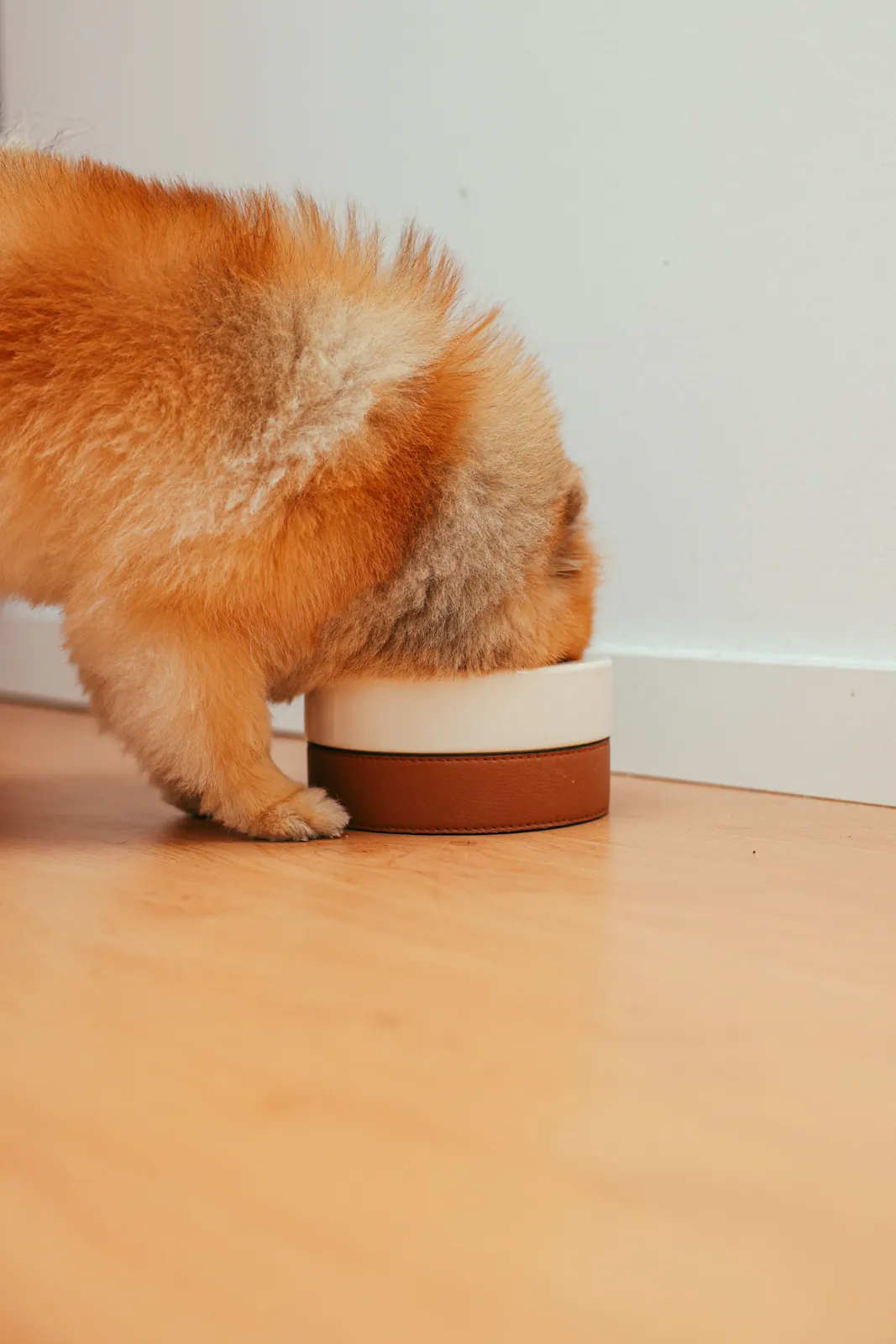
Featured photo: A small dog eats from a bowl indoors. Photo: Cup of Couple / Pexels.
Prepared with AI assistance and reviewed against the sources above.