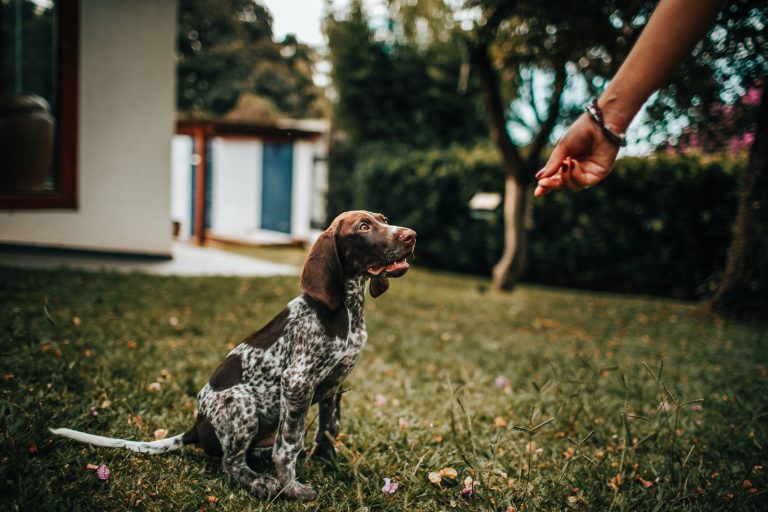
Teach a dog to ring a bell by rewarding a voluntary touch, placing the bell near the bathroom exit, and promptly taking them outside when they ring. The AKC describes pairing the bell with outdoor trips. Keep offering scheduled bathroom opportunities too; the signal adds communication and does not replace supervision or house training.
The skill has two parts: making the bell sound and learning what happens next. A dog who watches you ring it may still need help learning to touch it independently. Start with the broader reward-based training principles and the hand-target lesson when a voluntary touch is unfamiliar.
What should you prepare before bell training?
Choose a secure bell or accessible button that the dog can reach comfortably and you can hear. Check that its sound does not frighten the dog and that strings, loose parts, or hardware cannot be chewed or caught. Prepare small suitable rewards, a safe exit, and a consistent response from every caregiver.
A hanging bell is not the only option. A stable button or another clear signal may suit a particular dog or household better. If noise worries the dog, use a quieter alternative rather than repeatedly ringing the bell close to their face.
Place the signal where it will remain accessible during normal care, not behind a door that is usually shut. In a home with several exits, begin with one familiar bathroom route and agree who responds. The setup should make a request useful instead of adding another barrier.
Six steps from a nose touch to an outside request
Keep initial practice short and low-pressure, at a time when the dog is comfortable and not urgently waiting to pee. These steps combine the AKC’s voluntary nose-targeting approach with the outside association in its bell guide. Do not move the dog’s paw or push their nose into the bell.

1. Let the dog investigate without a demand
Show the bell at a comfortable distance and reward easy interest. Let the dog move away, and keep the sound gentle. If they hesitate or startle, increase distance or use another device before asking for a touch.
2. Mark and reward a voluntary touch
Present the bell where a small nose movement can reach it. When the nose touches, say your chosen marker, such as “yes,” and give a reward. If contact is difficult, reward looking or moving toward the bell first, then build from that easier choice.
3. Make the mounted position easy
Secure the bell near the exit at a comfortable height and repeat the touch practice there. A dog who can touch an object in your hand may need easier practice when it hangs beside a door. Avoid repeated cueing; check the position and make success simpler.
4. Link one ring with a bathroom trip
When you are ready to take the dog to the usual bathroom spot, offer the bell opportunity, then promptly open the door after a ring. Fit the leash or other needed equipment before the request when possible. Do not delay an urgent trip to complete a training repetition.
5. Reward the right behavior in the right place
During early touch lessons, food rewards explain how to ring. During bathroom outings, reward after the dog finishes toileting at the intended spot. Humane World emphasizes rewarding promptly after successful toileting. Keep these two learning goals clear rather than repeatedly rewarding re-entry alone.
6. Notice independent requests and share the response
Respond when the dog rings without a prompt, and record what happened so the household can see the pattern. Keep the bell accessible and show sitters the routine. Gradually rely less on prompting as independent ringing develops, while continuing bathroom opportunities that meet the dog’s needs.
An Animalia example: a dog touches the bell easily during practice but stands quietly at the door later. The caregiver responds to the door signal and offers an easy bell lesson at another time. They do not wait for the dog to ring before allowing a needed bathroom trip.
When the bell rings too often, review what follows
A bell can become a request for outside access, play, company, or another learned result. Repeated ringing does not prove the dog is lying about needing the bathroom. First offer an appropriate bathroom opportunity, then review activity, companionship, recent intake, and whether the household responds consistently.
| Problem | What to check | Helpful adjustment |
|---|---|---|
| Dog watches but never rings | Have they learned a voluntary touch? | Teach the action separately in an easy position |
| Dog avoids the device | Sound, movement, height, or previous experience | Use a quieter or more accessible alternative |
| Dog rings and plays outside | What ringing has predicted | Keep bathroom trips clear and provide play separately |
| Dog rings immediately after returning | Whether they actually toileted; other unmet needs | Observe the next trip and revise the routine |
| Dog has an accident without ringing | Training stage and missed bathroom opportunities | Increase supervision and proactive trips |
| Repeated small pees or discomfort | Possible health change | Contact the vet instead of retraining the bell |
The table is an editorial troubleshooting tool, not a test of the dog’s intentions. You can keep a requested bathroom trip calm and practical while also providing enough play and exploration elsewhere in the day. Do not remove all enjoyable outdoor time to make the bell mean only one thing.
If the device becomes a chew toy or creates a trapping risk, remove that hazard and supply another way to ask. A training aid is optional; a dog can communicate through door approaches or another accessible behavior. The goal is a workable shared signal.
How do you know the signal is becoming reliable?
Look for voluntary rings outside practice, a prompt caregiver response, and fewer missed bathroom opportunities across ordinary routines. Practice with different caregivers once the first setup is easy. Reliability is specific to the dog, location, and care pattern; there is no guaranteed number of days after which every puppy will use the bell independently.
Keep a brief note of rings, trips, and whether the dog toileted. This helps distinguish a touch skill that needs more practice from a routine that offers too few opportunities. If progress stalls, a qualified reward-based trainer can observe the setup rather than promising a universal deadline.
AVSAB recommends reward-based methods. Avoid scolding, startling, forced paw contact, or withholding needed care. Seek veterinary advice about pain, urinary changes, or a sudden loss of previous house-training progress. Share the final routine in your sitter instructions and explore our dog training hub for related skills.
Frequently asked questions
Can a young puppy learn to use a potty bell?
A puppy can learn an easy voluntary touch and an outside association, but they still need frequent bathroom opportunities and close supervision. Do not expect the bell to provide mature bladder control or a fully reliable warning. Respond to other signals and keep proactive trips in the routine while the puppy grows and learns.
Should I ring the bell with my dog’s paw?
No. Teach the dog to touch the device voluntarily instead of moving a paw or pressing their face against it. Reward an easy approach or nose touch, then build the sound and location gradually. If the device is awkward or worrying, adjust the setup rather than using physical force to complete the action.
Why does my dog ring the bell to play?
The dog may have learned that ringing brings outdoor access, which can include enjoyable activities. That does not establish a deceptive intention. Offer an appropriate bathroom opportunity and review the routine. Keep bathroom trips clear, while meeting exercise, exploration, and social needs separately, rather than punishing ringing or ignoring a request that may be genuine.
How long does bell training take?
There is no dependable deadline for an individual dog. Some learn the touch before they understand when to use it; others need more work on sound, position, or caregiver consistency. Track comfortable progress and independent requests rather than counting days. Ask a qualified reward-based trainer for help if the setup remains confusing or stressful.
What if my dog has accidents without ringing?
Return to close supervision and frequent appropriate bathroom opportunities. The bell may not yet be a usable independent signal, and an accident does not show stubbornness. Check whether trips are timely and whether the dog actually goes. Ask your vet about pain, unusual frequency, blood, or a sudden change in a previously established pattern.
Can I use a button instead of hanging bells?
Yes, if the dog can comfortably activate it and the household can hear and respond. Check for loose parts, chewing risks, slippery placement, or sounds that worry the dog. Teach voluntary interaction and the same clear consequence. If neither device suits the dog, another accessible request signal can work without adding an unnecessary obstacle to care.
Sources and editorial notes
- AKC: teaching a bell as an outside signal
- AKC: voluntary nose targeting
- Humane World: bathroom routine and immediate rewards
- AVSAB: reward-based training
Animalia Editorial. Last reviewed: October 22, 2026. The six-step progression, troubleshooting table, and door-signal example are editorial adaptations, not a tested time-to-train claim. Bell use does not diagnose a bathroom need or replace health assessment and regular care. Editorial standards: Animalia Editorial Policy.
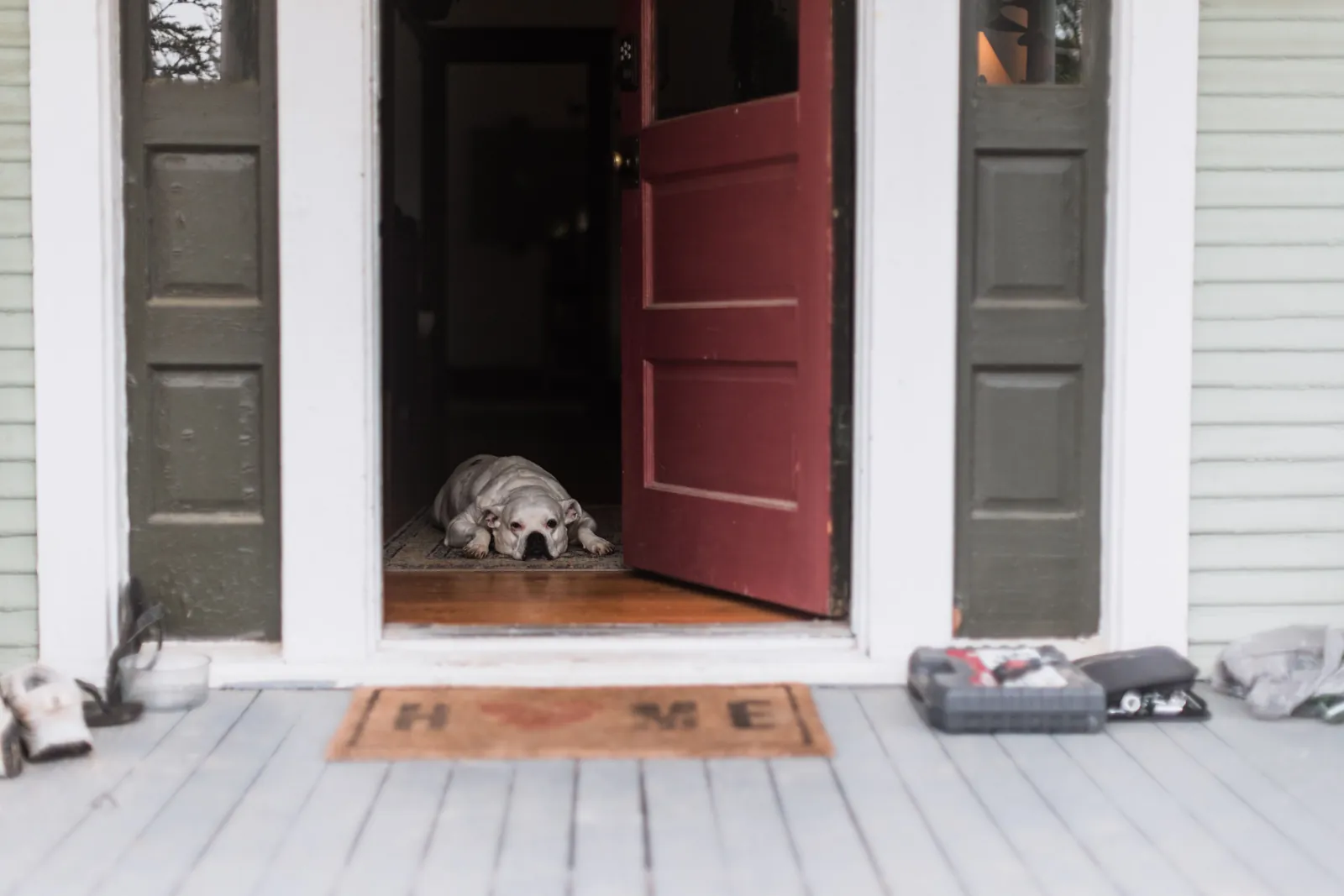
Featured photo: A dog at a doorway illustrates the route used for an outside request. Photo: K / Pexels.
Prepared with AI assistance and reviewed against the sources above.