A beginner dog puzzle feeder should make food easy to find before it makes the task challenging. Compare the simplest setting, cleaning instructions, and how your dog actually handles objects. Complexity and price do not tell you whether a puzzle suits this dog.
Start with the individual dog
Notice whether your dog gently noses objects, paws forcefully, carries them away, or tries to chew and swallow material. Those observations matter more than an age label on the package. Ask your veterinary team about suitability if eating, dental comfort, or movement is a concern.
Use food already suitable for the dog and account for it within their planned meals. You do not need unfamiliar ingredients to introduce a puzzle.
Compare the practical details
- Openings and parts appropriate for the dog’s size.
- No damaged edges or accessible loose pieces.
- A stable position on suitable flooring.
- A genuinely easy starting configuration.
- Instructions for cleaning, inspection, and supervision.
Choose equipment you can dismantle and maintain as directed. Inspect it before and after use, including pieces that move or detach.
Make the first attempt obvious
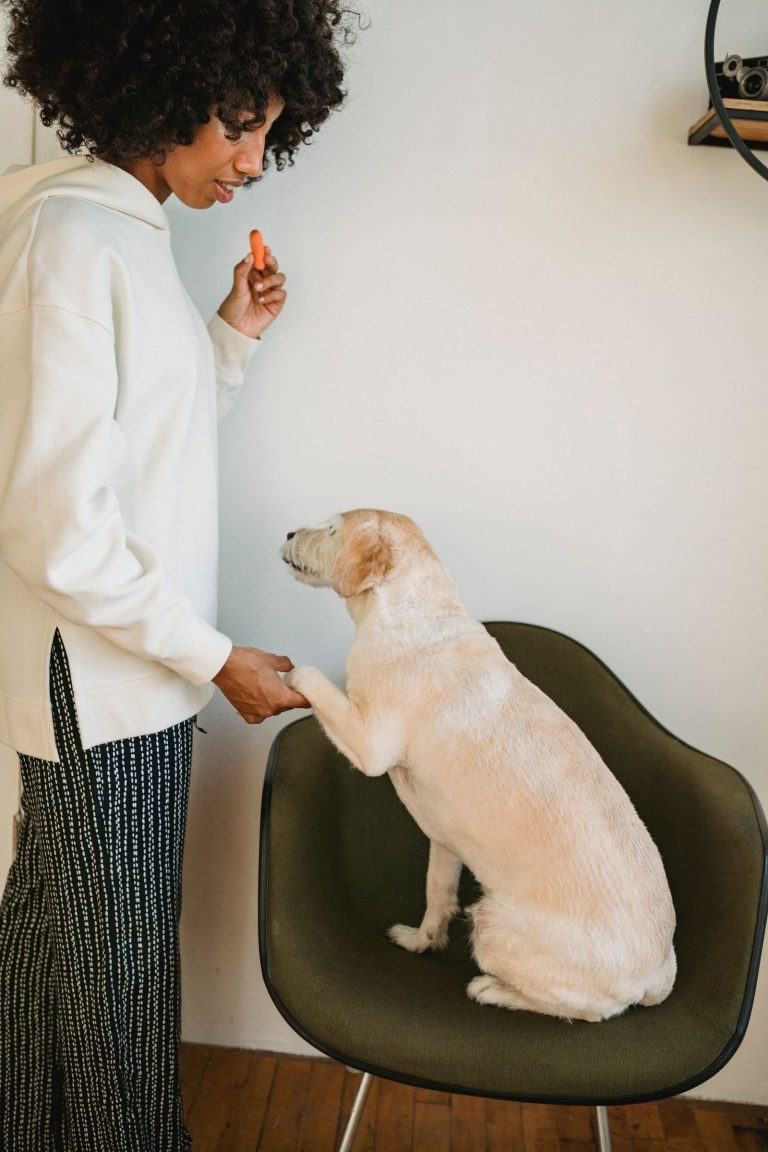
Prepare a small amount of food in the easiest accessible part. Stay nearby and let the dog investigate voluntarily. If you need to demonstrate, do it without placing your hands beside a dog who is uncomfortable around food.
For a dog with guarding concerns, stop this experiment and seek qualified individual advice. A food puzzle is not a treatment for guarding.

Adjust difficulty gradually
If the dog repeatedly reaches food comfortably, change one feature next time. If they disengage or attack the equipment, make access easier or choose a different activity. The useful outcome is comfortable engagement, not completing a difficult product.
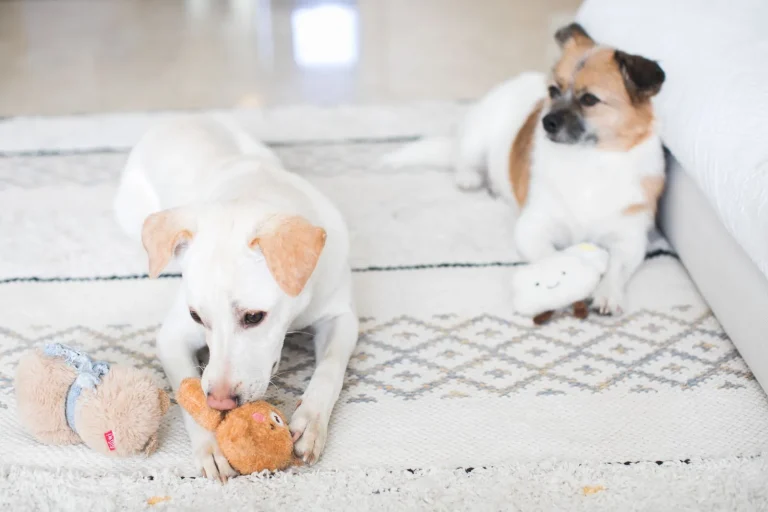
Give each dog a separate space when food and toys are involved. See our multi-dog enrichment setup.
Keep other options available
A puzzle does not replace walks, rest, social contact, or veterinary care. Mix it with suitable non-food activities, and stop if the equipment becomes unsuitable.
Sources and editorial notes
Welfare context: Blue Cross: enrichment for dogs. This is an equipment-selection framework, not a product test or a recommendation for a medical feeding problem.
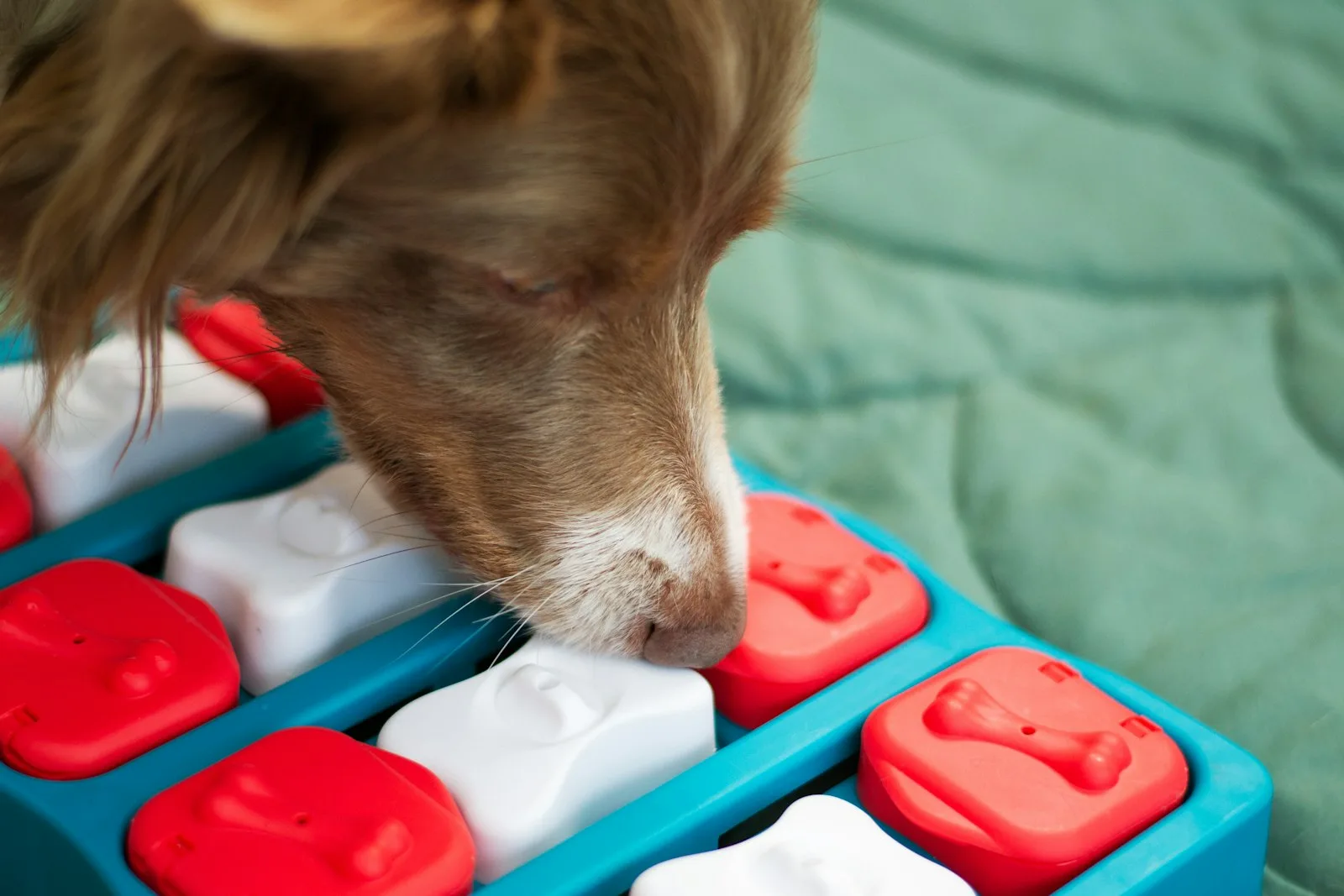
Featured image: A dog uses its nose to work the sliding blocks of a puzzle feeder. Photo: Ayla Verschueren / Unsplash