To get a cat to drink water, offer fresh water in several quiet places, try a wide bowl, and consider wet food or added food moisture. Cats Protection recommends separating water from food and litter. A sudden drop in drinking, poor appetite, or illness needs advice from your vet before a bowl experiment.
An untouched bowl raises questions about what you can see. Your cat may drink while you sleep, use another source, or get water from food. Start with safety, then improve access without forcing a drink.
When does a cat not drinking water need help?
Contact your vet promptly if drinking has clearly decreased, especially with reduced eating, vomiting, diarrhea, weakness, or unusual hiding. Do not wait for a particular number of hours or an empty water bowl. A cat who seems unwell needs a check even if you cannot measure how much they drank.
Cornell lists weakness, lethargy, poor appetite, and dry mouth tissues among dehydration signs. You cannot reliably clear a cat as hydrated using a skin pinch, gum check, or normal litter alone. Describe the change to your vet team and follow their advice.
Seek emergency vet care now for collapse, breathing trouble, severe weakness, or repeated attempts to urinate with little or no urine. Cornell calls a possible urinary blockage an emergency. Straining in the litter box calls for urgent attention, especially in male cats. Extra water at home cannot resolve a blockage.
Do not syringe water into a resisting cat, hold their face near a bowl, or attempt home fluid treatment. Keep fresh water accessible while arranging help. For kittens, frail older cats, or a cat already receiving medical care, ask the vet team sooner about any intake change.
Does wet food count toward daily water intake?
Yes. Food moisture adds to total water intake, so bowl drinking alone does not tell the whole story. A cat eating moisture-rich meals may visit a bowl less often than a cat eating dry food. Keep drinking water easy to reach with either diet and check changes from your cat’s normal pattern.
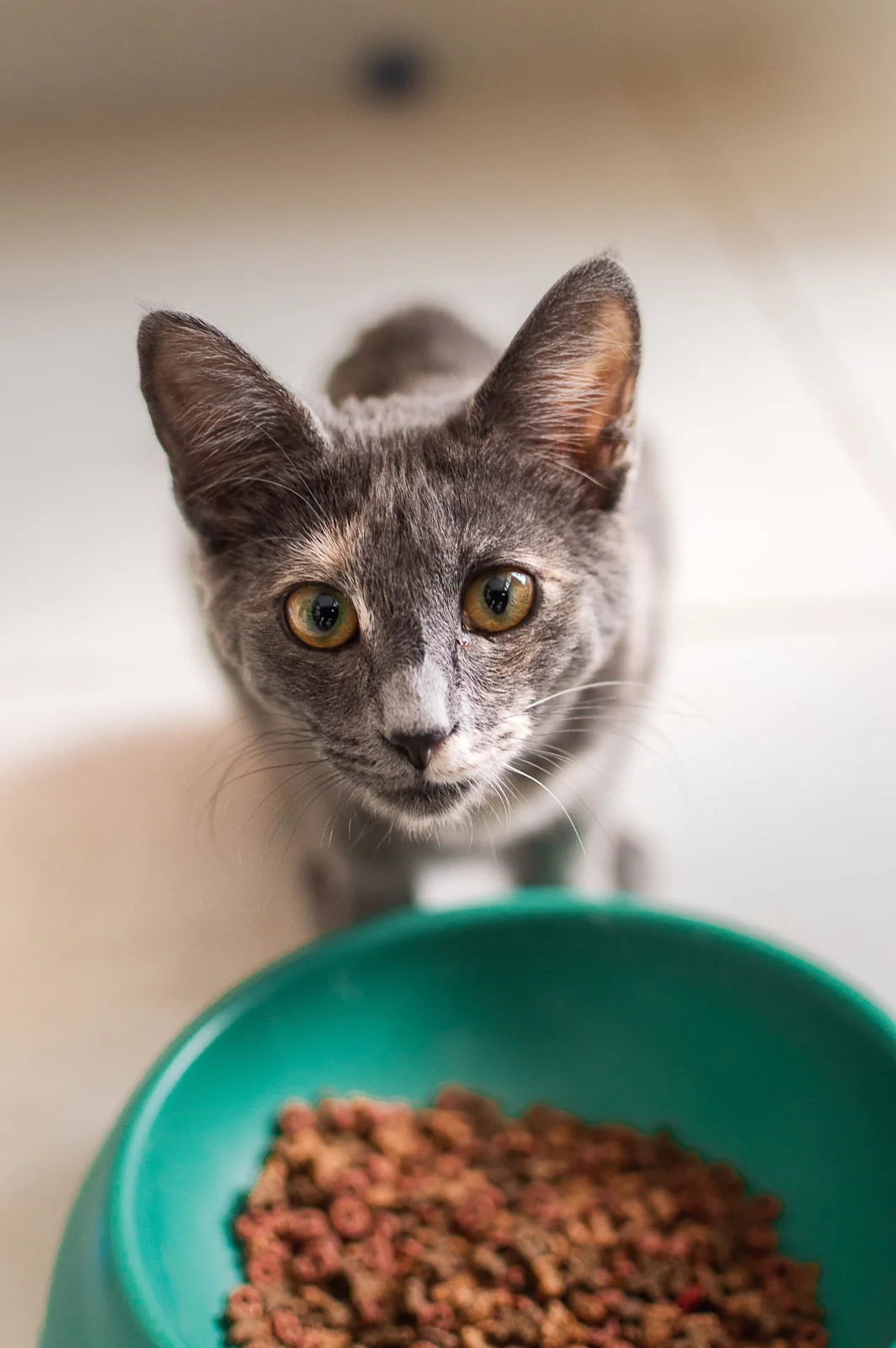
For a rough context, Cornell gives about four fluid ounces per five pounds of lean body weight daily, including food moisture. That is a general guide, not an amount to make your cat swallow. Health, body size, food, and losses affect individual needs; ask your vet about a useful target.
Illustrative food-label calculation: if a food portion weighs 100 grams and its label lists 75% moisture, it contains roughly 75 grams of water, about 75 milliliters. That is label arithmetic, not a feeding recommendation. Actual food intake and moisture vary, and it does not establish whether a cat is getting enough water.
Record food actually eaten, not merely food served. In a shared household, Animalia’s simple cat care log helps prevent one person assuming another saw the cat drink. If several cats share bowls, note that the household total cannot show each cat’s intake.
Set up water stations your cat can use
Use Animalia’s comparison below to plan a change. Begin with clean, stable bowls and familiar drinking water. Put options on routes your cat already uses, with room to approach and look around. A new station should add a choice. Keep a familiar water source on hand while your cat investigates.
| What you observe | A practical change | What to keep in mind |
|---|---|---|
| Water is beside food or litter | Add a station in a separate quiet spot | Do not remove the familiar station immediately |
| The bowl sits in a dead end | Give the cat a clear approach and exit | Another pet may be blocking access |
| The cat sniffs but walks away | Wash the bowl and replace the water | Check detergent residue and the bowl’s condition |
| The cat reaches awkwardly into a deep bowl | Offer a stable, wide bowl alongside it | Individual preferences matter more than a universal shape |
| One cat guards the drinking area | Separate stations into different locations | Several bowls side by side still share one access point |
Cats Protection suggests fresh daily water, multiple locations, and separation from food and litter. Wash bowls regularly and sooner when dirty; rinse thoroughly. Choose intact, easy-to-clean dishes and replace chipped or damaged ones. Avoid unstable glasses where a cat could knock them over.
For several cats, use the access principles in our multi-cat resource layout guide. In a rental, planning resources before buying equipment can reveal a quiet water location without rearranging the whole room.
Try one preference change at a time
Once health concerns have been addressed, compare a simple option with the setup your cat already knows. Change one variable so the result is understandable. You are looking for calm, willing use, not trying to reach a quota by making every drink more exciting.
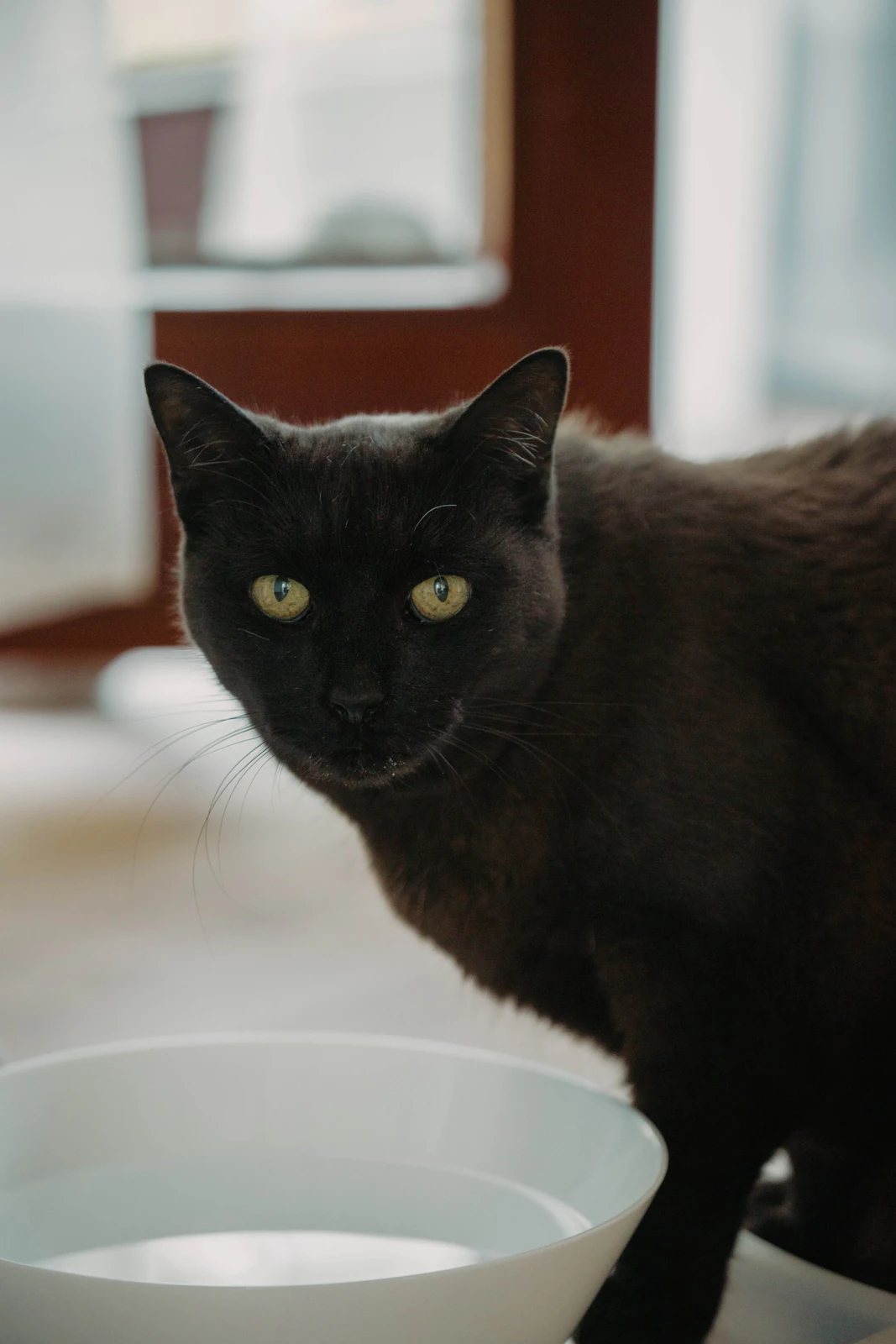
- Place a wide ceramic, glass, or stainless-steel bowl in a useful location, keeping the existing water on hand.
- Use the same fresh drinking water in both options. Observe approaches and relaxed drinking without hovering.
- If the new bowl is ignored, try another quiet location before buying several more products.
- If your cat dislikes the local water’s taste, discuss offering filtered drinking water; keep the bowl and location otherwise similar.
- Write down the bowl, location, and what you actually saw. Stop experimenting and call the vet if appetite, comfort, or behavior changes.
A lower bowl level is only an estimate: spills, evaporation, other animals, and refills affect it. If your vet asks you to measure intake, ask how to do that with your specific household. Do not isolate a worried cat merely to produce a cleaner measurement.
Will a fountain or wetter meal help?
A fountain can suit a cat who prefers moving water, but you do not have to buy one. Cornell notes that fountain preferences differ between cats. Keep a plain bowl on hand, start using the fountain without pressure, and follow the maker’s cleaning and filter instructions. Water movement does not replace cleaning.
Place the power cable where it cannot be chewed or become a trip hazard. Watch whether the sound, splash, or position makes your cat hesitate. If the cat uses a bowl with ease and avoids the fountain, choosing the bowl is a useful result.
For food moisture, ask whether a gradual move toward safe wet food fits the cat’s diet. A little water mixed into an accepted meal may be an option, but keep it palatable and follow safe food-storage guidance. Do not let a hydration experiment turn into food refusal. Check before altering a prescribed diet.
Plain water remains the default. Milk is not needed, and Cats Protection advises against cow’s milk and human milk substitutes. Ask your vet before adding broth or flavorings, especially for a cat on a restricted diet. Keep plain water as a choice, and use only products your vet has checked for your cat.
Frequently asked questions about cats and drinking
My cat eats normally but I never see drinking. Is that okay?
It may reflect food moisture or drinking out of sight. Review the diet, other water sources, and normal litter-box behavior without assuming that eating proves hydration. A genuine change from baseline, or any concern about intake, deserves a call to your vet team. Keep the usual bowl clean and easy to reach while you check the pattern.
Should I make my cat drink a cup of water?
No. General water figures include moisture from food and cannot become a forced-drinking goal. Offer accessible water and record what you observe. Your vet can interpret the diet and health context, especially if a daily intake estimate has been recommended for an existing condition. Never withhold normal food or water to make a cat seek out a new drink.
Can I put water beside every food bowl?
Keep water on hand in separate locations too. A cat who dislikes water next to food should be able to choose another station. Look at safe access and the cat’s willing use rather than assuming matching food-and-water bowls provide the best layout. Check whether each cat can reach a bowl without passing a pet who guards the route.
Is drinking from a faucet a problem?
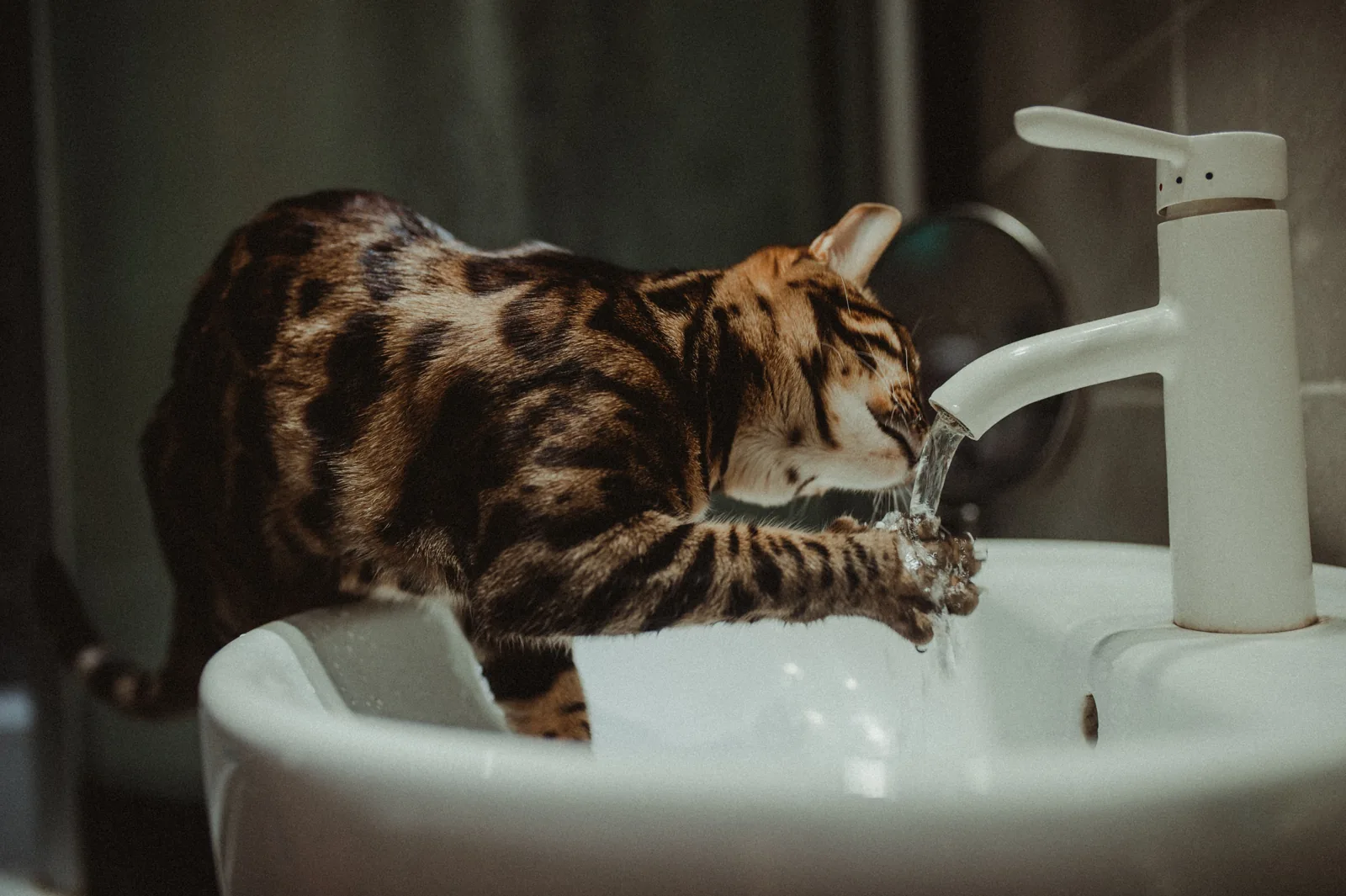
Some cats prefer moving water. Supervise faucet access, check a safe water temperature, and keep normal bowls on hand. A clean pet fountain may be more practical, but it is not mandatory. A new or much more intense drinking habit needs a talk with your vet rather than just a new gadget. Water should always be easy to reach even when no one is there to turn a faucet on.
What if none of the bowl changes work?
Stop adding experiments and contact your vet with your notes, food details, and any other changes. Lack of improvement does not name a disease, and neither does a successful fountain trial rule one out. See our cat care guides for related everyday setup advice. Tell the vet what changed first and which bowl or food changes you have already tried.
Start by checking for a change from your cat’s normal habits. Call your vet if you are concerned; otherwise, improve one water choice and record what happens. Our cat care hub has more home-setup guides.
Sources and editorial notes
- Cats Protection: cats and drinking
- Cats Protection: eight tips to encourage drinking
- Cornell Feline Health Center: hydration
- Cornell Feline Health Center: lower urinary tract disease
- Cornell University Hospital for Animals: emergency warning signs
This guide covers water access and notes for a talk with your vet. It does not diagnose dehydration or provide treatment. The food-label example is illustrative arithmetic, not a personal water goal.
Animalia Editorial. Last updated October 22, 2026. See our Editorial Policy.
Featured photo: A cat investigates running tap water. This stock photo illustrates a water preference, not a hydration assessment. Photo: Helena Jankovičová Kováčová / Pexels.
Prepared with AI assistance and reviewed against the sources above.