Yes, dogs get bored when they lack safe chances to sniff, explore, play, learn, or interact. The American Kennel Club describes restlessness, attention-seeking, and damage to belongings as possible signs. These signs also have other causes, so check the context and any health changes before you decide that your dog needs more to do.
A dog resting beside your desk may feel at ease. Pacing at the door may mean a bathroom break, worry, or pain. What happens before and after the behavior helps you choose a fair next step.
Do dogs get bored, and what might you see?
Possible signs include repeated attempts to start a game, trouble settling, searching for things to chew, digging, and frequent barking. Look at the pattern across the day rather than counting signs. None of these signs proves boredom, and a single quiet afternoon or a chewed cushion cannot tell you the cause.
Notice what your dog seeks. Do they bring a toy, try to reach a closed-off spot, or keep looking for time together after a long period without it? Does a known game meet that need, followed by calm rest? These notes can guide changes without calling the dog naughty or stubborn.
Also check normal needs first: water, a chance to pee or poop, a safe temperature, safe space, food at the usual time, and quiet rest. If your dog is often being disturbed by children, visitors, another pet, or outdoor noise, adding a harder puzzle may miss the actual problem.
Sudden changes in how your dog acts, reduced interest in things they once enjoyed, being slow to move, or changes in eating and peeing warrant advice from your vet. Repeated licking, tail chasing, or self-injury should not be brushed off as a need for more toys.
Boredom, rest, discomfort, or distress?
Use Animalia’s table to sort your notes, not to diagnose your dog. More than one problem can occur at the same time. Dogs Trust explains that health can change how dogs act and recommends a vet check for changes that worry you. An expert can use video and your notes alongside a health check.
| Pattern you notice | What it may suggest | A useful next step |
|---|---|---|
| Loose posture, normal appetite, sound sleep after an outing | The dog may be at rest and at ease | Let them rest; offer normal chances to explore later |
| Looking for time together after a long inactive stretch, then settling after a safe game | Unmet activity or social needs may add to the problem | Try one manageable outlet and record the response |
| Damage or loud barking mainly around departures, with panting, drooling, or escape attempts | Possible distress when left alone | Arrange help from your vet and a skilled behavior expert |
| Barking begins at a window when people pass | A sight or sound may be causing it | Offer a quieter resting place or reduce the view |
| New lethargy, discomfort, accidents, or loss of interest | Possible health or other welfare concern | Contact your vet rather than adding more exercise |
Do not wait to prove the cause when your dog is hurting themselves, trying to escape in unsafe ways, or showing great distress. Make the environment safer and seek help promptly. Breathing trouble, collapse, or possible poisoning requires emergency vet care.
Does sleeping all day mean a dog is bored?
Sleep by itself does not tell you whether your dog is bored. Look for a change from their usual pattern and how they behave when awake. A relaxed dog who eats, moves with ease, and enjoys familiar activities is different from a dog who has suddenly become withdrawn or hard to engage.

Avoid waking a settled dog often to test whether they want play and contact. Instead, offer choices during their normal waking hours. A quiet sniff outing or a short known game gives you more useful details than nonstop play. Let the dog stop and return to resting.
Compare similar parts of the day. A dog who is calm after a busy morning may behave differently during a long, empty afternoon. Your notes should also include heat, noise, visitors, changes in routine, and anything that interrupted sleep.
If a dog who normally greets a walk or meal stops showing interest, call your vet. Do not assume that a new lack of energy is just their nature. For a cozy resting setup, our daily routine guide provides a good starting point.
Keep a simple care log before changing everything
Record what you can see instead of writing only “bored.” A simple log helps your household notice patterns and gives an expert useful details. You do not need to bring on the problem, withhold attention, or leave a distressed dog alone to get proof.

- Context: time, people present, recent rest, bathroom break, meal, walk, and unusual noise.
- Actions: what the dog did, where, and whether it started around one clear event.
- Your response: what safe option you offered and whether the dog chose it.
- Afterward: relaxed rest, more pacing, more arousal, or a quick return to the same actions.
- Health notes: changes in appetite, drinking, movement, sleep, or toileting.
Animalia’s example of a care log: “After I started a work call, Milo carried a toy to me and paced. A short search game held his interest, then he rested beside the desk.” That suggests a useful change to the day. It does not prove that all pacing is boredom.
For actions that happen when you are out, a camera may reveal details you otherwise miss. The ASPCA distinguishes boredom from separation anxiety and other causes of damage. Record a normal, unavoidable situation if safe; do not stay out longer just to see how bad it gets.
Match the first change to the need you observe
Choose one short, safe game that your dog can succeed at, then watch the result. More exercise is not the only answer. A dog may need sniffing, friendly time together, an easier game, or quieter rest. Select chances that fit age, health, ease of movement, and what your dog likes.
| What seems to be missing | First option to try | What a useful response looks like |
|---|---|---|
| Sniffing on the same route | Allow more safe sniffing at the dog’s pace | Willing sniffing and calm rest |
| Contact during a long work block | Plan a known game or reward-based practice before the block | Enjoyment without frantic excitement |
| A safe chewing choice | Offer a correctly sized, intact dog toy under supervision | Relaxed use without swallowing pieces |
| A simple food-search game | Start with a very easy supervised search using part of a meal | Success rather than repeated frustration |
| Uninterrupted sleep | Provide a quiet resting choice and reduce disturbances | The dog settles without people often coming up to them |
Our relaxed sniff walk guide explains sniffing outdoors. For indoor options, use these easy indoor games or activities that do not depend on treats. The goal is a safe choice, not exhausting the dog until they stop asking.
Watch your dog with new toys and food games. Remove items if your dog breaks off or swallows pieces, and separate pets around valued food or toys. Include food rewards within the dog’s diet plan. If your dog struggles more, make the task easier or choose a new game.
What if the problem happens when you leave?
Damage while you are out is not enough to tell boredom from distress. The ASPCA describes signs of distress when left alone such as barking, damage, pacing, and escape attempts. When it starts and how the dog feels both matter. A pile of damaged belongings does not prove that your dog was enjoying themselves.
If your dog appears distressed, contact your vet and a skilled behavior expert who uses reward-based methods. Reduce avoidable absences or arrange safe company while you seek support. Do not leave the dog to cry it out, punish the damage, or rely on a crate to solve the feeling underneath it.
A new puzzle cannot replace a bathroom break or human support. Daycare and dog playdates also depend on the dog: some dogs enjoy them, others find them stressful. A calm sitter or walker who understands the dog may fit better than a busy group setting.
Measure success by comfort and the ability to choose, engage, and recover. If you keep adding games while the same trouble persists, bring the record to your vet or behavior expert. Checking the cause again is more useful than buying one more toy.
Frequently asked questions about boredom in dogs
Can my dog be bored even with daily walks?
Yes. The walk may provide movement without much chance to sniff or make choices. Look at its quality and the rest of the day. Adjust one part, such as safe sniffing or a brief shared activity, rather than always adding distance or intensity. Watch whether your dog enjoys the change and can rest afterward, rather than counting steps alone.
Does chewing furniture prove that a dog is bored?
No. Chewing can occur for many reasons, including normal chewing and play and distress. Prevent access to dangerous items and offer safe choices while you check the pattern. New, severe, or ongoing damage deserves expert advice, especially when it centers on being left alone. Check for missing pieces and tell your vet if you think the dog swallowed any material.
Should I get another dog to solve boredom?
Another dog is a long-term household decision, not a sure way to fix boredom. The dogs may have different needs or struggle with each other. First address your current dog’s care, chances, and any distress. Time with others can also come from you or another safe familiar person. Do not add a new pet while hoping that an unresolved care or distress problem will fix itself.
How much play and contact does every dog need?
There is no single schedule that fits all dogs. Health, age, likes, and time to rest matter. Offer safe walks, sniffing, learning, contact, and rest, then watch your own dog. Ask your vet team when illness or pain affects what your dog can do with ease. Build from what your dog can manage now, and include quiet time as part of the plan.
When should I ask a behavior expert for help?
Ask early for ongoing trouble, suspected separation distress, repeated behavior, or safety concerns. Start with your vet when behavior changes or discomfort may add to the problem. Use the notes you collected to explain the pattern. More everyday care resources are in our dog care hub. Share a short clip if you can capture one safely, plus the changes in sleep or care.
Choose a next step from the pattern you observe, then watch for comfort, interest, and rest. Ask for help if the cause remains unclear. Visit our dog care hub for related everyday care guides.
Sources and editorial notes
- American Kennel Club: recognizing dog boredom
- Dogs Trust: separation anxiety signs and support
- ASPCA: separation anxiety and other behavior causes
- Cornell University Hospital for Animals: emergency warning signs
This is a guide to watching your dog and choosing a next step, not a diagnosis or plan to treat distress. The Milo example illustrates how to write a log; it is not a case report or a promise of results.
Animalia Editorial. Last updated October 22, 2026. See our Editorial Policy.
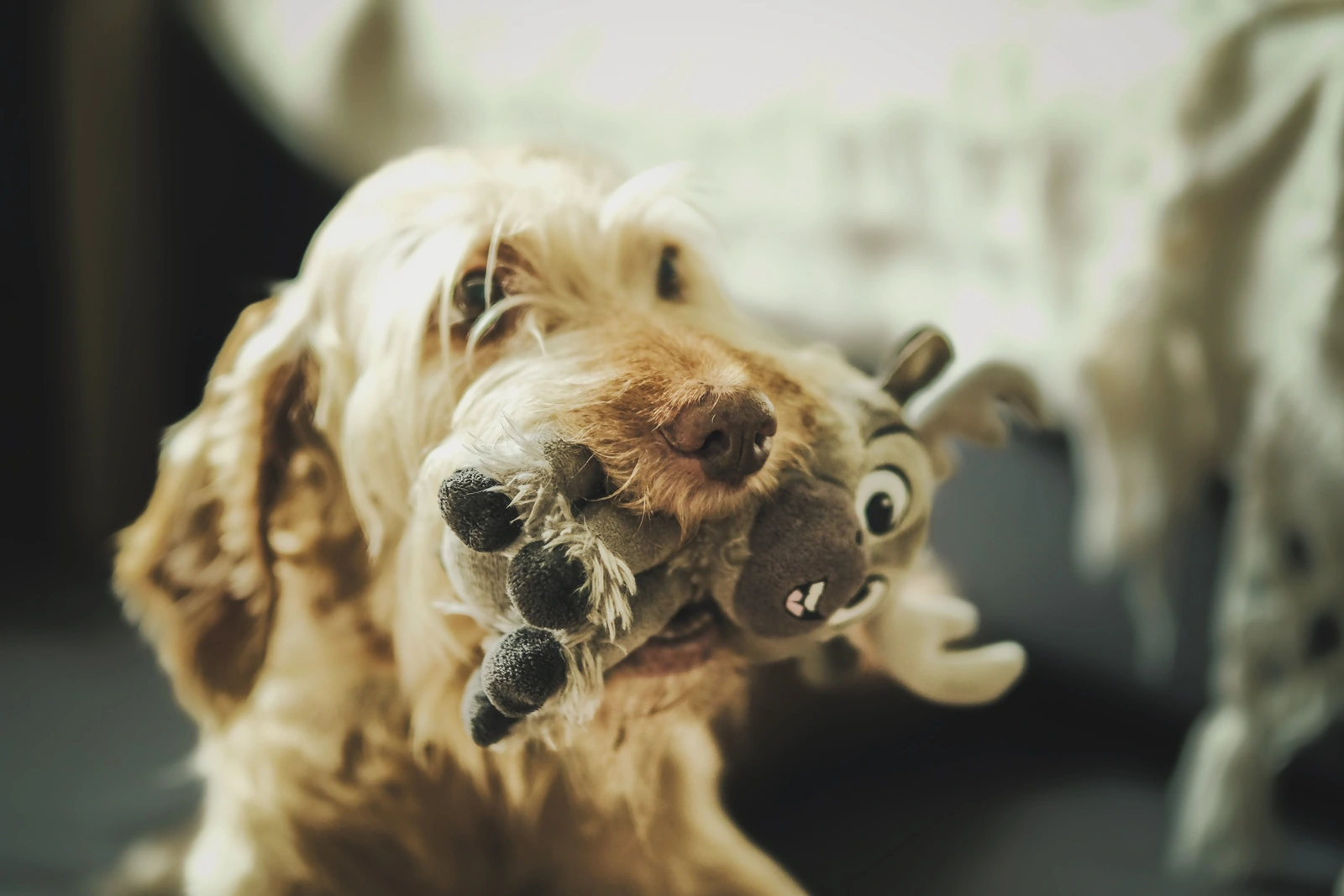
Featured photo: A dog holds a soft toy indoors. Toy interest alone cannot establish why a dog seeks an activity. Photo: Andreas Schnabl / Pexels.
Prepared with AI assistance and reviewed against the sources above.