Separation anxiety dog training starts with absences short enough that your dog stays relaxed, then builds in small steps. Arrange support for longer exits and watch for early distress. The ASPCA recommends gradual, below-threshold practice and expert help for hard cases. Do not leave a distressed dog to cry it out.
What does separation anxiety training involve?
The goal is relaxed time alone, rather than staying silent or following a stay cue. Training changes what tiny times apart mean for your dog. Management covers exits they cannot yet handle. A vet and qualified reward-based behavior expert can help assess signs, exclude health problems, and shape a plan for your dog.
Barking, accidents, damaged doors, and pacing do not prove a diagnosis. Record when they happen, what happens before them, and whether they occur when someone is home. A changed bathroom pattern or sudden behavior change deserves veterinary attention. Tell the clinic if there has been an injury or dangerous escape attempt.
This guide is a guide to first steps, not a treatment plan. It does not ask you to provoke panic to find the longest absence. If your dog becomes worried when you merely approach the door, those are useful notes for an expert.
What should you record before starting?
Use video to observe body language as well as sound, with live viewing if possible so you can return promptly. The AKC separation anxiety guide describes signs such as pacing, panting, barking, and escape attempts. Compare what you see with your dog’s usual relaxed behavior rather than judging by a single signal.
Set up the camera while you are present first. Check that it captures the resting area and exit, has working sound, and has no chewable trailing cords. A dog sitting still at the door may be waiting with worry, so silence alone does not show comfort.
Make a short clear record: the context, your action, the dog’s response, and what you changed. Note whether the dog can rest with another trusted adult. Tell your expert if distress occurs around a given person leaving, an empty home, or being shut in even with someone present. These notes guide review; they are not a home diagnostic test.
How do you plan for necessary exits?
Before adding training absences, name how real trips out and work will be covered. Dogs Trust recommends planning alone time around the dog’s needs and finding help when absences exceed what the dog can cope with. A midday walk does not cover distress that begins right away after exit.
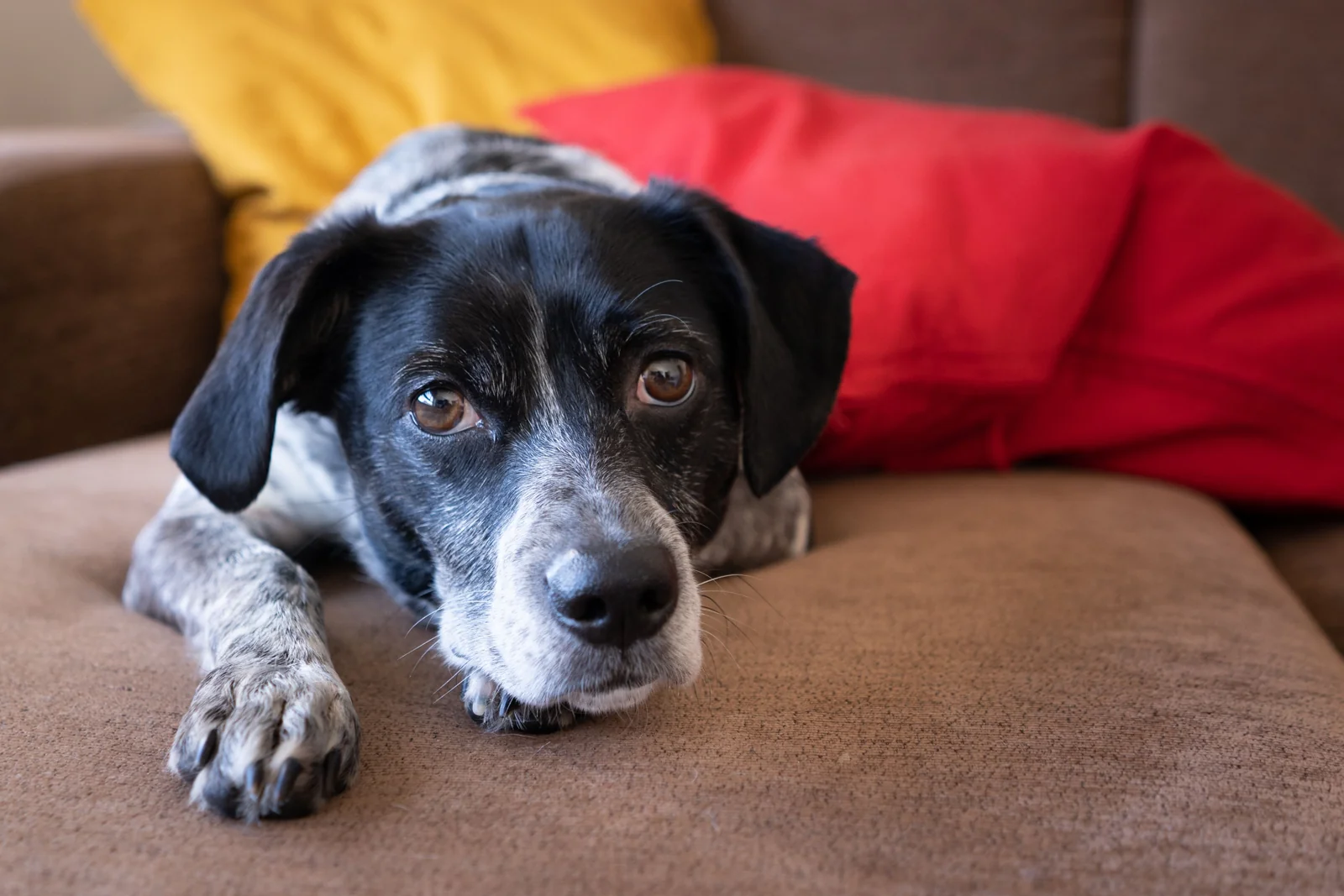
Write a workday care plan with names, start times, handovers, and backups. Options may include a well-known sitter, a trusted family member, or a safe care setting where your dog can relax. Test the care setup with you present first, rather than finding during an urgent absence that it creates another problem.
Use clear sitter instructions to explain exits, equipment, contacts, and what signs need a call. Keep water on hand and the space physically safe. A resting area is useful only if your dog feels relaxed there. Do not force a crate or shut a worried dog into a room as the training fix.
Start with a change your dog can handle
Choose a calm, usual moment after daily needs are met. Start at a step that does not worry your dog, which may be shifting in your chair or briefly touching a door handle. If even that causes concern, pause exit practice and get help choosing an easier starting point.
- Observe your dog at rest before doing anything. This gives you a baseline for the next action.
- Make one tiny change, such as standing up and sitting down again. Keep the rest of the setting the same.
- Check the response. Look for relaxed posture and an easy return to normal activity, not just absence of barking.
- Keep easy attempts short. Do not lengthen every attempt or stack several new exit cues together.
- When a real separation is right, make it shorter than your dog can handle with ease. Return before concern begins and use live viewing.
The ASPCA explains desensitization to exit cues such as keys or coats. Practice a cue on its own only when it is mild enough for your dog to stay relaxed. Repeatedly rattling keys while your dog gets more and more worried is not useful practice.
If you notice distress, return calmly and stop that attempt. Do not wait outside for silence. Allow rest, review what changed, and seek expert input rather than repeating the same hard step.
Use notes to choose the next action
The table is an editorial planning aid, not a diagnostic scale. Look at the whole pattern and discuss unclear signs with your expert. A useful next step protects comfort, whereas a stopwatch record by itself can reward pushing too far.
| Observation | What to record | Safer next action |
|---|---|---|
| Dog follows as you stand | Posture, speed, skill to settle again | Make your movement smaller; do not add an exit |
| Dog watches the door and stops resting | Which cue preceded the change | Remove that challenge and review the setup |
| Dog ignores a usual food game | Whether this differs from normal | Do not use food to conceal a longer absence |
| Pacing, escalating barking, or escape behavior | Video and exact context | Return, end practice, and contact your expert |
| Relaxed with one sitter but not another | People, setting, and handover | Use the relaxed care setup and plan a gradual first meeting |
Food toys, walks, and a steady daily care routine may support daily welfare. They do not show that a dog can cope with being left after the food is finished. Do not choose chews or objects that are unsafe without someone watching.
A useful practice log and expert handoff
Illustrative example, not an observed case: an owner writes, “Dog resting on rug. I reached toward keys. Dog stood and followed. I put keys down; dog returned to rug. Next time: smaller movement, no exit.” This records a useful change without claiming that the dog failed or giving a diagnosis.
Use a simple session log to compare similar settings. Include new noise, guests, poor sleep, changes in care, and whether your dog rested with ease. Bring short clips to your vet or behavior expert, with a list of planned absences that need cover.
Choose someone who explains their methods, uses reward-based work, and will adapt to your dog’s response. AVSAB recommends reward-based methods and rejects aversive training. Bark-suppression devices, punishment after damage, and forcing longer absences do not teach a worried dog that being alone is safe.
FAQ: separation anxiety dog training
Should I let my dog cry until they settle?
No. If distress appears during practice, return calmly and reduce the challenge next time. Quietness after prolonged distress does not show relaxed alone time. An expert can help separate usual brief barking from a wider distress pattern without asking you to test how much your dog can endure. Share the full pattern with your expert.
Will crate training solve separation anxiety?
Not by itself. A dog can enjoy a crate with someone nearby yet struggle when alone, and being shut in can add worry. Tell your expert what happens in each setting. Do not repeat escape attempts in a stronger crate or force the dog to remain confined until they stop trying to escape.
Can exercise or a food puzzle fix the problem?
They may support daily needs and enrichment, but they are not proof of relaxed time apart. A tired dog can still feel afraid, and food can briefly occupy a dog who becomes distressed afterward. Choose safe exercise and food equipment, while treating separation practice as its own gradual task. Keep the setup safe and simple.
What if I have to go to work tomorrow?
Prioritize a care setup that can work and contact your vet or qualified behavior expert. Explain the actual hours, your dog’s observed response, and what help is on hand. Shorter visits alone may not solve immediate distress. A realistic care plan is part of the work, not a failure of training. Write down who can cover each gap.
How long will separation training take?
There is no reliable deadline for each dog. Starting skill, health, setting, and needed absences vary. Measure progress through relaxed behavior in comparable settings rather than a promised weekly increase. Ask your expert how to adjust the plan if comfort decreases or daily care becomes hard. Record both easy days and harder days.
Sources and editorial notes
- ASPCA: Separation anxiety, signs, review boundaries, exit cues, and gradual practice.
- AKC: Separation anxiety in dogs, notes and expert support.
- Dogs Trust: Helping your dog spend time alone, daily first steps and care planning.
- AVSAB: Humane dog training position statement, reward-based methods and welfare.
Animalia Editorial. Last updated: October 22, 2026. Sources checked on this date. The tables and example log are editorial tools, not clinical review instruments or documented training results. Explore our training and behavior guides for related daily skills. Read the Animalia Editorial Policy. Review reward-based dog training foundations before adding a harder skill.
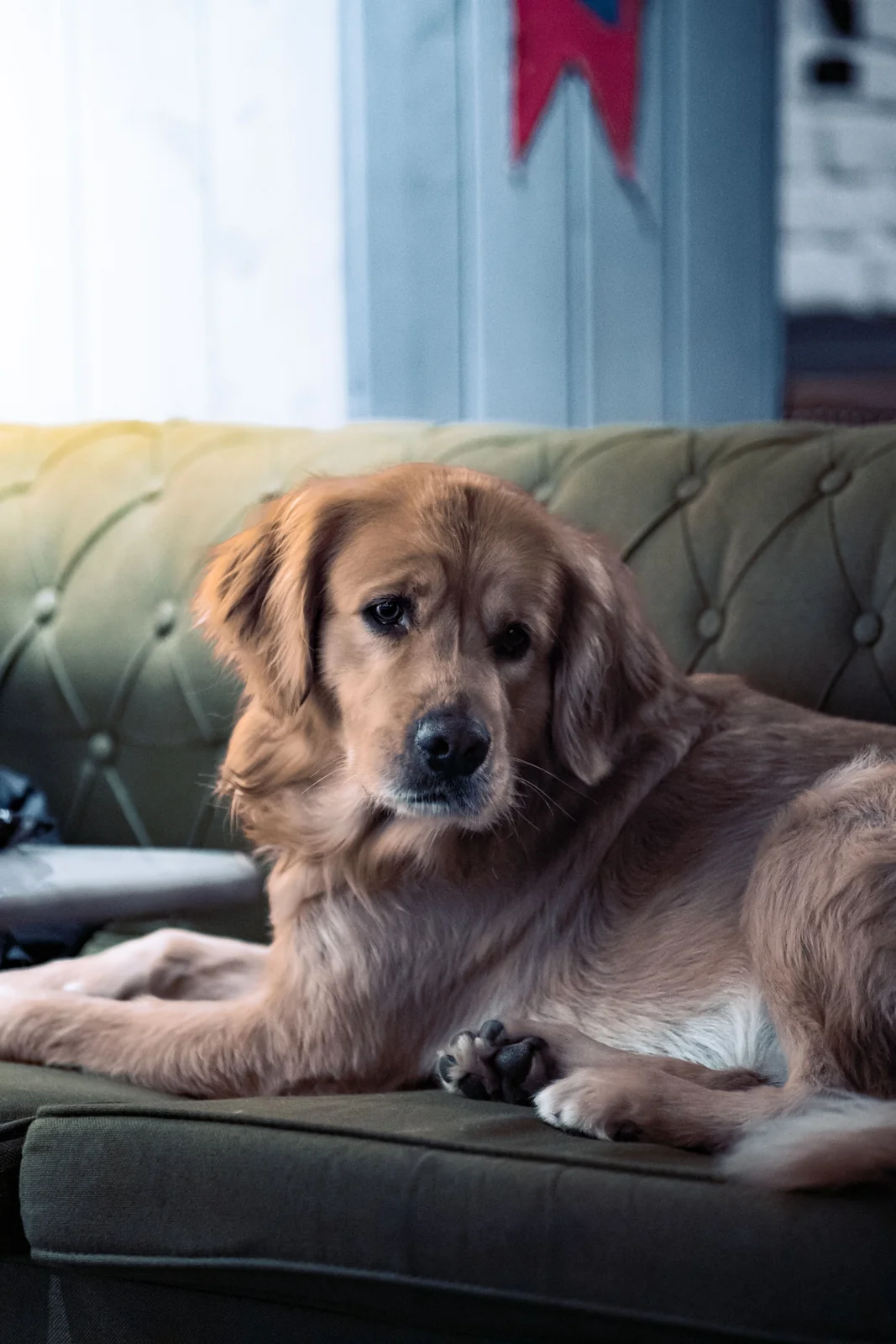
Featured photo: A golden retriever rests on a green sofa. This stock photo shows a resting space, not an assessed separation-training result. Photo: Caner Kökçü / Pexels.
Prepared with AI assistance and reviewed against the sources above.