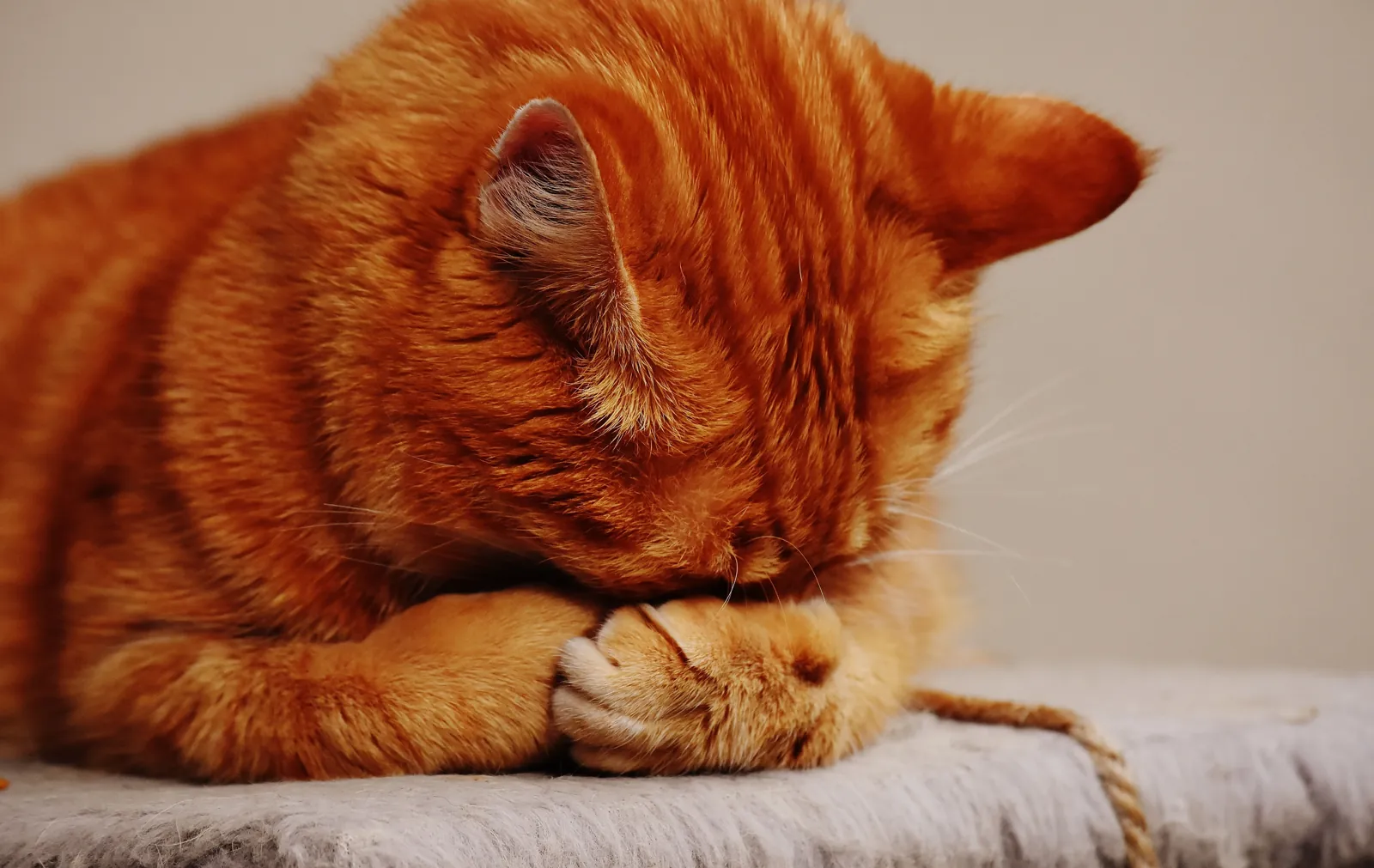
Cats may cover their face when they sleep to block light, keep some warmth, or simply rest in a comfortable position. Cats Protection lists these as possible explanations. A paw over the eyes does not prove a particular sleep stage or illness. Look at normal breathing, relaxed posture, and the cat’s usual habits.
You usually do not need to lift a paw or rearrange a sleeping cat. Give them a choice of quiet resting places and notice changes from their own baseline. What happens when they are awake matters much more than a single cute nap photograph.
Why do cats cover their face when sleeping?
Light shielding, warmth, and comfort can all fit this position, and more than one may matter. The pose alone cannot identify which applies to your cat. Instead of trying to decode it exactly, check that the resting spot is safe, the cat breathes normally, and they can choose another position.
For example, a cat resting near a bright window may tuck their paws over their eyes, while another curls their nose toward their tail. Those are observations, not proof that either cat is cold or bothered. You do not need to move a cat from a safe spot just to test a theory.
Avoid firm claims that the pose means the cat is in deep REM sleep, protecting whiskers, or deliberately sending a message. Those explanations appear in many articles, but you cannot establish them by looking at a photograph. Keep the answer at the level the evidence supports.
The practical point is simple: leave a comfortable resting cat alone. If a new position comes with other changes, investigate those. Cats Protection emphasizes the whole cat and changes in normal sleeping habits rather than treating one posture as a reliable health label.
Build a sleep setup with real choices
Offer a quiet place to rest and an easy route in and out. A cat should be able to choose a sheltered bed or a more open resting surface. VCA explains why snug spaces and elevated resting places can appeal to cats. Match the setup to the cat’s movement and preferences.
| What the space is like | A useful option | What to avoid |
|---|---|---|
| Bright during normal nap times | A shaded resting option nearby | Covering the cat’s head yourself |
| Busy with people passing close by | A quiet bed away from the main route | Repeatedly waking the cat to interact |
| Shared with another pet | Separate resting places with clear access | One narrow entrance controlled by another animal |
| Difficult to jump onto | An accessible low bed or easy route | Lifting a reluctant cat onto a high perch |
| Warm in strong sunlight | A cooler alternative the cat can reach | Leaving the cat without another safe resting choice |
Animalia’s table gives options, not a required shopping list. You may already have a useful resting surface. Choosing a cat bed and planning a cat hideout can help you improve access and privacy before buying more furniture.
Is a covered face a reason to wake the cat?
A familiar sleeping pose in an otherwise comfortable cat is usually a reason to allow rest, not to wake them for a check. Observe from a normal distance. If breathing looks difficult or the cat appears in distress, seek urgent veterinary help rather than assuming it is just an unusual sleeping position.
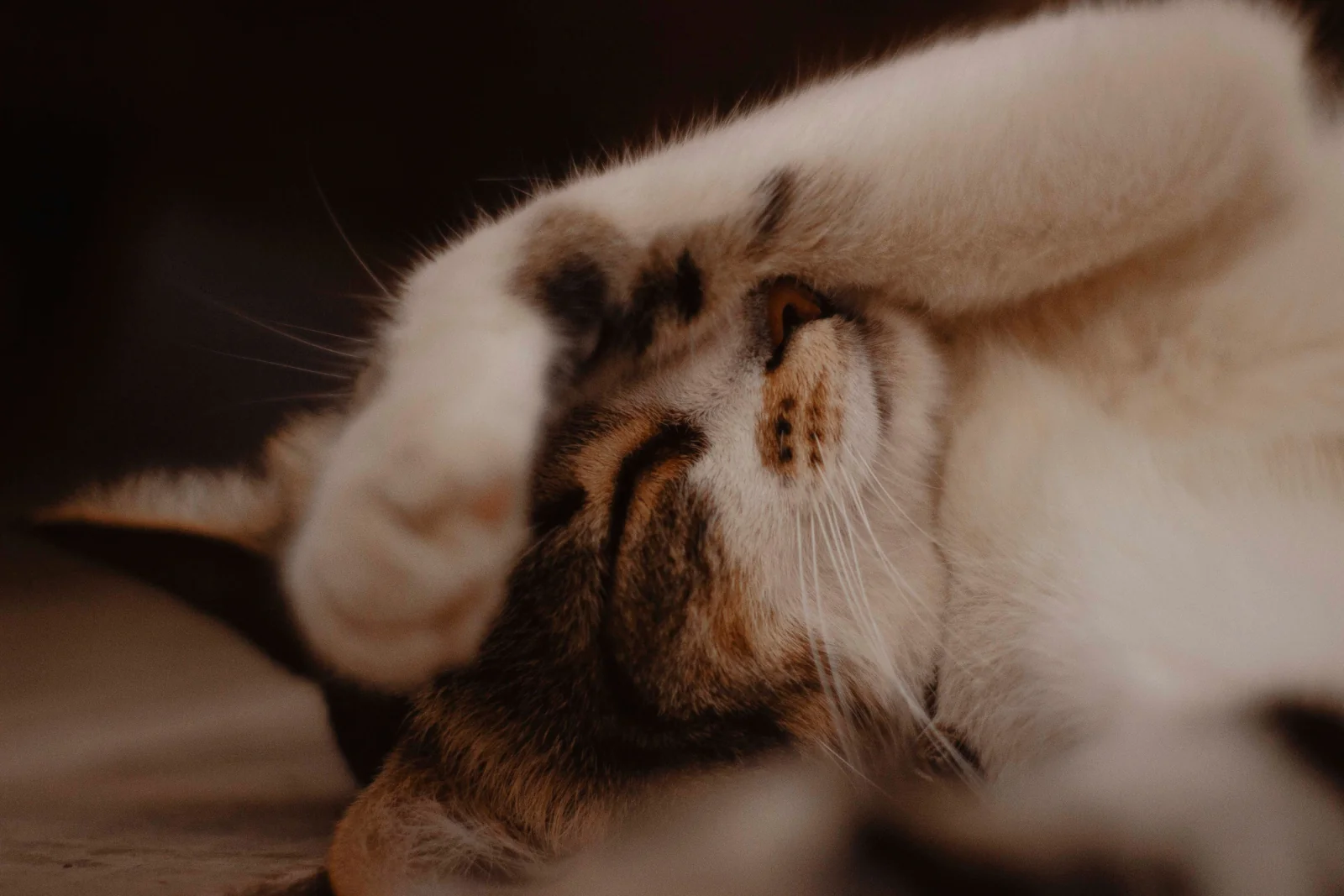
Do not pull back the paw to inspect the eyes for a photo, tuck bedding over the nose, or make the cat hold a different pose. A sleeping cat’s face does not need a cover supplied by a person. Keep the resting surface clear of loose cords, bags, and material that could trap them.
If children live in the home, make the resting place a no-touch space. Adults can model this by walking past calmly and waiting until the cat chooses to approach. A cat who wakes and moves away should have a clear exit, without being followed into another resting place.
For shared households, note what you actually see in a cat care log. “Curled on the same bed, breathing as usual” is more useful than “looks sad.” Do not use repeated disturbance as a way to gather more notes.
Notice changes across waking and sleeping hours
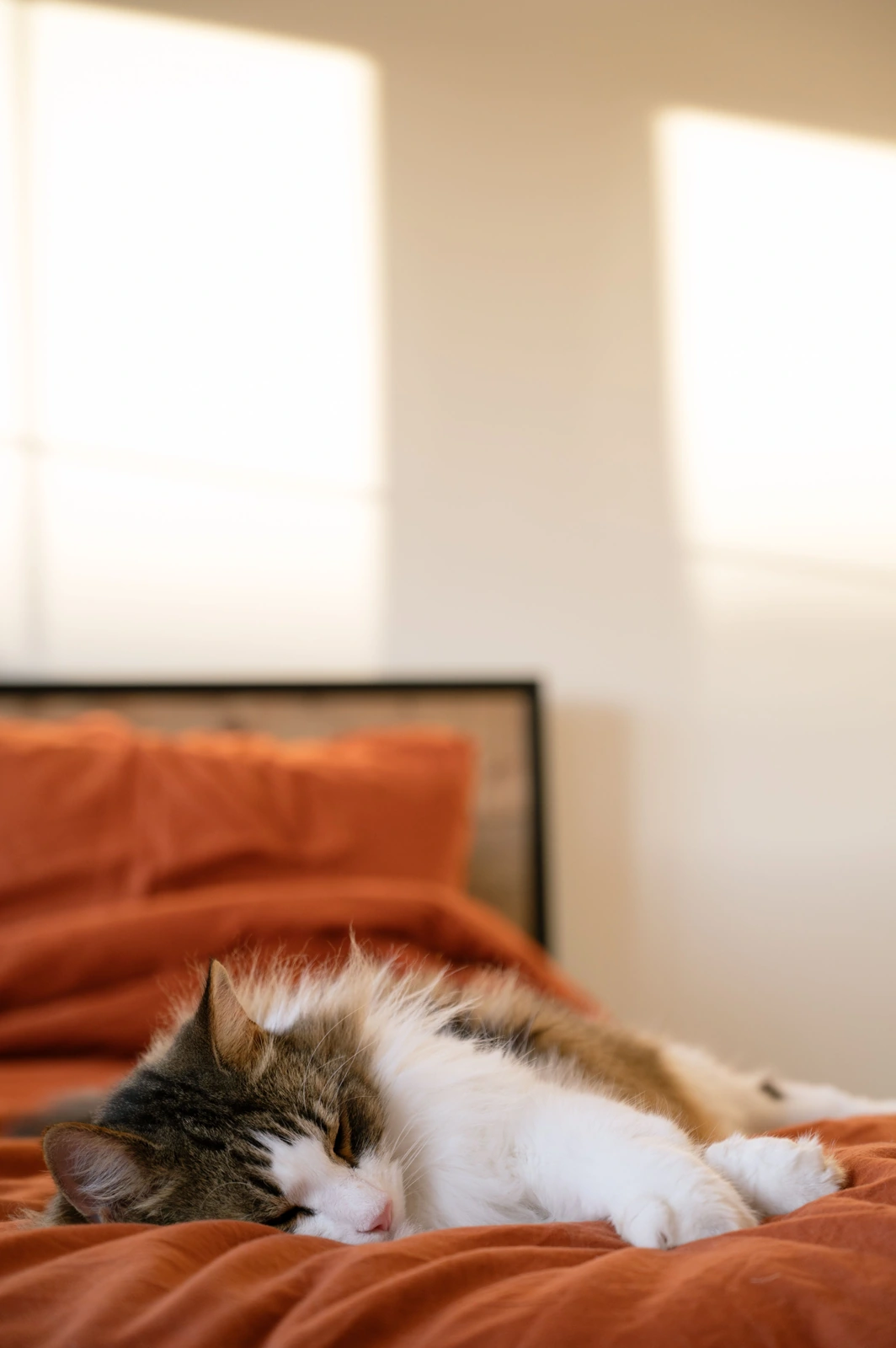
Compare the cat with their own usual pattern. Cats Protection’s sleep guidance discusses normal variation and changes that warrant attention. A different resting pose can be unimportant; a cat who also stops eating, hides much more, or struggles to move needs a closer look and advice from a vet.
- Has the sleeping place changed, perhaps after noise, visitors, new furniture, or another pet’s arrival?
- When awake, does the cat eat, drink, groom, and use the litter box as usual?
- Can the cat stand, walk, and reach the bed without obvious trouble?
- Does their breathing look quiet and easy, or different from normal?
- Is this a long-standing pose, or a sudden change alongside other signs?
Animalia’s questions are prompts for a useful conversation, not a home diagnostic test. You do not need a photo from every angle or a timed sleep score. If something concerns you, contact your vet and describe the change. A short clip may help if you can take it without disturbing the cat.
When should a sleeping-position change prompt help?
Contact your vet for a sudden or ongoing change alongside reduced eating, extra hiding, altered grooming, trouble moving, or other signs of discomfort. Cats Protection warns that open-mouth or difficult breathing needs urgent veterinary attention. Do not wait for the cat to adopt a supposedly more normal sleeping pose.
A cat who is unsteady, has a seizure, or collapses needs urgent help. Cornell’s emergency guide lists these signs alongside breathing trouble. Do not assume an unusual pose explains them, or try to identify the cause from a photo. Call the veterinary team and describe what you see.
If you are unsure whether you are seeing ordinary rest or a problem, describe exactly what is happening and ask your veterinary team how urgently the cat should be seen. Do not give medicines, force food or water, or try to change the cat’s posture as treatment.
A calmer home can support rest, but a new bed does not replace care when the cat is unwell. Respecting the cat’s choice during contact remains useful when they wake, especially if they prefer more space than usual.
Frequently asked questions about face-covered naps
Is my cat cold if a paw covers their nose?
Warmth is one possible explanation, but the pose cannot tell you the cat’s temperature. Offer a comfortable resting place and another option nearby, then let them choose. Avoid placing a cover over the nose or adding a hot item to test the idea. Look at the whole cat and ask your vet about changes that concern you.
Does covering the eyes mean deep sleep?
You cannot reliably identify a sleep stage from that pose alone. A cat may find the position comfortable or use a paw to shield some light. Treat a settled nap as time to leave them undisturbed. If the cat’s breathing or ability to wake and move seems abnormal, contact your vet rather than guessing at sleep depth.
Why does my cat use my arm as a face cover?
Your arm may happen to provide a comfortable resting edge or some shade. That does not prove a particular message about affection or fear. Keep the cat free to move, and shift your own position gently if you need to leave. You can offer a nearby bed without holding the cat against you or covering their face.
Should I turn off every light when my cat sleeps?
You do not need to make the entire home dark. Give the cat a shaded, quiet resting choice alongside normal household space. Watch which safe spots they use. If a room is busy, a bed away from foot traffic may matter more than changing every lamp. Avoid following the cat to keep adjusting their sleeping conditions.
Is a new face-down sleeping pose always a problem?
No single sleeping pose confirms illness. A change matters more when it comes with altered eating, extra hiding, trouble moving, or abnormal breathing. Record the wider pattern and ask your vet if you are concerned. Do not rely on a reassuring photo comparison when your own cat seems unwell, or wait for another sign to appear.
Keep the nap safe and undisturbed, offer a useful choice, and act on changes in the whole cat. Animalia’s cat care hub includes more everyday resting and home-setup guidance.
Sources and editorial notes
- Cats Protection: sleeping positions, face covering, and health changes
- Cats Protection: cats and sleep
- VCA Animal Hospitals: why cats choose unusual sleep spots
- Cornell University Hospital for Animals: emergency warning signs
Possible explanations are not a diagnosis of an individual cat’s motives or health. This guide does not infer sleep stage from posture. The comparison table is an owner setup aid, not a clinical assessment.
Animalia Editorial. Sources last reviewed October 22, 2026. Editorial Policy.
Featured photo: An orange tabby rests with its face against its paws. Posture alone does not identify sleep depth or health. Photo: Pixabay / Pexels.
Prepared with AI assistance and reviewed against the sources above.