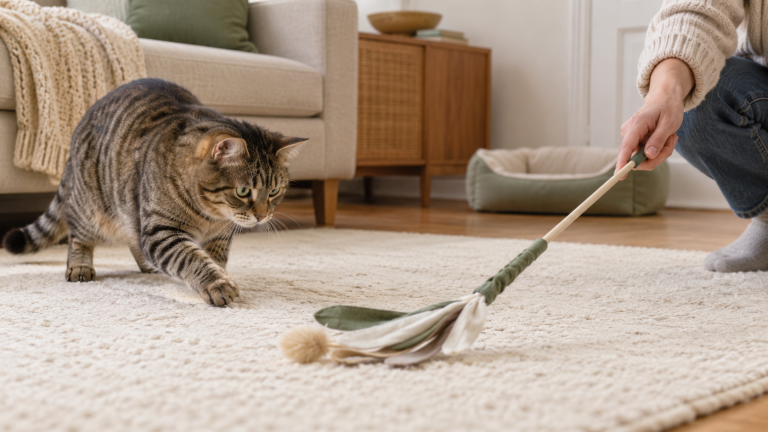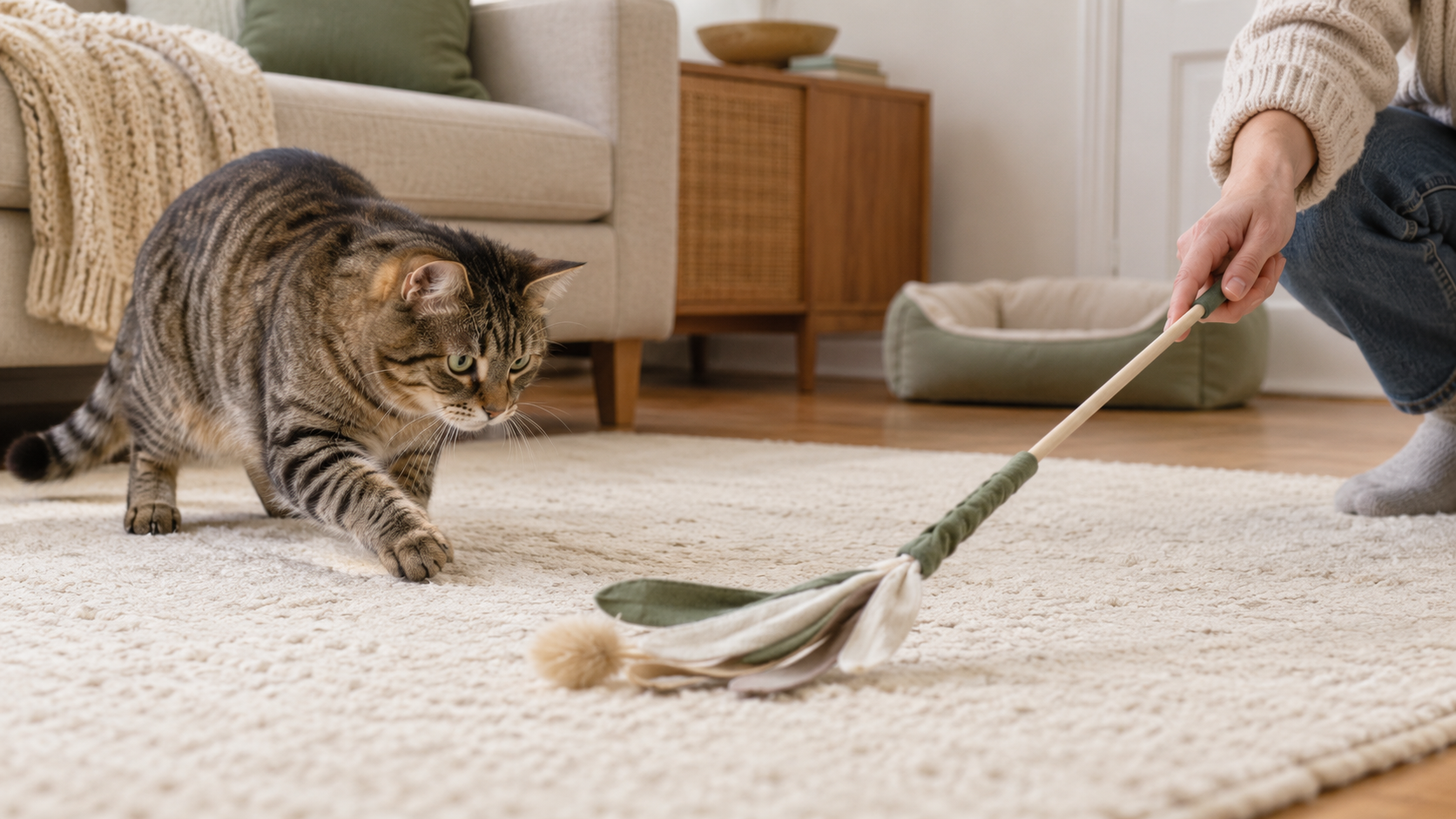
Choose a cat wand toy with secure attachments, a comfortable handle, and a lure your cat can engage with without getting tangled. Use it only while you supervise. The way you move and store the toy matters as much as its appearance.
Inspect the whole toy before play
Check the handle, connection points, line, and lure. Look for fraying, exposed sharp parts, broken fittings, and pieces that could detach. Follow the manufacturer’s age, size, and supervision guidance, and retire a damaged toy rather than patching it with loose tape or string.
Consider your cat’s habits. A cat that chews and swallows soft attachments needs a different choice from one that gently bats at a large lure. A product labeled for cats is not automatically suitable for every cat.
Compare practical features
- Control: you can move the lure smoothly without striking furniture.
- Construction: attachments stay secure during normal use.
- Visibility: you can see both the cat and the moving toy.
- Storage: the whole toy fits somewhere the cat cannot reach unattended.
- Maintenance: inspection and cleaning are straightforward.
For a small room, a manageable handle may be easier than an oversized wand. Before buying, think about the actual play area rather than the open studio shown in a product photograph.
Move the lure at the cat’s pace
Start low to the floor and away from the cat’s face. Let the cat investigate, pause, and choose whether to approach. Give space for comfortable movement rather than drawing the cat toward stairs, unstable furniture, or a tight corner.
Avoid wrapping the line around the cat or encouraging the cat to wrestle with it. Keep the activity easy to supervise, with breaks and a clear finish. Our play-routine guide offers a simple session structure.
Store the toy after the session
Put it in a closed cupboard or another secure place as soon as play ends. Hanging a wand from a door handle leaves a line available to chew or become tangled in. Do not turn a supervised toy into an unattended decoration.
If several people play with the cat, agree on the storage location and a quick inspection habit. A small note beside the cupboard can remind caregivers to check attachments before use.
What if your cat ignores it?
Try gentler movement, a quieter room, or a different familiar texture. Change one variable and observe. You do not need to keep presenting the toy to a cat that has chosen to leave.
A cardboard hideout or a floor-level toy may suit the cat better. See our cardboard-box game guide for another approach. Sudden changes in interest or comfort deserve veterinary advice.
Sources and editorial notes
Supporting toy-safety guidance: VCA: kitten toy dos and don’ts. These are selection and supervision criteria, not a product test or a claim that any wand is risk-free.
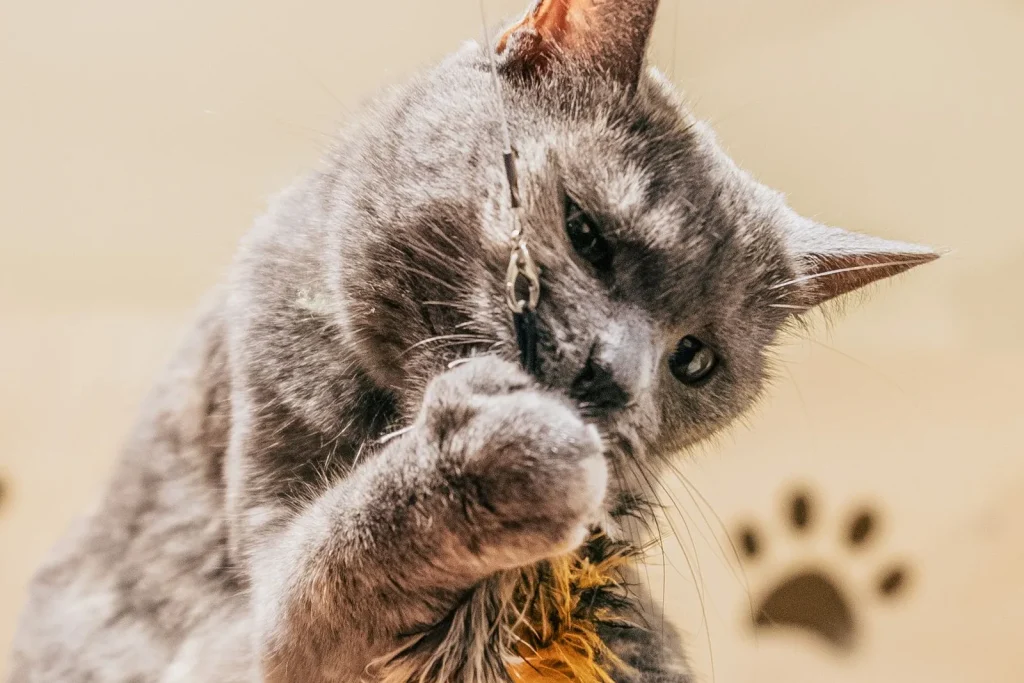
Featured image: Illustrative supervised play scene, generated with AI; not an observed Animalia session.