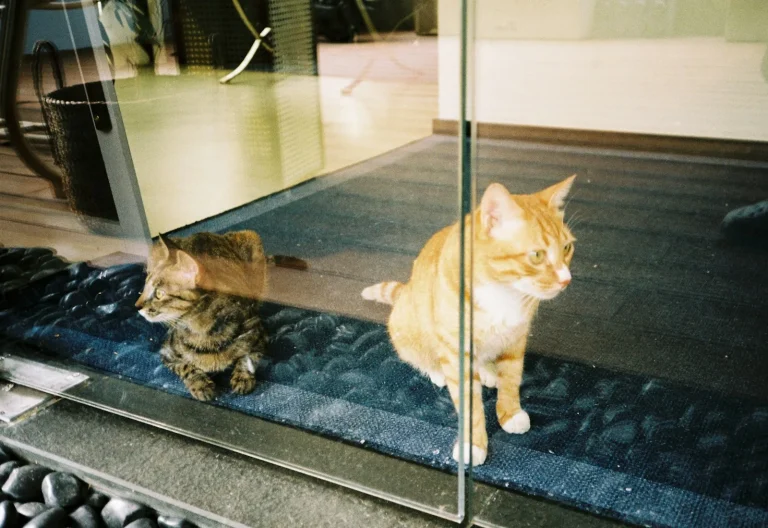
A cat may pee on your bed because peeing hurts, the litter box is hard or unpleasant to use, stress has changed their habits, or soft bedding has become a preferred surface. Cornell recommends checking for medical causes. This is not evidence of revenge; start with health and access.
Finding wet sheets is frustrating, and cleaning alone may not prevent another accident. First check whether your cat can pass urine normally. Then share the pattern, box setup, and recent changes with your vet. Animalia’s cat behavior guide explains why observations are more useful than guessing motives.
Why does my cat pee on my bed suddenly?
A sudden change can reflect pain when peeing, another health problem, trouble reaching the box, or a change in the home. The bed’s spot and texture may then make it an alternative toilet. Even if stress seems likely, ask your vet before assuming that it explains the accident.
A cat can still use the litter box for some trips and have a problem on others. Also, a cat who eats and plays normally can need a health check. Give the clinic a clear description: when it began, whether you saw a normal urine stream, and any change in thirst or movement.
Avoid deciding that a new person or pet caused “jealousy.” Instead, note what changed in daily access. Did a dog start waiting near the box? Was the bedroom door closed? Did a noisy appliance move nearby? These questions identify practical obstacles without assigning blame to the cat or household.
Is peeing on the bed ever an emergency?
Yes. Straining or trying to pee over and over while passing little or no urine needs urgent vet care. Cornell calls a blocked urinary tract an emergency. Do not wait to see whether a different litter works. If you are unsure whether urine is passing, contact an emergency clinic for guidance now.
Repeated trips, crying while trying to pee, blood, or frequent licking around the genitals also mean you should call your vet promptly. Tell the clinic what you can observe. Do not press the belly, give a human medicine, or attempt to treat a suspected blockage at home.
If your cat can pass urine but has started having accidents, call your vet promptly. A puddle cannot tell you the cause. The clinic can decide how soon to see your cat and what notes or samples would help. Do not delay the call to collect a perfect video.
A practical map of clues and next steps
Several factors can happen together. This table helps you prepare notes for a vet visit; it cannot diagnose your cat at home. Act on urgent signs first. Then look for access, box cleaning, and social changes that you can improve while keeping a familiar option in place.
| Observation | What to record | Next step |
|---|---|---|
| Repeated attempts, little or no urine | Whether any urine passes; distress | Contact emergency veterinary care immediately. |
| Normal puddles but a new habit | Onset, frequency, thirst, other changes | Arrange a vet check and review box access. |
| Accidents after a litter change | Old and new litter; covered or uncovered box | Offer the familiar setup alongside an alternative. |
| Cat hesitates at steps or high box sides | Mobility and where the boxes sit | Ask your vet; add an easily reached low-entry option. |
| Another pet waits near the box | Routes and potential blocked exits | Separate resources so the cat has independent access. |
| Small marks with a standing, quivering tail | Posture, surface, location | Record it for your vet; marking needs a different assessment. |
A standing cat marking an upright surface differs from a cat squatting over bedding, although location alone is not conclusive. Our guide to female cats spraying explains the distinction without treating sex or neuter status as a diagnosis.
Make the litter box easy to choose
Review the route to each box from the cat’s usual resting place. A box is available only if the cat can reach it safely whenever needed. Cats Protection recommends quiet, accessible toilet areas away from food and water, with enough space for comfortable entry and exit.
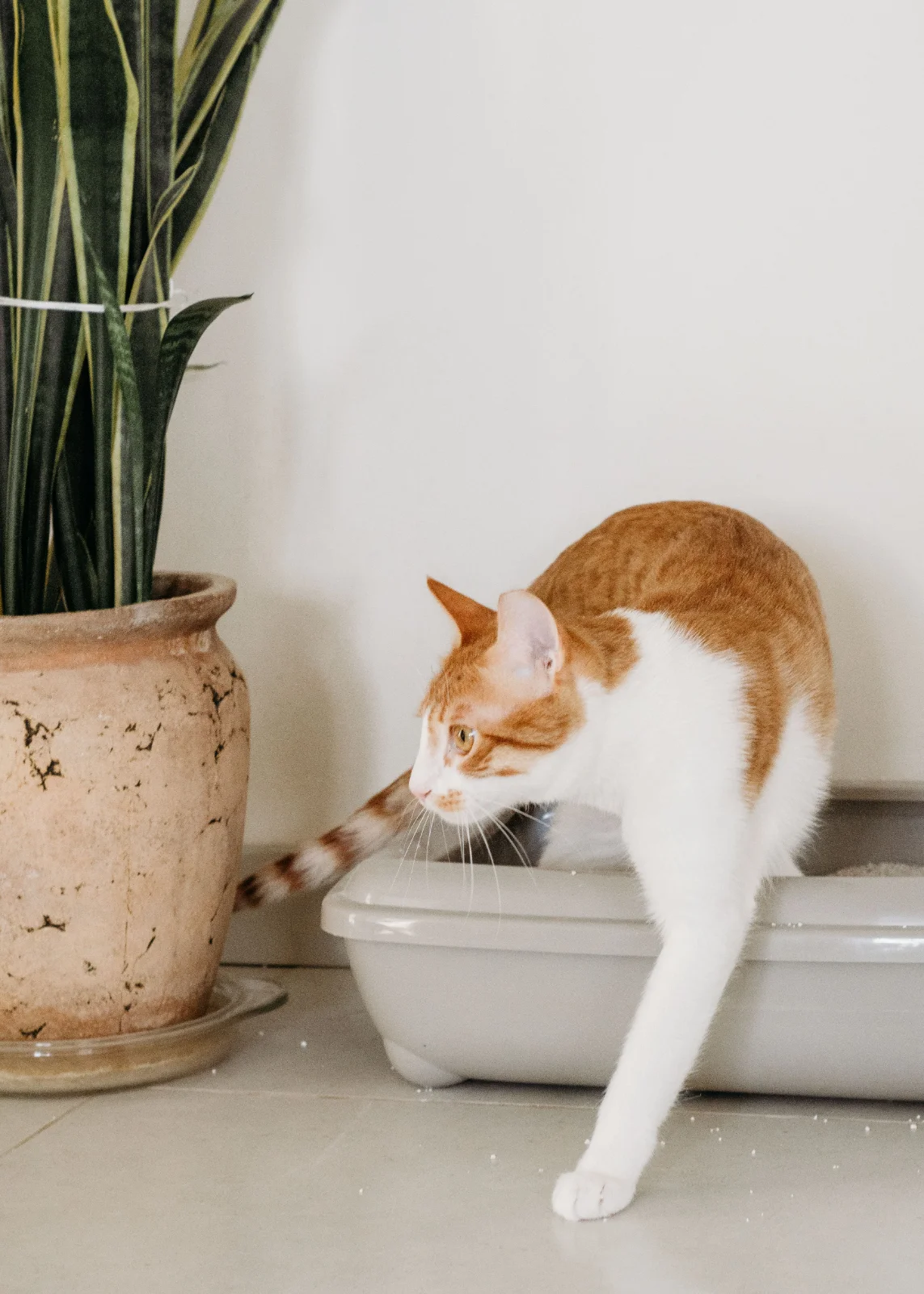
Offer additional options rather than replacing every box or litter at once. A large, open box may help reveal a preference; an accessible entry matters for a cat who has trouble climbing. Place boxes in separate useful locations, so another pet cannot control them all from one doorway.
Also keep the routine predictable. Scoop and maintain the boxes using our litter box cleaning routine. In a shared home, use the multi-cat resource layout to check routes. A row of trays side by side does not provide the same independent choices as well-spaced locations.
Let your vet know if a new litter, liner, cover, or cleaning scent preceded the problem. Avoid forcing your cat into the box to demonstrate its location. The goal is comfortable access, not compliance with a toilet lesson.
How can you protect bedding while investigating?
Clean soiled items promptly using Cornell’s guidance on cleaning soiled items and the product label. Choose odor removal rather than perfume. Keep your cat away until the area is ready for use, and avoid mixing cleaners. Protecting bedding helps while you investigate the cause; it does not replace a vet check.
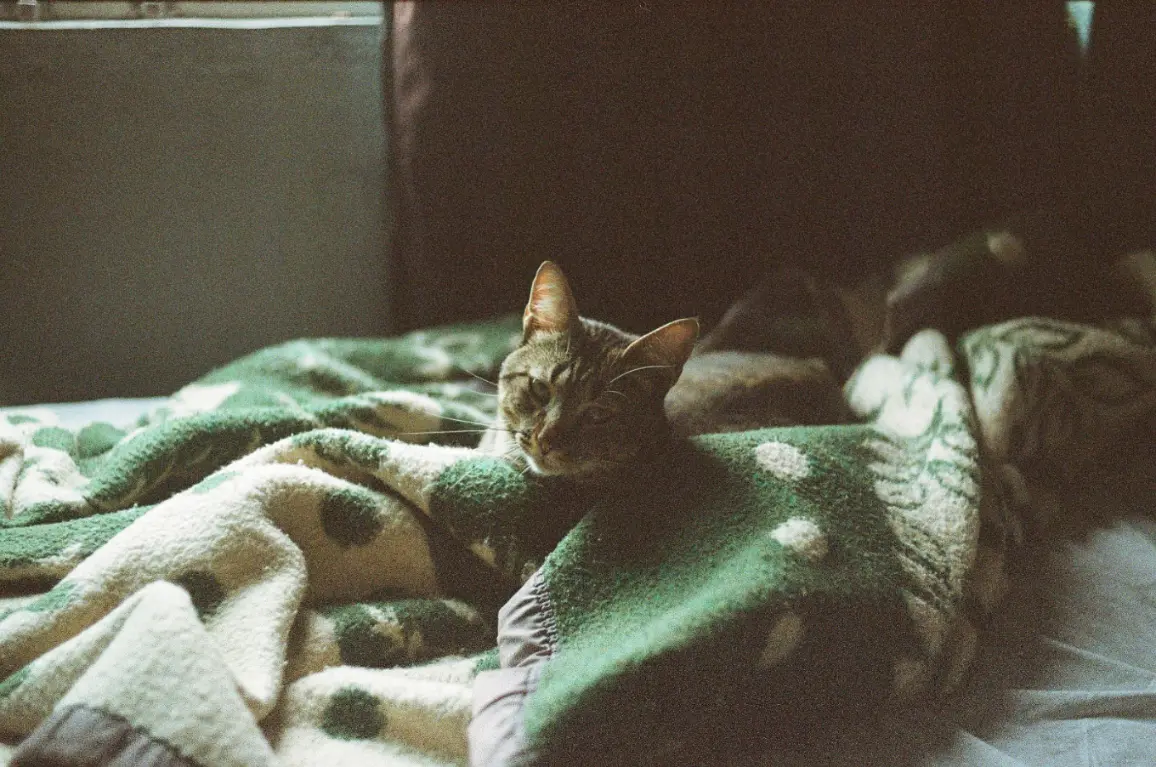
You can temporarily close the bedroom when you cannot supervise, provided the cat still has comfortable rest, water, and toilet access elsewhere. This protects the bed while you address the cause. Do not shut the cat away as punishment, carry them to the mess, or rub their face in it.
- Write the time and exact location of each accident.
- Record whether the cat squatted or stood, if you actually saw it.
- Note normal litter-box trips as well as accidents.
- List recent changes in litter, cleaning, visitors, routines, or pets.
- Record appetite, drinking, activity, and movement changes.
- Keep track of which adjustment you made and what happened next.
For an illustrative example, “Tuesday evening, wet duvet, cat not observed” is more useful than “angry about visitors.” It also avoids a false conclusion when several cats share the home. The household cat-care log helps everyone record the same facts. A vet or behavior professional can use that pattern to plan the next step.
FAQ: cats peeing on beds and clothes
Why does my cat pee on my bed but poop in the box?
Using the box for stool does not rule out a urinary or access problem. A cat may associate one activity with discomfort or prefer a different surface for urine. Tell your vet that the pattern differs between pee and poop. Also record whether your cat pees normally at other times, without delaying care for urgent signs.
Is my cat peeing on my bed because they are mad?
A wet bed does not show that your cat is punishing you. Focus on health, litter-box comfort, and changes in the environment instead. Punishment adds pressure without identifying the problem. If an accident follows a household change, record the timing and access differences rather than assuming your cat has chosen a target for revenge.
Can I stop bed peeing by closing the bedroom door?
Closing the door can protect bedding temporarily, but it does not explain or resolve the cause. Make sure your cat has other comfortable sleeping places and safe access to litter boxes. Meanwhile, call your vet for advice and review the setup. If accidents move to the couch or laundry, include that change in your record.
Why does my cat also pee on clothes or the couch?
Soft surfaces can become preferred toileting places, and several locations can be affected when a cat avoids a box. The pattern still cannot distinguish health concerns from environmental ones. Put laundry away, clean soiled areas, and tell your vet which surfaces are involved. Avoid changing every litter-box feature at once while investigating.
How long does it take to stop a cat peeing on the bed?
There is no reliable deadline without knowing the cause. A different litter setup cannot substitute for assessment of pain or urinary problems, and an established pattern may need a tailored plan. Ask your vet how to track progress and when to report another accident. Seek urgent help at any point if your cat strains without passing urine.
If you are asking “why does my cat pee on my bed?”, begin with normal urine flow and a call to the vet. Next, make toilet access comfortable and record changes calmly. Animalia recommends protecting bedding while you look for the cause, using calm changes that keep your cat’s safe choices. See our cat behavior hub for help reading other patterns.
Sources and editorial notes
- Cornell Feline Health Center: house soiling
- Cornell Feline Health Center: lower urinary tract disease
- Cats Protection: preparing your home for a cat
- Cats Protection: Behavior Guide, house soiling and toileting
Animalia Editorial. Published and last updated October 29, 2026. Editorial Policy.
Featured photo: A cat sits on a bed. This stock photo does not show a toileting accident. Photo: Katerina Mishkel / Pexels
Prepared with AI assistance and reviewed against the sources above.