Why do cats sleep in a ball? Curling up may help conserve warmth, and some cats simply find it comfortable. Cats Protection cautions that the position alone cannot show whether a cat feels safe or anxious. Leave a settled cat undisturbed and ask your veterinarian about a new or persistent change, especially with other concerns.
A compact curl is a common resting shape, rather than a code you must translate into one emotion. Animalia’s guide connects the pose with useful observations, suitable resting choices, and the limits of deciding health or comfort from a photograph.
Does sleeping in a ball mean your cat is cold?
Curling can help retain warmth, but the position alone does not establish that your cat is cold or needs extra heat. Consider the room, available resting places, and what is usual for your individual cat. Offer comfortable choices and let them move rather than changing the environment solely to correct a familiar sleeping pose.
Notice whether this is a favorite position or a recent change. A cat can curl up on a comfortable surface without needing you to move them to a different bed. Likewise, a cat who stretches out has not necessarily stopped feeling secure. Avoid reading one position as a temperature measurement or a test of the quality of your care.
Our cat bed planning guide covers the separate task of choosing suitable rest areas. Start with access and choice, rather than purchasing a bed designed to create a particular pose. A useful resting place accommodates the cat’s preferences and allows them to settle or leave comfortably.
Compare what you see with what you actually know
This Animalia table separates the visible position from conclusions that need more information. Use it to choose a sensible next action, rather than diagnose a problem or assign an emotion. A still photograph cannot establish the whole sequence or your cat’s health. It also cannot show whether a resting place is their only available choice.
| Observation | What remains uncertain | Practical next step |
|---|---|---|
| A familiar relaxed curl in a usual spot | Exact emotion or body temperature | Allow rest and keep other suitable options available |
| A change in sleeping place or position | Whether preference, surroundings, or discomfort contributed | Review the setting and discuss persistent concerns |
| Difficulty settling or moving as usual | The underlying cause | Ask your veterinarian for advice |
| Another animal controls a route to the bed | Whether the resting choice is freely available | Review access and provide separate options |
| A photograph of a tucked-up cat | Whether the cat is asleep, comfortable, or unwell | Consider wider behavior rather than diagnosing the image |
Write the specific change if you need to discuss it: “usually sleeps in the open bed; now stays behind the chair” is clearer than “looks anxious in a ball.” You can then describe ordinary movement, appetite, and care without deciding that the sleeping shape itself establishes the cause.
Avoid repeatedly waking the cat to inspect their position or moving them for a clearer photograph. If something concerns you, ask for guidance and describe what you observed. A useful record supports care without turning rest into another handling task or creating the very change you are trying to understand.
How can you provide comfortable resting choices?
Provide suitable quiet resting places that your cat can reach and leave comfortably. Keep routes usable and let the cat choose a position instead of placing them into a curl. Cats Protection advises leaving sleeping cats undisturbed. Review access separately if another animal or household activity makes the chosen place difficult to use.
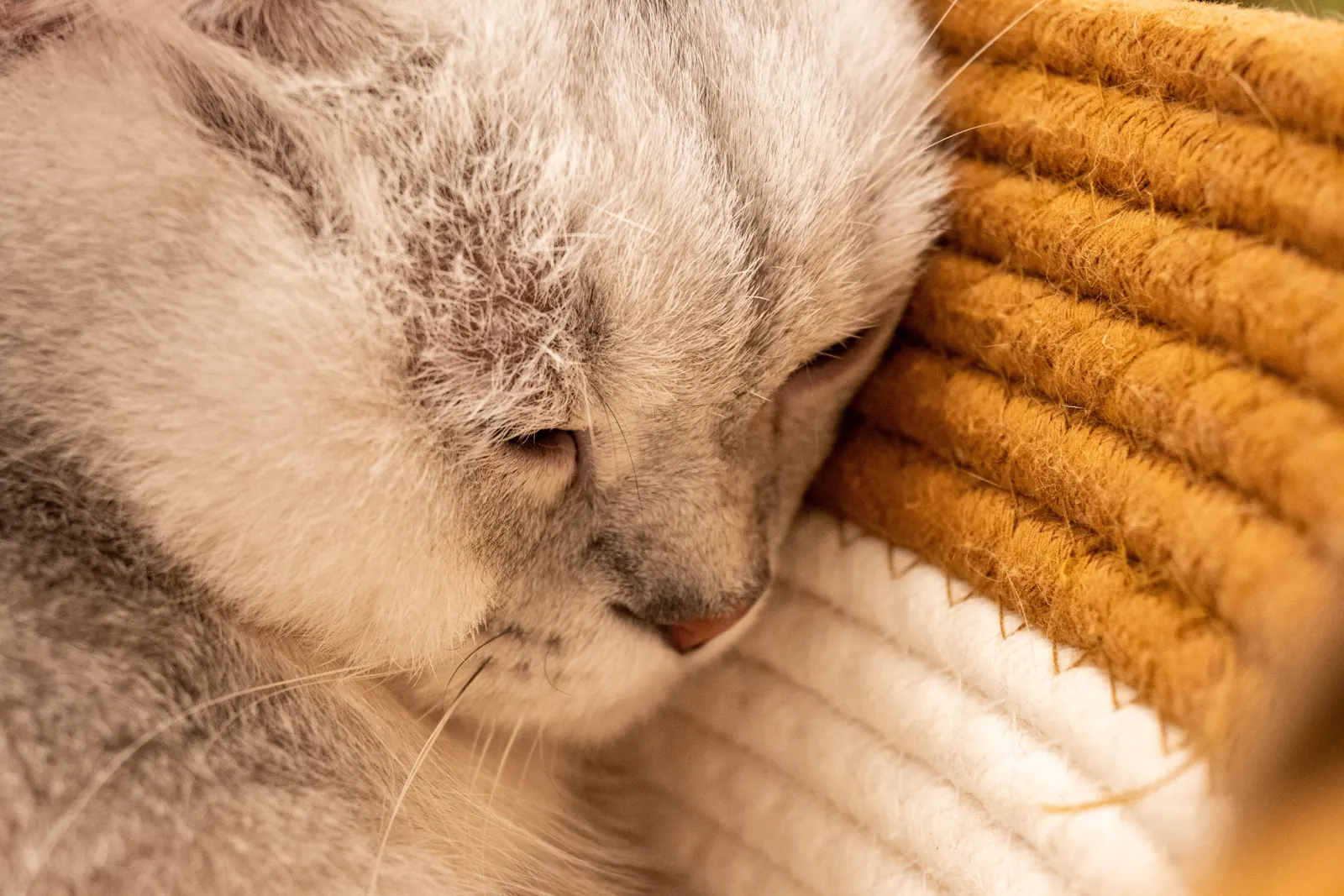
You can offer an open resting area and a suitable retreat without requiring the cat to use either one. Our hideout guide covers sheltered options. In homes with several cats, our resource layout guide helps you look at routes and separate access rather than assuming a shared bed proves harmony.
Keep the arrangement practical for everyone. Check before closing a door or moving bedding, and tell caregivers which spaces the cat uses. A favorite nap spot can be part of the household routine without becoming a place where people repeatedly reach in, lift the cat, or encourage children or other animals to investigate.
Sleeping poses are clues, not a health assessment
The same broad position can occur in different circumstances. A curled outline does not tell you whether muscles are relaxed, movement is normal, or the cat’s wider pattern has changed. Describe those observations separately. If you are unsure about comfort, seek advice instead of repeatedly repositioning the cat to compare shapes.
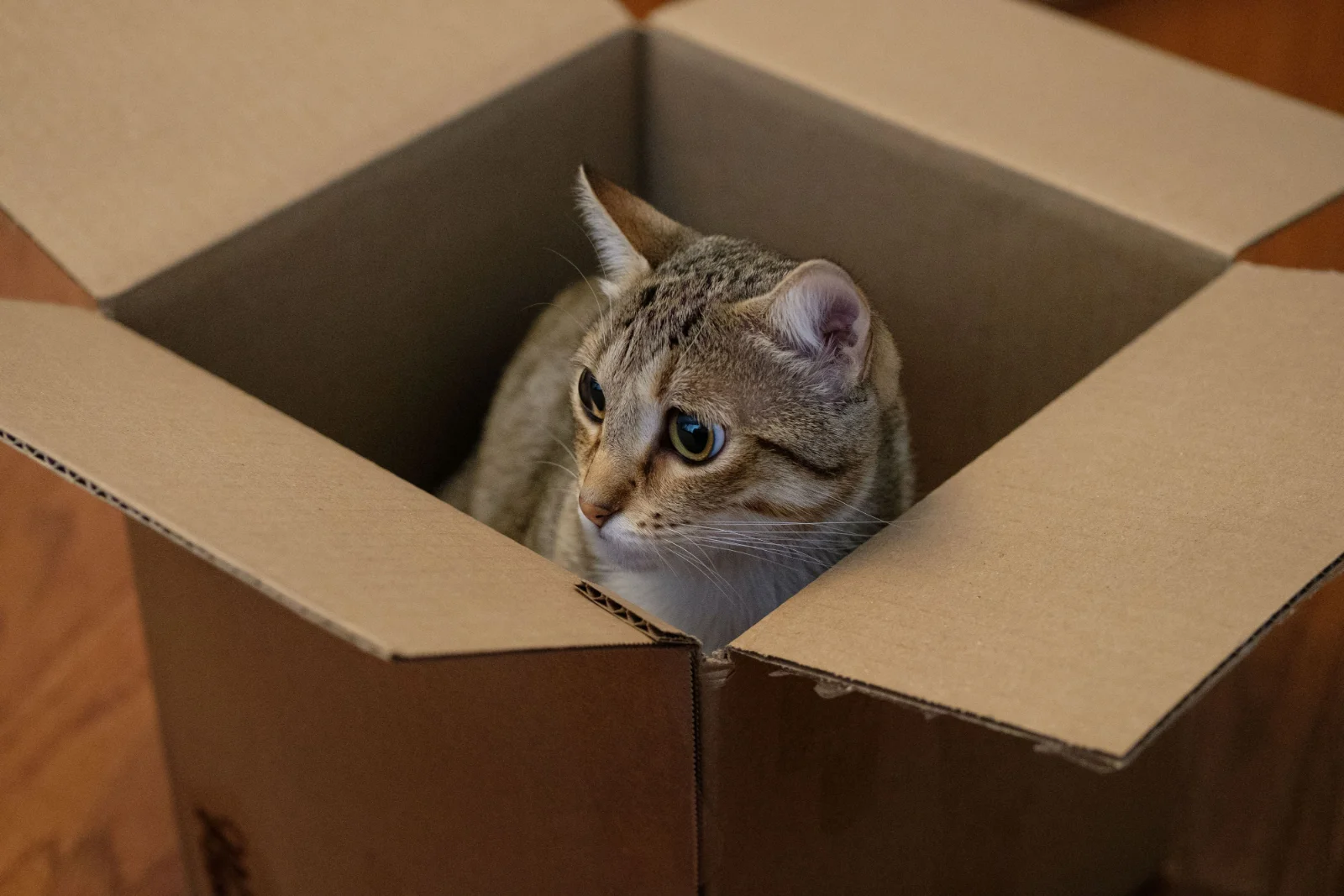
Avoid fixed claims that one pose proves deep sleep, complete trust, fear, or a particular disease. Popular pose charts often move too quickly from an image to an explanation. Animalia uses the individual cat’s usual behavior and available choices as the starting point, with professional assessment for concerns that cannot be resolved through ordinary observation.
If you notice a change, consider what else changed in the home and report that context without deciding it explains everything. New furniture, a different rest area, or another animal may be relevant to the conversation. They do not rule out discomfort or make it appropriate to ignore a persistent concern.
When should a sleeping change prompt a vet call?
Ask your veterinarian about sudden or persistent changes in sleep, posture, movement, or hiding, especially with other changes in appetite, toileting, breathing, or comfort. A familiar-looking curl does not cancel a warning sign. If your cat appears acutely unwell or distressed, contact a clinic promptly rather than waiting to complete an observation record.
Start with what you can do safely now: preserve comfortable rest, keep ordinary access available, and make the appropriate call if concerned. Return to our cat behavior hub for related questions. You do not need to establish one hidden meaning before respecting your cat’s chosen rest or requesting help with a change.
Frequently asked questions
Does a curled-up cat always feel anxious?
No. Curling is a common position and may be comfortable or help conserve warmth. The shape alone does not establish anxiety or security. Look at your cat’s usual pattern, available resting choices, and any wider changes. If a new or persistent concern affects ordinary care or comfort, discuss it with your veterinarian rather than interpreting the pose by itself.
Should I wake my cat to check the position?
Leave a comfortably settled cat undisturbed rather than waking them to compare their shape with a photograph. Observe the wider routine when they are naturally awake, and ask for advice if something concerns you. If the cat seems acutely unwell or distressed, contact a veterinary clinic promptly; you do not need a complete sleep record before seeking help.
Is sleeping in a ball the same as loafing?
The labels describe different visible shapes: a ball is a curled body, while a loaf commonly refers to an upright rest with paws tucked underneath. Neither label establishes one emotion or proves health. Our separate loafing guide discusses that posture. For your cat, notice whether the position is usual, movement is comfortable, and anything else has changed.
Do I need to add a heater when my cat curls up?
Do not use the pose alone to decide that extra heat is needed. Review the room and provide suitable resting choices that your cat can leave comfortably. If you are concerned about temperature needs, especially for a cat with an existing condition, ask your veterinary team for individual advice. A curl is not a body-temperature measurement.
What if my cat stops using their favorite curled position?
A changed preference may have several explanations, and the new position alone cannot identify one. Notice changes in the room, access, movement, or wider care and discuss sudden or persistent concerns with your veterinarian. Avoid forcing the previous pose or deciding that stretching out proves recovery, confidence, or a particular health condition from appearance alone.
Sources and editorial notes
Animalia Editorial. Reviewed November 4, 2026. The comparison table and examples are observation aids, not a diagnostic sleep chart. See our editorial policy.
Cats Protection: sleeping positions and their limits; Cats Protection: rest, suitable places and avoiding disturbance.
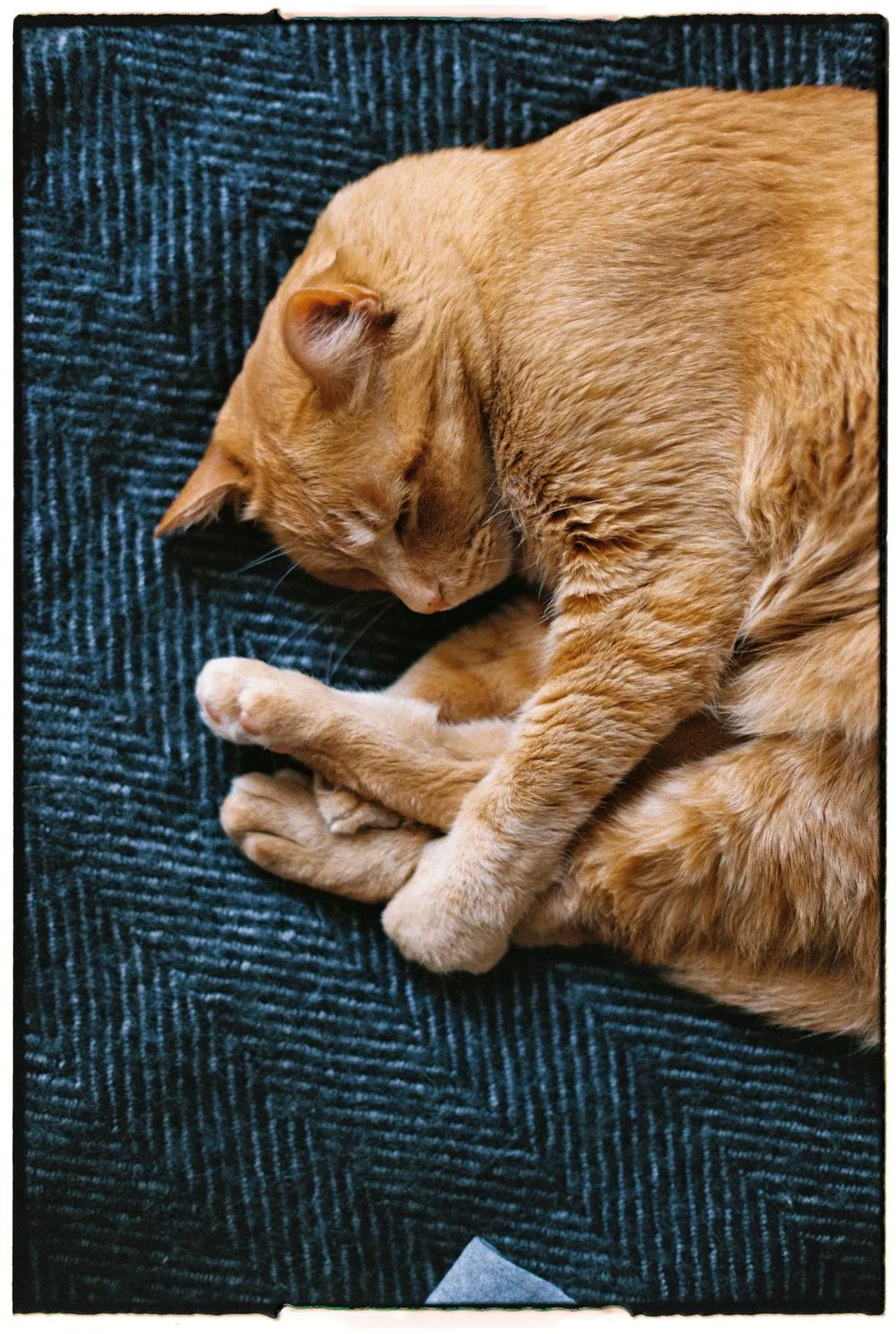
Featured photo: A ginger cat sleeps curled on a patterned carpet. The pose alone cannot establish temperature, emotion, or health. Photo: Alina Skazka / Pexels.
Prepared with AI assistance and reviewed against the sources above.