Yes, cats can form affectionate bonds with people, and attachment research from Oregon State University shows that many use their caregiver as a source of security. That supports calling the relationship love in everyday language. It does not prove that a cat’s private emotional experience is identical to a human’s.
A cat who rests across the room may care about you without wanting a cuddle. Animalia looks at what researchers actually measured, what remains uncertain, and how to support a bond without turning it into a test. Start with our guide to everyday cat behavior for the wider context.
What does research tell us about cats feeling love?
Research supports attachment to caregivers, rather than a simple claim that cats only want food. In the Oregon State study, researchers observed cats during a caregiver’s presence, absence, and return in an unfamiliar room. Many showed a secure-base pattern, using the returning person for comfort while also exploring. The study measured behavior, not a spoken account of love.
Among classifiable kittens, 64.3% showed secure attachment; the adult sample showed a similar pattern. These percentages describe the study groups, so they are not the chance that your own cat loves you, and an owner cannot assign an attachment label from one greeting.
Do not recreate a stressful separation to find out where your cat belongs, because a research method uses defined conditions and trained interpretation. Your useful task at home is simpler: provide dependable care, notice changes, and make social contact something the cat can choose. A reserved cat deserves the same patience as an outgoing one.
Separate a useful observation from a bigger claim
This evidence ladder helps keep ordinary affection separate from conclusions a behavior cannot support. It also prevents a quiet cat from being judged against a fixed checklist, as the examples are ways to think about evidence, rather than a score for your relationship.
| Observation or finding | Reasonable interpretation | What it cannot establish |
|---|---|---|
| A secure-base pattern in research | A caregiver can provide security | That every cat feels exactly like a human child |
| A familiar voice gets a different response | The cat recognizes a familiar person | The full emotional meaning of that response |
| A cat returns for chosen contact | The current interaction appears welcome | That every kind of handling will be welcome |
| A cat rests nearby without touching | Quiet company may suit this individual | That the bond is weak |
| A purr during a tense moment | The sound needs the rest of the context | That the cat is happy or pain-free |
| A sudden change in social habits | Something deserves closer attention | A diagnosis or proof of rejection |
A study of owner-voice recognition found that cats could distinguish their owner’s voice from unfamiliar voices. Recognition, attachment, and conscious human-style love are different questions, so Animalia keeps those questions separate instead of claiming that any single finding answers all of them.
Do cats know when you are sad?
Cats may notice changes in human behavior, but noticing a change is different from understanding sadness as a person does. The VCA discussion of cat emotions emphasizes that cats cannot tell us directly what they feel. A cat’s response can vary, so comfort offered during a difficult day is meaningful without proving mind reading.
A cat who approaches while you sit quietly might welcome company, while a cat who keeps its distance might need space. Neither response is a fair test of empathy, and you do not need to encourage licking, clinginess, or constant attendance to validate the relationship.
Keep the household routine as manageable and familiar as you can, and if your own day changes, leave the cat’s care needs clear for other caregivers. Our shared cat-care log can help with that practical task. It should record care and observations, rather than emotional ratings.
How can you show love in a way your cat can choose?
Support the relationship through reliable care, calm company, and contact the individual cat actually seeks. Cats Protection’s body-language guidance recommends reading the whole cat and responding to discomfort. Invite an interaction, pause, and let the cat decide what follows. Leaving your lap does not cancel the bond or justify holding the cat in place.

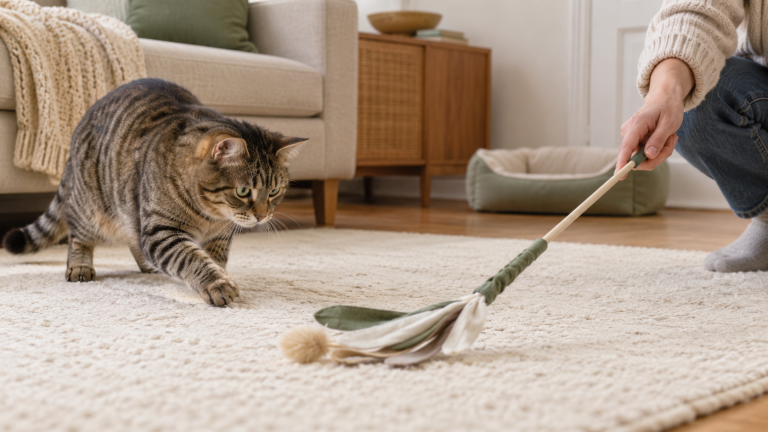
You can sit nearby, offer familiar play, or give a brief face stroke if the cat asks for it, as our cat petting guide explains pauses and personal space. For a cat who enjoys games more than touch, build company around an activity it already chooses.
Avoid comparing your cat with videos of unusually cuddly pets, because some prefer little handling, and preferences can change with the setting. Our guide to why cats enjoy petting considers that separate question. More touch is not automatically better care, even when the owner intends it kindly.
When a change in affection deserves a vet call
A cat who suddenly hides, avoids familiar contact, eats less, or changes other habits needs attention to the whole pattern. VCA notes that changed behavior and appetite can overlap with illness, including when an owner suspects grief. Contact your vet instead of deciding the cat is sulking or no longer loves you.
Write down when the change began and what else is different, including movement, grooming, food, water, litter-box use, and recent household events. Stop touch that appears uncomfortable. For persistent social or handling difficulties, ask your vet about a qualified cat behavior professional who uses humane methods.
Frequently asked questions
Why does my cat only like me?
Your cat may feel more comfortable with familiar interactions; distance from others does not prove dislike. Cats Protection advises slow, one-at-a-time introductions and letting the cat make the first move. Other caregivers can offer calm company without reaching or forced cuddles. Preserve hiding choices and an escape route, and ask your vet about a sudden change in social behavior.
Do cats have feelings?
Cats show behavior consistent with emotional states and form social attachments, although they cannot describe those feelings to us. Observe the whole pattern rather than assigning a detailed human story to one action. A calm approach, a retreat, and a changed appetite each deserve different responses. Your cat’s welfare matters more than choosing the perfect emotional label.
Can cats feel love for more than one person?
A close bond with one caregiver does not require a cat to reject everyone else. People can build positive relationships through the care and contact the cat accepts. Avoid comparing family members through forced cuddles or withheld attention. Let each person learn the cat’s preferences, and keep important routines consistent between caregivers rather than competing for a favorite-person title.
Do cats get lonely?
Do not assume that an independent-looking cat never needs social contact. Attachment research shows that people can matter to cats, but it does not give every cat one ideal amount of company. Plan care around the individual’s established routine. If absences coincide with distress or changed habits, discuss the pattern with your vet rather than staging longer separations.
How do you know if your cat is happy with you?
Look for comfortable daily activity and chosen interaction, while recognizing that one behavior cannot measure a whole relationship. Relaxed posture and voluntary closeness can be useful clues. Purring does not override tension or a wish to leave. Compare your cat with its usual pattern, and ask your vet about a new persistent change instead of treating it as rejection.
Do cats know you love them if you do not cuddle?
Cuddling is not required to provide kind, dependable care. Your cat can experience calm company, familiar routines, play, and brief chosen touch without being held. Those are useful ways to support a relationship even when the cat dislikes close handling. You do not need proof that it understands the human word “love” before respecting those preferences.
Why do cats raise their butts when petted?
A raised rear during touch is a separate body-language question, rather than a scientific test of love. Watch the setting and whether the cat remains loose and seeks continued contact. Pause if it turns, tenses, or tries to leave. If the movement is new or comes with discomfort or changed habits, discuss it with your vet.
Build a bond that leaves room for choice
Do cats feel love? Attachment and affectionate behavior give a sound reason to value the bond, while leaving the cat’s inner experience open. Choose one comfortable activity today and let your cat set the pace. Animalia’s daily play routine offers a practical way to share that time. Return to our cat behavior guide for related questions.
Sources and editorial notes
- Oregon State University: attachment to caregivers
- Saito and Shinozuka: recognizing the owner’s voice
- VCA Animal Hospitals: cat emotions and changed behavior
- Cats Protection: interpreting body language
Animalia Editorial. Publication date: November 2, 2026. Last updated: October 30, 2026. Editorial Policy.
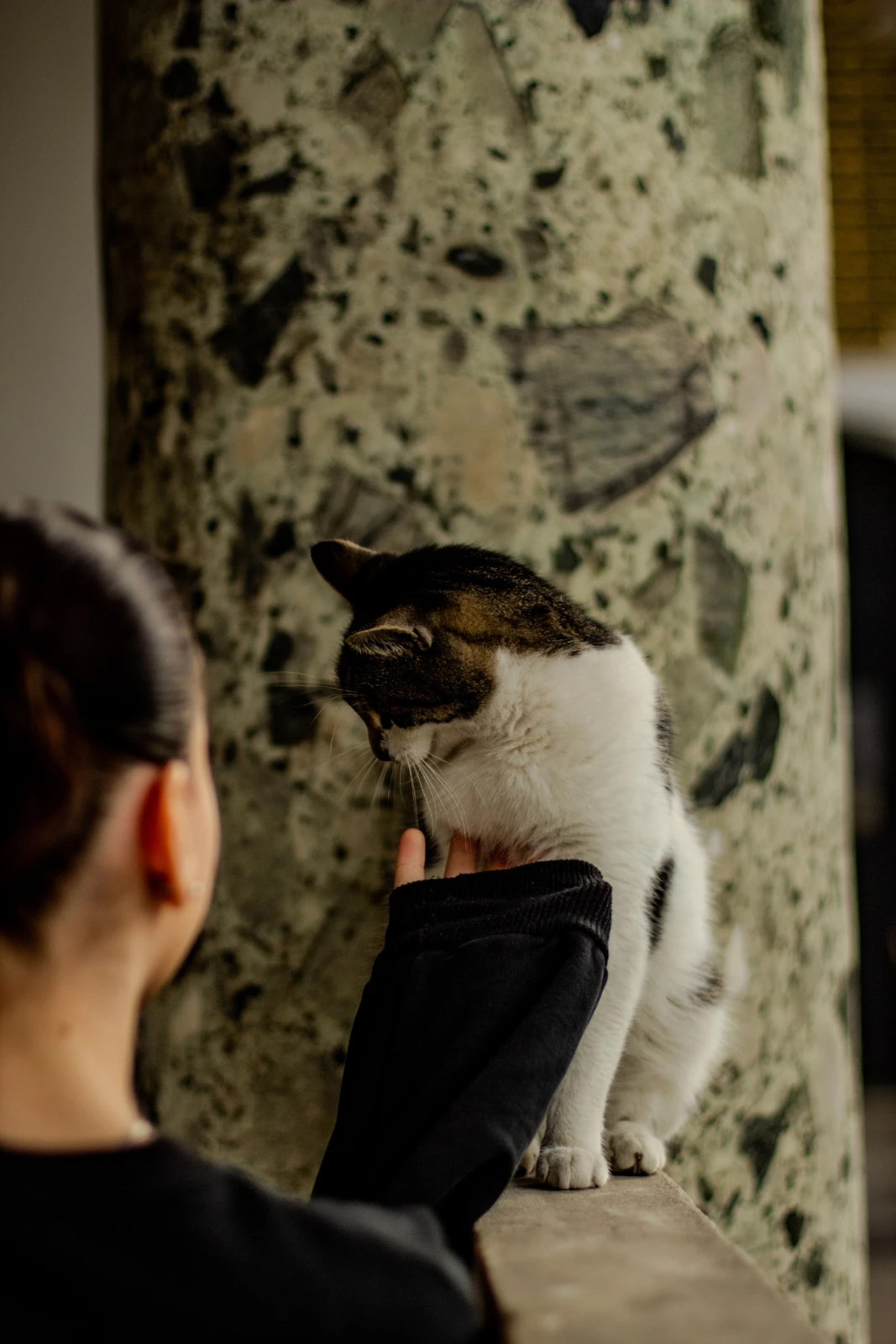
Featured photo: A seated cat receives a light chin touch. A still photograph cannot measure attachment or an emotion. Photo: Furkan Aktaş / Pexels
Prepared with AI assistance and reviewed against the sources above.