Most cats finish growing at around 12 months, according to VCA’s feeding guidance. Large, slow-maturing breeds can take longer: CFA describes Maine Coons taking up to three years. Body size, healthy weight, and adult behavior do not share one deadline. Track your cat’s pattern with your vet rather than comparing photos alone.
An older kitten may look adult while still needing care suited to growth. Animalia’s cat behavior hub helps separate what you can observe from a guessed explanation. Here, focus on size and body condition, with a simple record for your next vet visit.
When do cats stop growing, and why do ages vary?
Around the first birthday is a useful starting point for an ordinary pet cat, rather than a deadline for every individual. Breed and individual development affect the pattern. Also, a larger body does not always mean healthy growth: a cat can gain extra fat after its frame has stopped getting bigger.
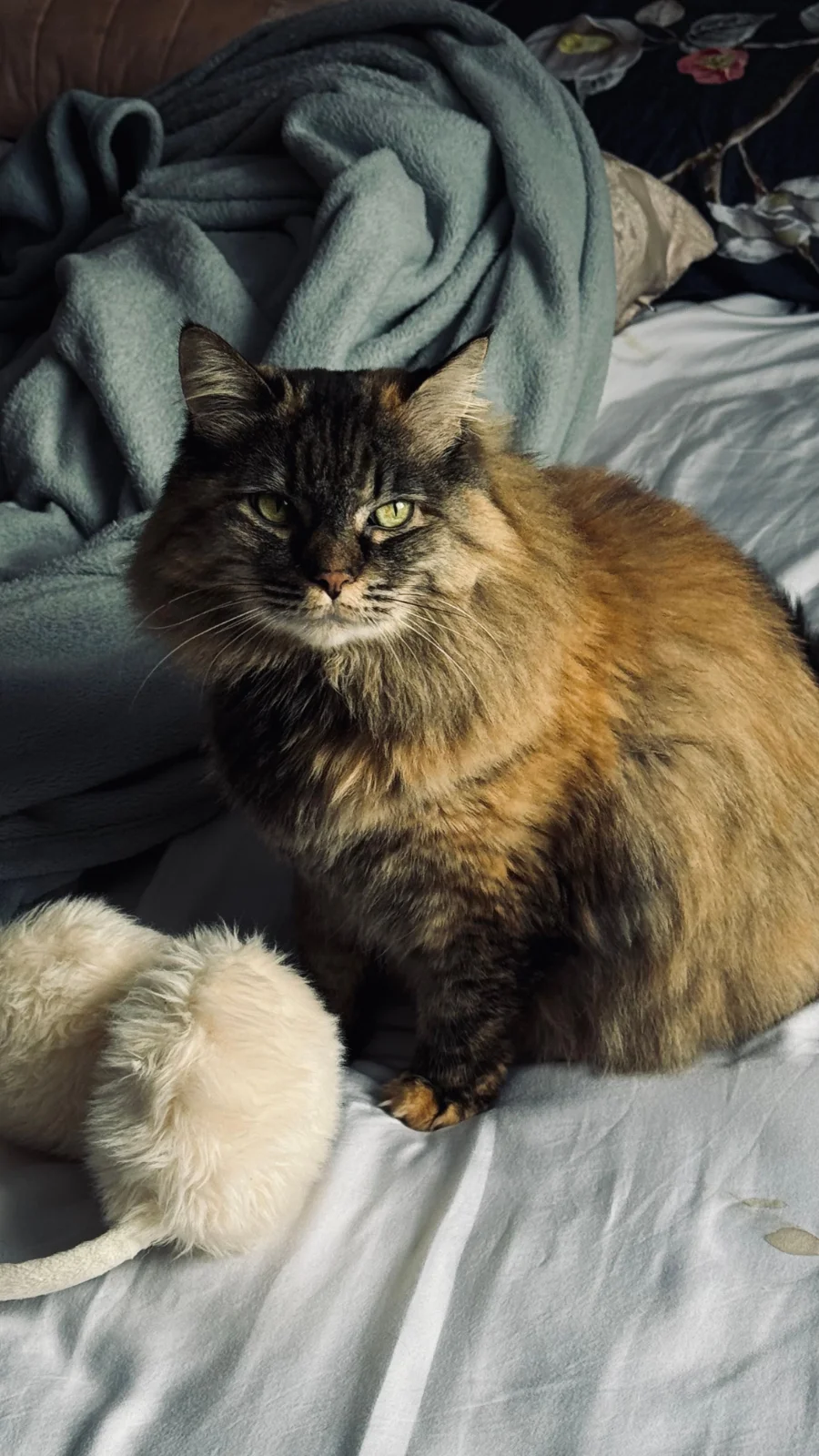
Breed organizations illustrate the variation. CFA says Maine Coons can take up to three years to reach full growth; GCCF describes maturity taking up to four years. These are broad breed descriptions, not targets that every cat must meet. A fluffy coat or large paws cannot confirm a growth schedule.
Likewise, “adult” can describe a care stage rather than a finished measurement. AAHA’s feline guidelines place kittenhood within the first year. Playfulness does not prove that a cat is still physically growing, and a calm kitten is not necessarily fully grown.
Compare size, weight, and life stage
Keep these different questions separate when assessing a change. The table is a guide for organizing observations, not a growth chart. It avoids universal weight targets, since cats differ in frame and build. Your veterinarian can compare the record with an examination and the cat’s previous measurements.
| Question | What to record | What it cannot prove |
|---|---|---|
| Is the frame changing? | Similar side-view photos and vet measurements | A single picture cannot establish maturity. |
| Is weight rising? | Dated weights from the same reliable scale | More pounds alone do not show healthy growth. |
| Is body condition changing? | Ask your vet about ribs, waist, and fat cover | Coat fluff cannot show body condition reliably. |
| Is this a slow-maturing breed? | Confirmed background, if known | Appearance cannot prove a pedigree or exact timeline. |
| Is daily behavior changing? | Appetite, play, movement, and rest | Energy level does not measure skeletal growth. |
For body condition, WSAVA’s cat chart considers the waist, ribs, and fat covering. Ask your vet to demonstrate the assessment on your own cat. Do not squeeze or repeatedly measure a reluctant cat just to complete a home chart.
If the shape you notice is a loose belly flap, our cat primordial pouch guide explains why that feature and overall body condition are separate questions. Keep new changes in your veterinary notes rather than deciding food amounts from the flap alone.
How can you support healthy growth?
Offer complete, balanced food suited to your cat’s life stage, regular play, rest, and routine veterinary care. Discuss the move from kitten food with your vet as growth slows. Do not keep increasing food just because a larger breed may mature later; food choice and amount should fit the individual.
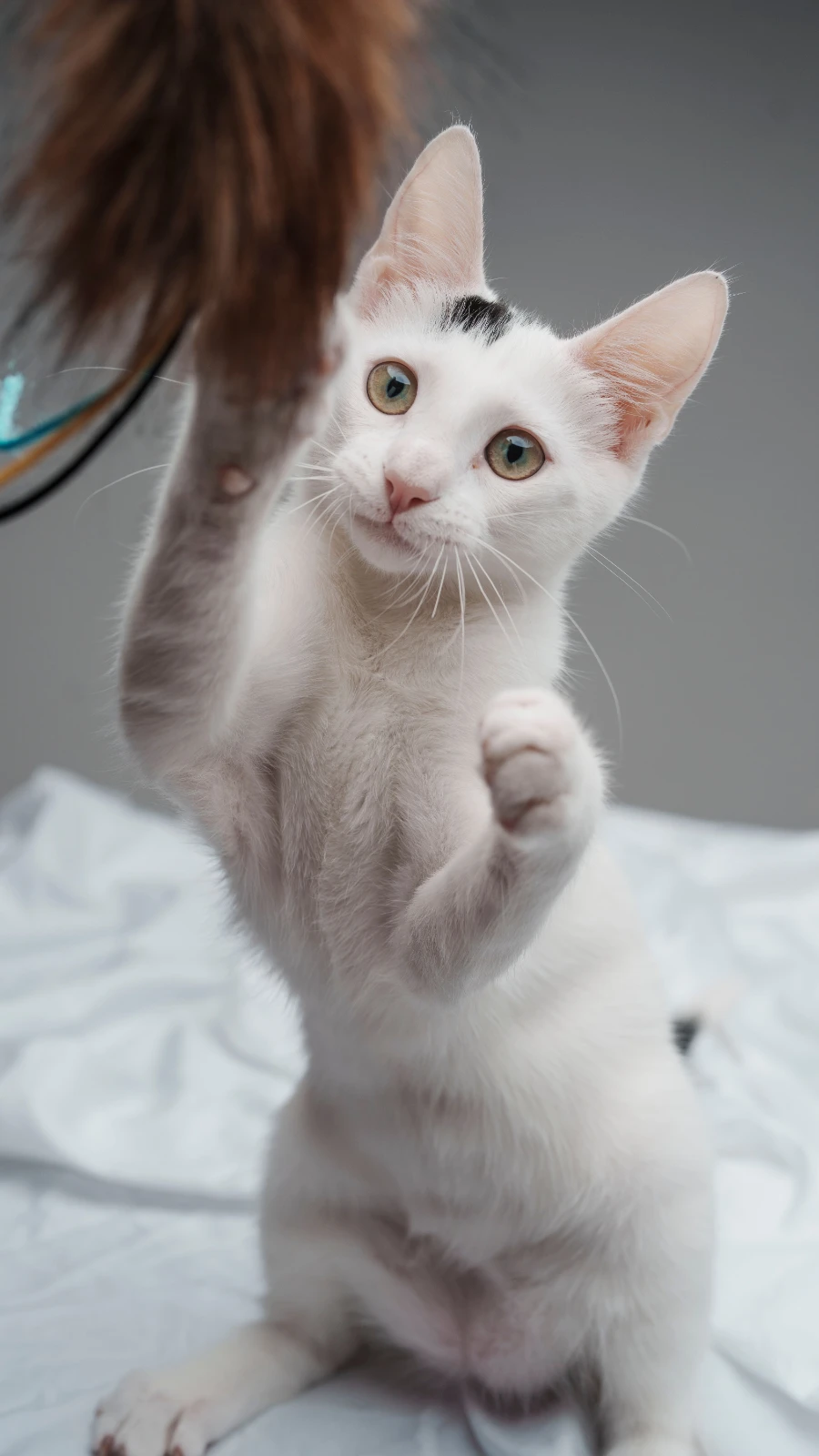
VCA recommends food formulated for growth until growing is complete, typically around 12 months. That guidance does not mean every cat should switch food on the same birthday. Bring the current food label and weight record to the appointment so your vet can help plan the change.
Also keep movement enjoyable. A daily cat play routine provides an outlet without forcing exercise. Review the size of beds and carriers as the cat grows. Our cat bed guide helps you choose a resting space from observed preferences.
When a growth pattern deserves a vet call
Ask your vet about weight loss, a sudden appetite change, poor energy, or a kitten whose progress worries you. Do not assume that a small cat needs supplements or a large cat needs a diet cut. Keep notes in the household care log and seek individual advice.
FAQ: growing from kitten to adult
Is my cat fully grown at one year?
Many cats are close to their adult size at that age, but the first birthday does not settle every case. Slow-maturing breeds can take longer. Use the cat’s previous measurements and your vet’s assessment rather than a photograph of another cat. Also review food needs instead of assuming that more food always supports growth.
Can cats still grow after two years?
Some slow-maturing breeds can continue developing beyond that age, as the Maine Coon descriptions show. However, rising weight alone is not evidence that the frame is still growing. Ask your vet to check body condition and compare earlier records. Avoid using a breed’s latest maturity age to explain every change in size.
Can I predict adult size from my kitten’s paws?
Paw size cannot give you a dependable personal growth deadline or an exact adult weight. It is more useful to record your cat’s own progress. Breed background can add context when known, but individual cats vary. Do not change food or add supplements based on a large-paw prediction or an online size calculator.
Does a playful cat still count as a kitten?
Playful behavior does not tell you whether physical growth has finished. Adult cats can still enjoy stalking, chasing, and catching toys. Continue offering suitable play while your vet helps assess size and life-stage needs. A quiet cat also deserves attention if the change is new, rather than being dismissed as simply growing up.
Should I feed more if my cat keeps getting bigger?
Not automatically. A change in weight can mean something different from a change in frame size. Review the food, body condition, and growth record with your vet before adjusting the amount. Keep meals and observations consistent enough to make that conversation useful. If your cat loses weight or seems unwell, seek advice promptly.
When do cats stop growing? Start around the first birthday, allow for breed differences, and check the actual pattern. Use the cat behavior guide for daily observations, then take size and food questions to your vet. Healthy development matters more than reaching another cat’s size.
Sources and editorial notes
- VCA Animal Hospitals: general feeding guidelines for cats
- Cat Fanciers’ Association: Maine Coon growth
- GCCF: Maine Coon breed profile
- AAHA/AAFP feline life-stage guidelines
- WSAVA: cat body condition chart
Animalia Editorial. Published and last updated October 29, 2026. Editorial Policy.
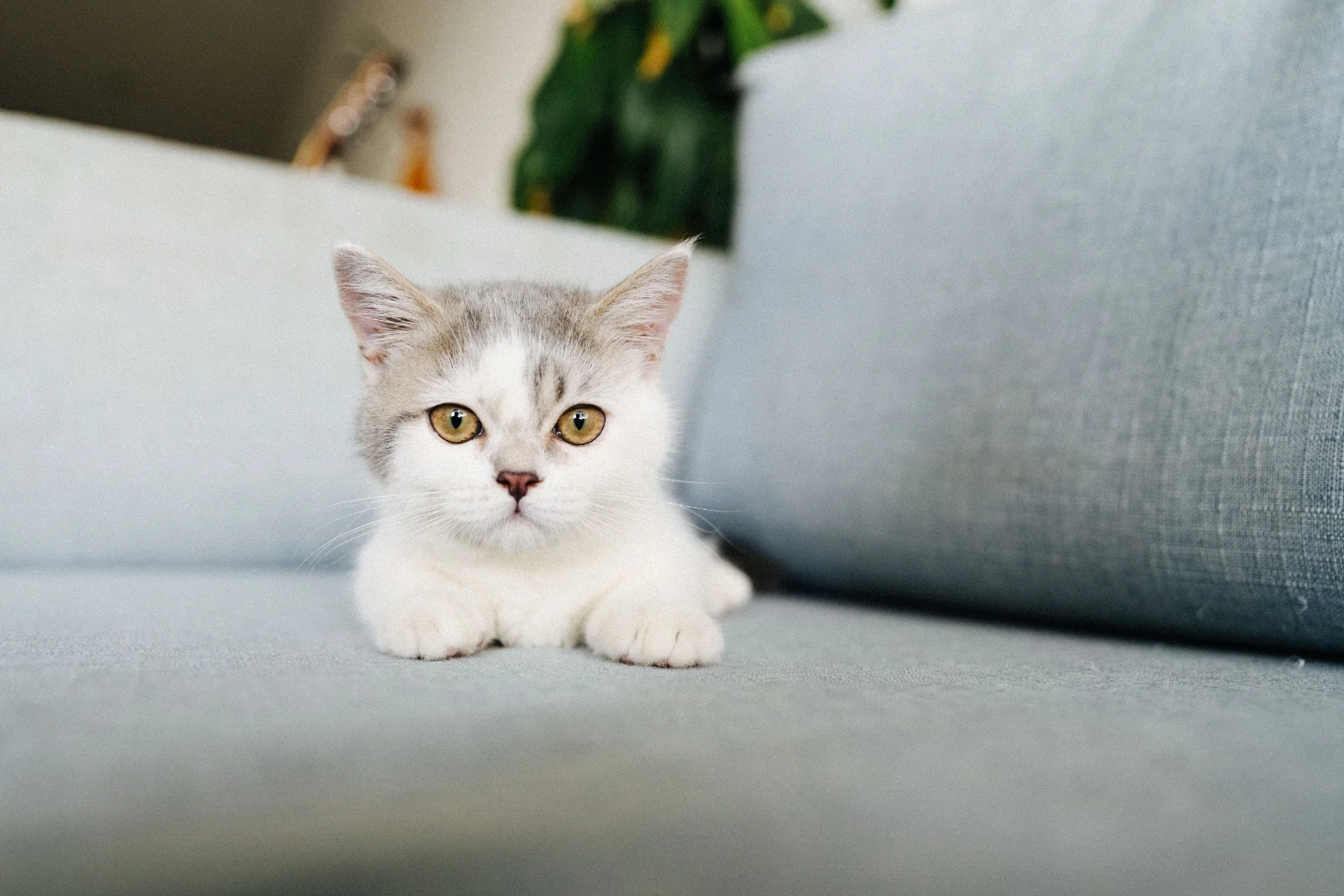
Featured photo: A young cat rests on a sofa. The photo does not establish its exact age. Photo: Tranmautritam / Pexels
Prepared with AI assistance and reviewed against the sources above.