A useful daily routine for dogs makes food, bathroom breaks, activity, and rest predictable while leaving room for the individual dog. Start with your dog’s existing needs and your household schedule. There is no single timetable or exercise total that suits every age, breed, and health situation.
The example below is a planning template, not a prescription. Ask your veterinary team about activity and feeding needs when those depend on health, age, or a specific diet.
Build around five daily needs
- Bathroom access: plan reliable opportunities rather than expecting the dog to fit your meetings.
- Appropriate food and water: use the established feeding plan and keep water available.
- Movement and exploration: include suitable walks or other activity the dog comfortably enjoys.
- Mental activity and company: offer manageable games and interaction.
- Undisturbed rest: provide a comfortable place the household respects.
Dogs Trust describes enrichment as opportunities to engage in natural activities such as sniffing, exploring, and chewing. A routine can make room for these without turning every waking moment into a training session.
An adaptable daily schedule
| Part of the day | Possible routine | Adaptation to consider |
|---|---|---|
| After waking | Bathroom opportunity, then the usual meal and a calm transition | Puppies and some older dogs may need more frequent opportunities |
| Morning | Suitable walk with time to explore, followed by rest | Choose weather and surroundings the dog can handle |
| Midday | Bathroom break, company, and a brief enrichment activity | Arrange help if you cannot meet the dog’s needs while working |
| Afternoon | Rest, then another suitable activity or short training session | Keep the task easy enough for the dog’s energy and focus |
| Evening | Usual meal, family time, and a calm resting area | Reduce hectic activity when the dog is trying to settle |
| Before bed | Final bathroom opportunity and a predictable bedtime transition | Adjust to the individual dog’s overnight needs |
The sequence matters more than copying a clock time. For example, a household that starts work early might place its longer outing later in the day, provided the dog still has appropriate bathroom access, care, and activity.
Use walks for more than covering distance
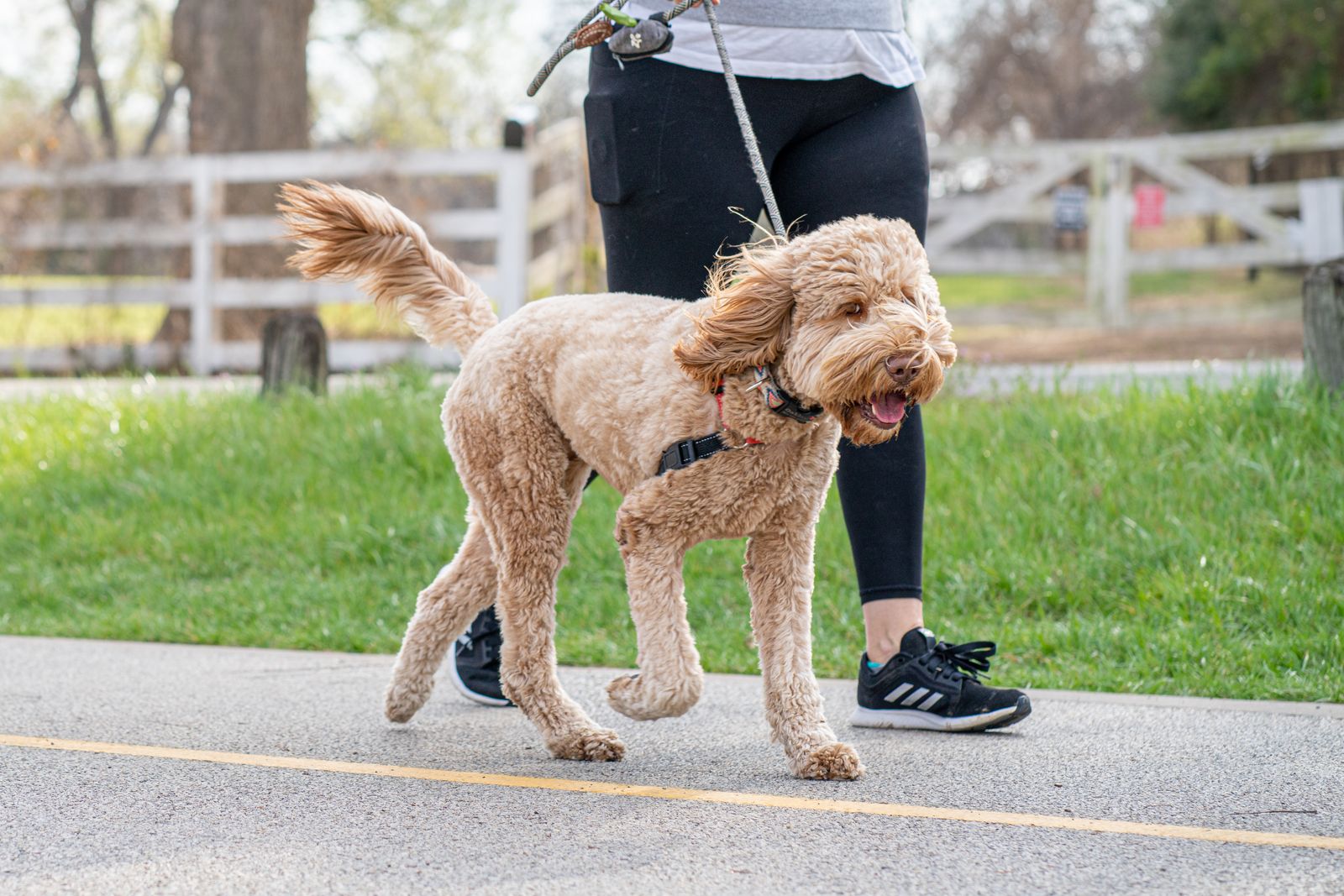
Choose routes that offer comfortable movement and safe sniffing opportunities. Watch how your dog responds to traffic, crowds, other dogs, and the weather. A busy route that keeps the dog tense is not automatically better exercise because it is longer.
Keep equipment well fitted and follow local access rules. If pulling makes walks difficult, work through our loose-leash walking guide in a quiet setting. Training practice can be separate from the everyday outing so both needs remain manageable.
Add small activities, then protect rest
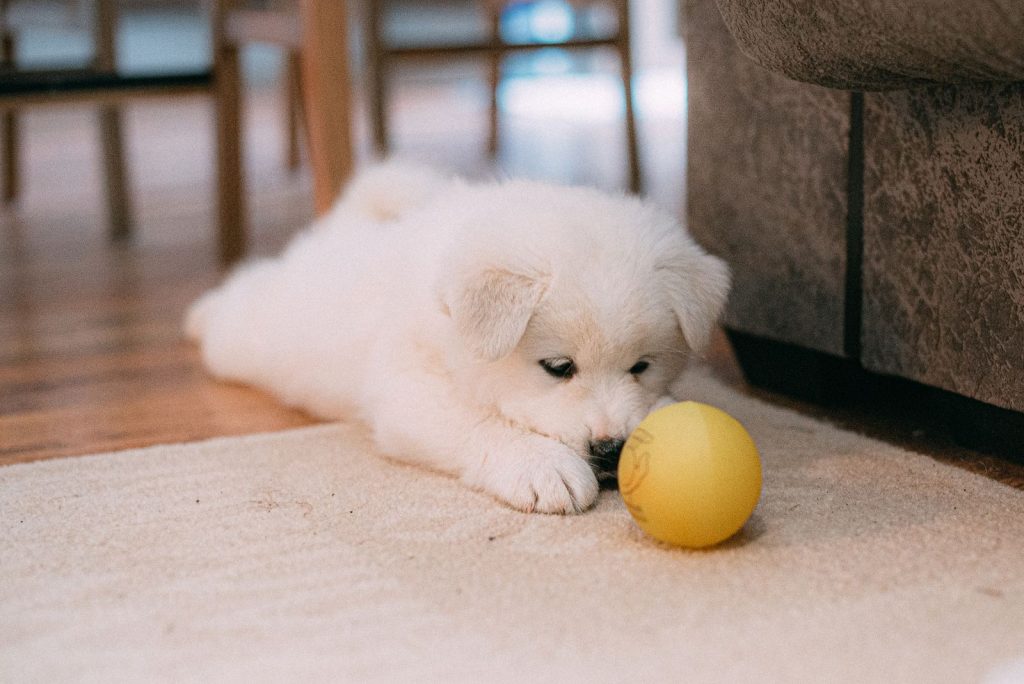
One simple food-search game or a brief reward-based practice can fit between normal care tasks. Try the beginner options in our indoor dog enrichment guide. Use part of the dog’s usual food allowance when appropriate and supervise anything new.
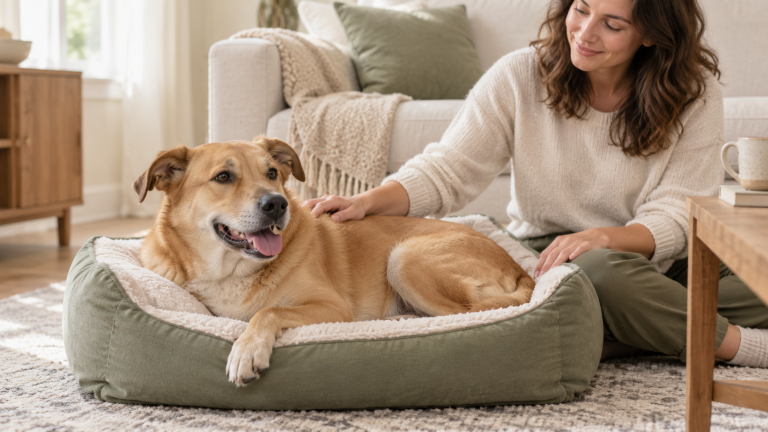
Rest is a planned part of the day, not empty time you must fill. Put the bed where the dog can relax without constant interruption. Teach children and visitors to leave a resting dog alone. Our mat-training guide can help you build a voluntary settling behavior.
Plan for the hours you are away
Write down who will provide care if your workday, travel, or an appointment interrupts the routine. A neighbor, trusted dog walker, or other suitable caregiver needs clear instructions about access, equipment, food, and the dog’s preferences.
Do not assume a puzzle toy solves distress about being alone. If your dog shows repeated distress when you leave, discuss it with your veterinarian and an appropriately qualified reward-based professional. Change the care plan while you seek help rather than expecting the dog to cope through exhaustion.
Review the routine using observations
For several ordinary days, note when the dog rests comfortably, asks to go out, becomes restless, or struggles with an outing. Look for patterns before adding more activity. You may need a quieter route, a better-timed break, or fewer interruptions rather than a packed schedule.
Introduce changes gradually where practical. Sudden changes in appetite, comfort, movement, or toileting should prompt veterinary advice. They are not evidence that your dog simply needs a stricter timetable.
Common questions
Do meals need to happen at exactly the same minute?
A predictable household rhythm can help, but follow your dog’s actual feeding requirements. Dogs with prescribed schedules need the plan agreed with their veterinary team.
Is a puppy routine the same as an adult dog’s?
No. A puppy needs a plan suited to development and care needs. Start with our new puppy home checklist and your veterinary team’s advice.
Sources and editorial notes
Supporting guidance: Dogs Trust: enrichment activities and Blue Cross: first-time dog owner guide. The sample schedule is an Animalia planning example, not a clinical exercise plan.
Featured image: An everyday dog walk; illustrative photo, not a demonstration of a specific training step. Photo: gabesdotphotos / Pexels.
More everyday dog-care guides
Choose the guide that fits your household and the next manageable step.
- Dog Sitter Instructions: Write a Clear Care Handoff
- Dog Travel Packing Checklist for an Organized Trip
- An Adult Rescue Dog’s First Week: A Calm Home Plan
- How to Choose a Dog Bed for Everyday Rest
- How to Rotate Dog Toys with a Small Collection
- How to Choose a Dog Puzzle Feeder for a Beginner
- How to Plan a Relaxed Sniff Walk with Your Dog
- A Practical Rainy-Day Routine for Your Dog
- How to Keep Dog Training Consistent Across Your Household
- How to Plan a Comfortable Visitor Routine for Your Dog
- How to Organize Enrichment in a Multi-Dog Home
- Non-Food Dog Enrichment: Simple Choices for Everyday Variety
- A Simple Dog Toy Storage and Cleaning System
- How to Build a Calm Evening Routine for Your Dog
- How to Make a Dog-Care Plan Around Your Workday